Why remote mining camps choose flat pack container houses
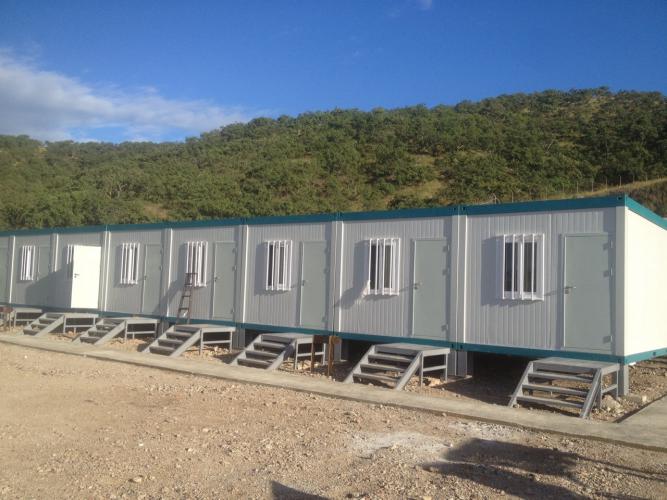
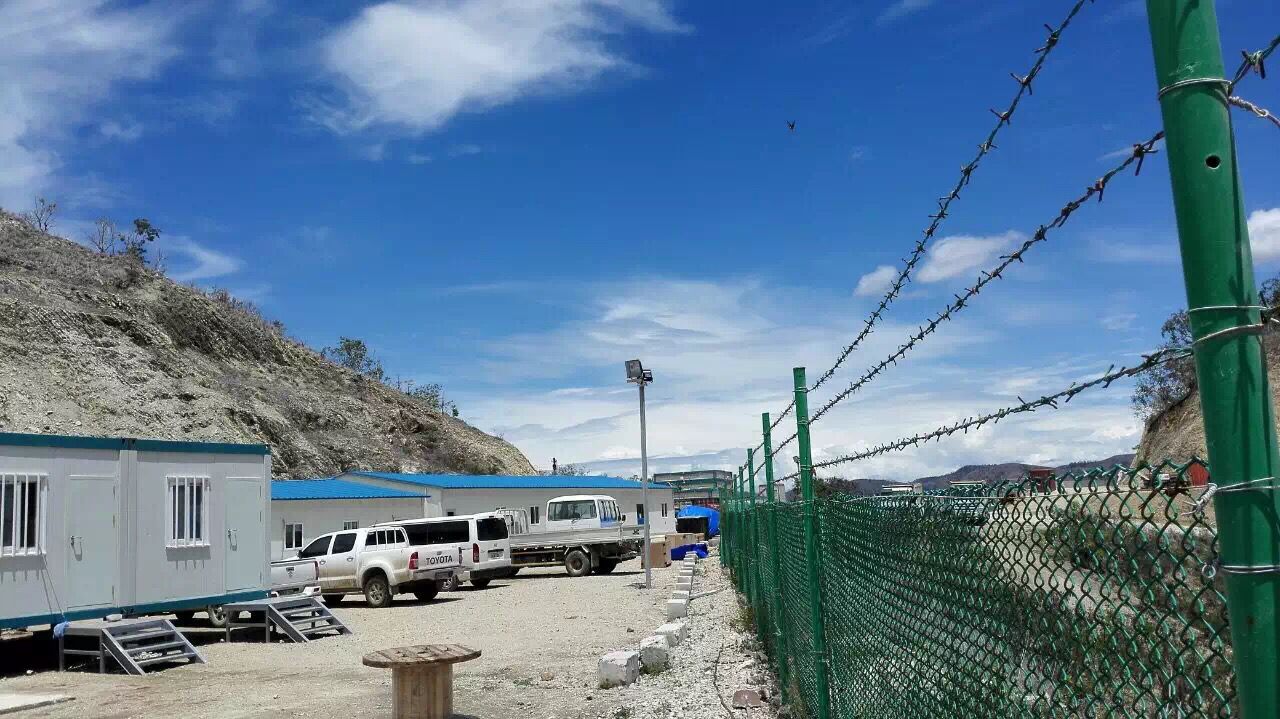
Remote mining projects are usually located far from cities, often in regions with harsh climates, complicated logistics, and limited local construction resources. In this context, flat pack container houses offer fast installation, easy transport, and flexible layout, which makes them ideal for building large worker camps, offices, canteens, warehouses, and service facilities.
Chengdong positions itself as an expert camp constructor for global projects, integrating research, production, marketing, and on‑site construction into one complete system, which you can learn more about on the official website homepage of China Flat Pack Container House Factory at https://www.cdph.net/.
Over more than 20 years, it has delivered over a thousand camp projects in more than one hundred countries, many of them in energy, mining, and infrastructure sectors that face the same conditions as remote mining operations. This global project experience is critical for mining owners and EPC contractors who need stable quality and predictable project delivery in unfamiliar environments.
What to expect from a China flat pack container house factory
Beyond basic steel and panels
When you evaluate a China Flat Pack Container House Factory for a remote mining camp, you are not only buying steel frames and sandwich panels. You are selecting an industrial system that covers design, production, quality control, logistics, installation, and long‑term reuse.
Standardized modules for flexible layouts
A professional factory like Chengdong operates large‑scale automated production lines with hot‑dip galvanized steel structures, standardized wall and roof systems, and modular components that can be repeatedly assembled and disassembled.
For more technical specifications and configuration options of flat pack container houses for camps, you can visit the container house product page on the official site at https://www.cdph.net/container-house.
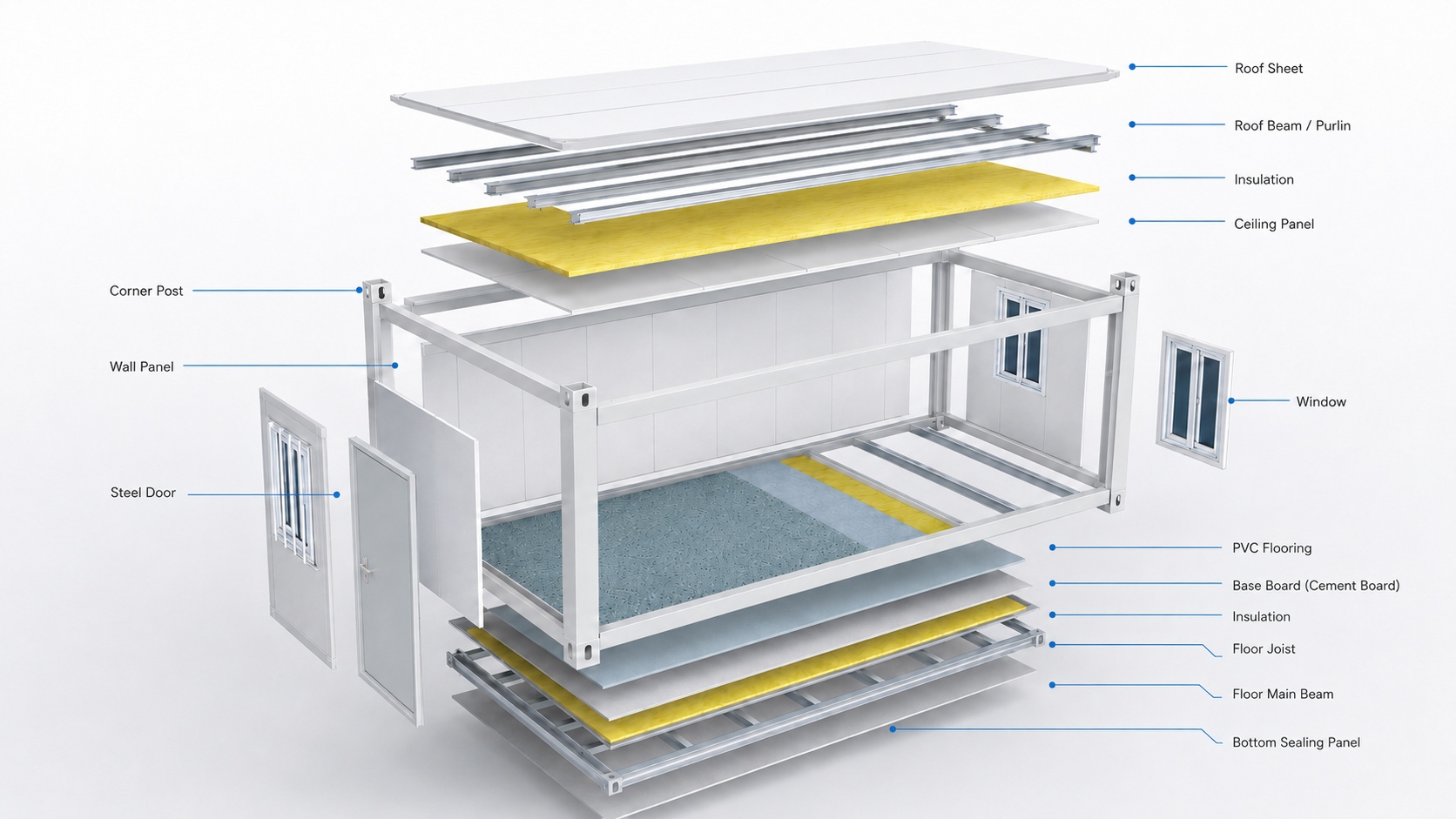
For the main box house, the structure uses high‑strength galvanized profiles and standard wall thicknesses (such as 75 mm glass wool sandwich panels) designed to meet thermal insulation, corrosion resistance, and load requirements for long‑term camp use. The standard single module can be used as a 20‑foot, 27‑foot, 38‑foot, or 45‑foot unit, and these can be combined in various ways to form dormitories, offices, dining halls, clinics, and other functional buildings in your mining camp.
Certifications and compliance assurance
On the quality side, Chengdong has passed ISO 9001 quality management, ISO 14001 environmental management, and OHSAS 18001 occupational health and safety system certifications. It has also obtained CE certification for steel structures (EN 1090) and sandwich panels (EN 14509) through SGS, as well as dozens of national patents.
For mining investors and EPC contractors who must meet strict compliance requirements from international owners or financing institutions, these certifications provide solid technical backing for supplier selection.
Solving the full life cycle camp problem: from blank land to handover
Nine integrated systems for camps
Remote mining camps are not simply “buy some container rooms and stack them together.” They are complicated engineering systems that must cover planning, architecture, water and power, safety, environment, and operations.
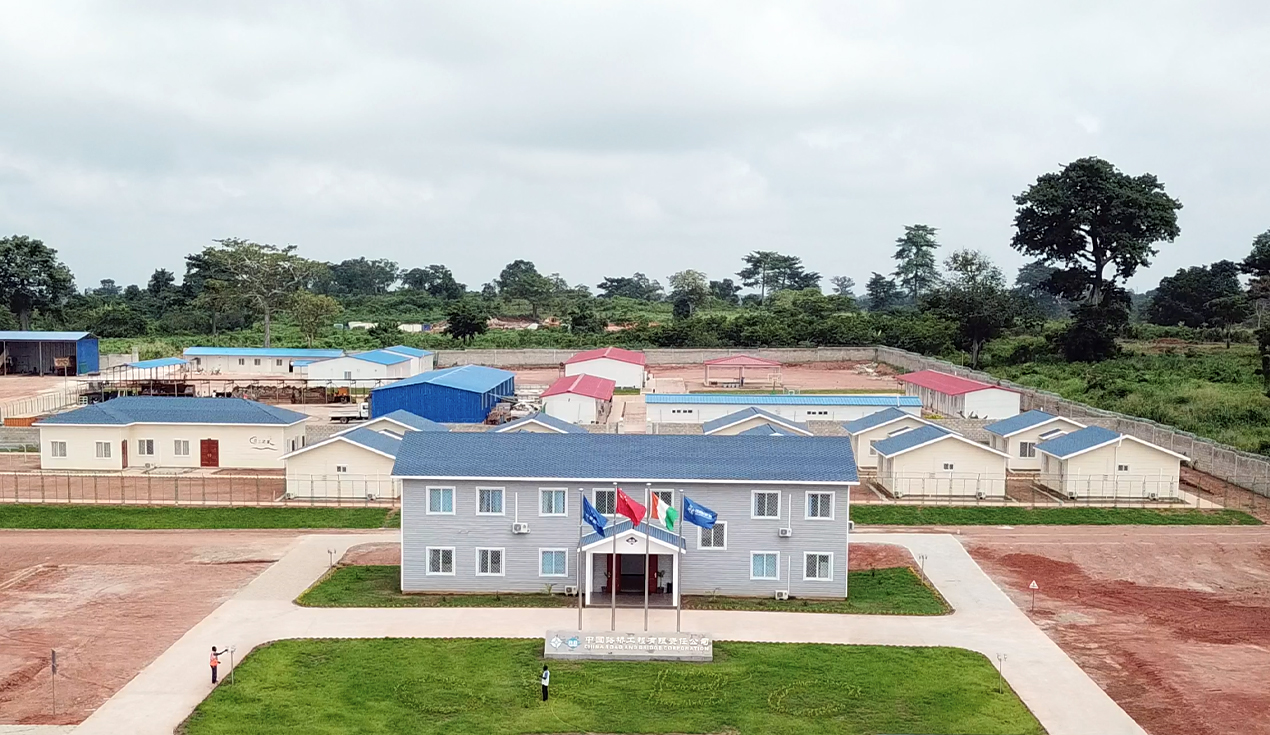
Chengdong summarizes this into an integrated camp solution based on nine systems: building system, water supply/drainage and heating system, power system, weak‑current system, fire‑fighting system, security system, traffic and road system, camp environmental facilities system, and environmental protection system.
For a mining camp, this means the factory can provide not only flat pack container houses, but also water tanks and purification equipment, septic tanks, transformers and generators, LED lighting, smart fire alarm systems, security fences and CCTV, roads and parking, landscaping, and solid and wastewater treatment facilities.
From planning drawings to camp layout
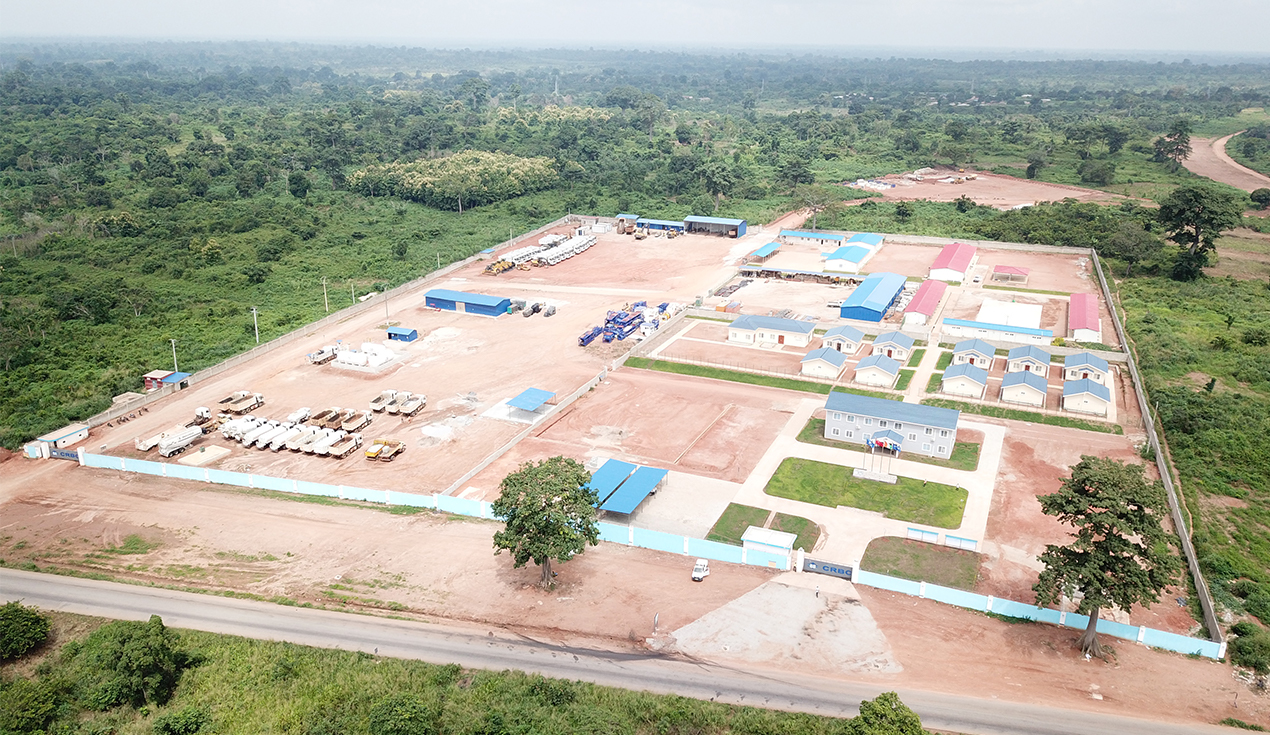
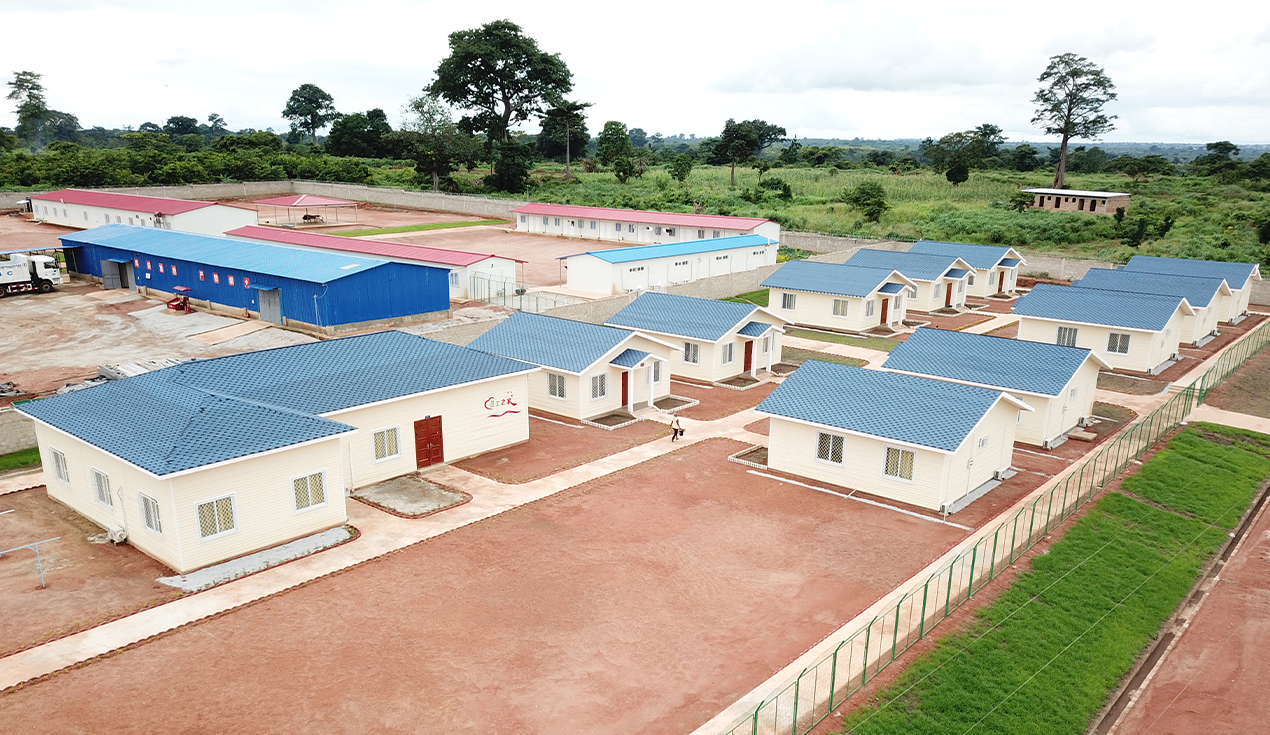
At the planning stage, the engineering team can design overall camp layout based on topographic drawings, camp usage, staff composition, and climatic conditions. A typical large camp planning case in the manual shows an accommodation zone with double rooms, single rooms, suites and hostels, plus public zones such as canteens and gyms, with a total planned construction area of about 42,800 m² and clearly defined roads and green areas.
For mining projects with hundreds or thousands of staff, this systematic planning helps you quickly form a clear blueprint and accurate material list for the entire life cycle.
Pre‑integrated equipment package
In terms of equipment configuration, the nine‑system solution can match key devices for water supply, power distribution, fire protection, and sewage treatment according to camp size and local conditions. For example, the brochure lists typical specs such as 30 m³ water tanks, 10 m³/h water treatment systems, 30 m³ septic tanks, 2,500 kVA transformers, 1,000 kVA backup diesel generators, 108 m³ fire water tanks, and 10 m³/h wastewater treatment units.
This pre‑integrated equipment package makes it easier for mining project teams to ensure that daily life, safety and environmental protection requirements are systematically covered, instead of piecing together multiple suppliers on their own.
Adapting to harsh mining environments
Climate‑specific container house solutions
Many mining projects operate in extreme environments: high altitudes, deserts, Gobi, polar cold regions, and tropical zones. A China Flat Pack Container House Factory that truly understands these scenarios must be able to provide targeted products for different climate zones, not just generic boxes.
Chengdong has developed specialized solutions such as cold‑resistant container houses, plateau container houses, Gobi container houses and desert container houses according to different regional climates, which are detailed on the cold‑resistant container house product page at https://www.cdph.net/cold-resistant-container-house.
Performance in extreme cold
The cold‑resistant technical manual shows that for temperatures down to between minus 30 and minus 50 degrees Celsius, the wall and roof insulation can be upgraded to thicker mineral wool with lower thermal transmittance values (for example, wall U‑values around 0.35 W/m²·K or below depending on configuration), paired with high‑performance windows and doors to ensure indoor comfort and energy efficiency.
For plateaus and Gobi regions, the product emphasizes enhanced structural strength, wind resistance, and heat preservation, so that buildings remain safe under strong winds and large temperature differences.
Comfort in deserts and tropical areas
In desert and tropical zones, the container houses focus on sun shading, ventilation, and optimized roof and wall insulation structures to reduce indoor heat load and improve living comfort. Through these regional product systems, a mining company can use the same supplier to deploy camps into multiple climate environments while maintaining unified standards and management.
Comfort and human‑centric design for worker welfare
Turning modular units into livable homes
Modern mining owners increasingly value worker welfare, because comfortable living conditions directly affect staff retention, productivity, and project safety. A qualified China Flat Pack Container House Factory must therefore understand how to turn modular buildings into livable “homes” for workers.
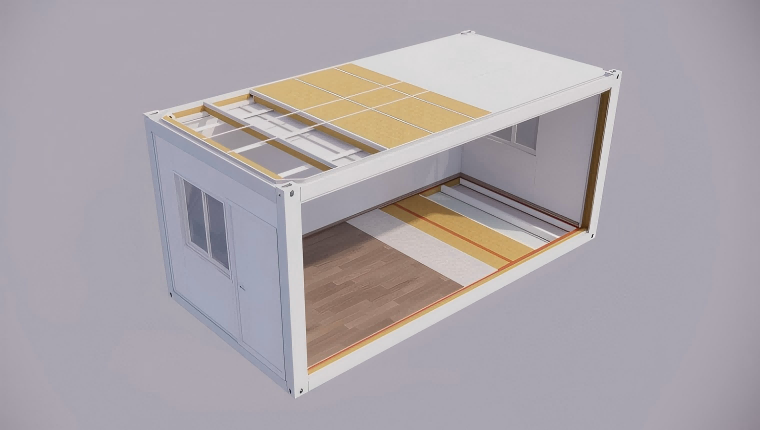
In Chengdong’s product system, each container module is designed with integrated factory prefabrication of floors, roofs, walls, doors, windows, and interior finishes, enabling rapid installation on site and multiple reuse cycles after project completion.
Standard floor structures use hot‑dip galvanized frames with thermal insulation layers, cement boards, and surface finishes, designed to meet both load‑bearing and comfort requirements. Wall systems use glass wool or polyurethane sandwich panels with specified thickness and density to reach required thermal insulation and sound insulation performance.
Integral bathrooms for better hygiene
For sanitary facilities, the “integral bathroom” is a representative example of humanized design. The entire bathroom is industrially molded in one step, including floor, walls, roof and all fixtures, and can be installed in only two to six hours, compared with about half a month for traditional wet construction.
It provides factory‑integrated waterproofing and can be relocated and reused multiple times, while also reducing on‑site waste and environmental impact. Functional details such as separate dry and wet zones, exhaust fans, LED lighting and easy‑to‑clean surfaces make daily life more comfortable for workers.
Ecological lighting for camp comfort
Lighting is another important factor for camp quality. By adopting LED ecological lighting, a mining camp can get longer service life (around 50,000 hours) and lower energy consumption compared with traditional energy‑saving or incandescent lamps, while also allowing for frequent on‑off switching that suits camp operation patterns.
These details may seem small individually, but together they significantly improve the overall living quality of the mining camp.
Safety, fire protection and smart security
Fire safety built into the system
In a remote mining camp, safety incidents can have especially serious consequences because external emergency response is slow and medical resources are limited. When selecting a China Flat Pack Container House Factory, you need to examine not only structural strengths and materials, but also its fire protection and security system capabilities.
Chengdong’s nine‑system framework includes a dedicated fire‑fighting system with components such as fire alarms, sprinklers, emergency lighting, evacuation signs and fire hydrants. In addition, the documents introduce a wireless fire alarm system tailored to camp usage, which simplifies installation by avoiding complex wiring and allows flexible layout according to building forms.
This approach reduces material and labor costs and can quickly meet the fire protection needs of large camps.
Integrated camp security
The security system covers site fences, watch towers, CCTV monitoring, gate control, intrusion alarms, and emergency medical equipment. Using integrated design and equipment selection, a mining project can build a complete security system within the same camp solution instead of separately coordinating multiple vendors.
This improves not only security but also the clarity of responsibilities, which is crucial for risk management in remote environments.
Sustainable wastewater treatment
Wastewater treatment is an often neglected but critical element for sustainable camps. Chengdong compares integral wastewater treatment equipment with traditional systems, showing that the integral solution is factory‑produced, easy to install, and fully automatic to operate, and can be moved and reused with the camp.
For mining projects that may shift locations or expand phases, this kind of relocatable environmental infrastructure is valuable for reducing long‑term costs and environmental impacts.
Logistics, local cooperation and construction management
Optimized logistics to remote sites
Even if you choose a technically strong China Flat Pack Container House Factory, your mining camp project can still face delays and cost overruns without robust logistics and local site management. Chengdong emphasizes its professional logistics planning and cooperation with strong local partners to transport products from the nine systems to the project site in an optimized manner.
Years of experience in international shipping, land transport and customs clearance allow them to support projects in regions such as South America, Africa, the Middle East and Asia.
On‑site installation and labor management
On the construction side, Chengdong relies on a team of technical experts familiar with different national building codes to guide and lead local workers through the installation process. They also highlight their experience in managing local labor in countries with strict employment management requirements, such as Argentina and Chile, where they can quickly organize local teams to start on‑site work.
For mining companies whose core competence is not construction, handing camp delivery to such a partner reduces management pressure and improves schedule reliability.
Proven track record in complex projects
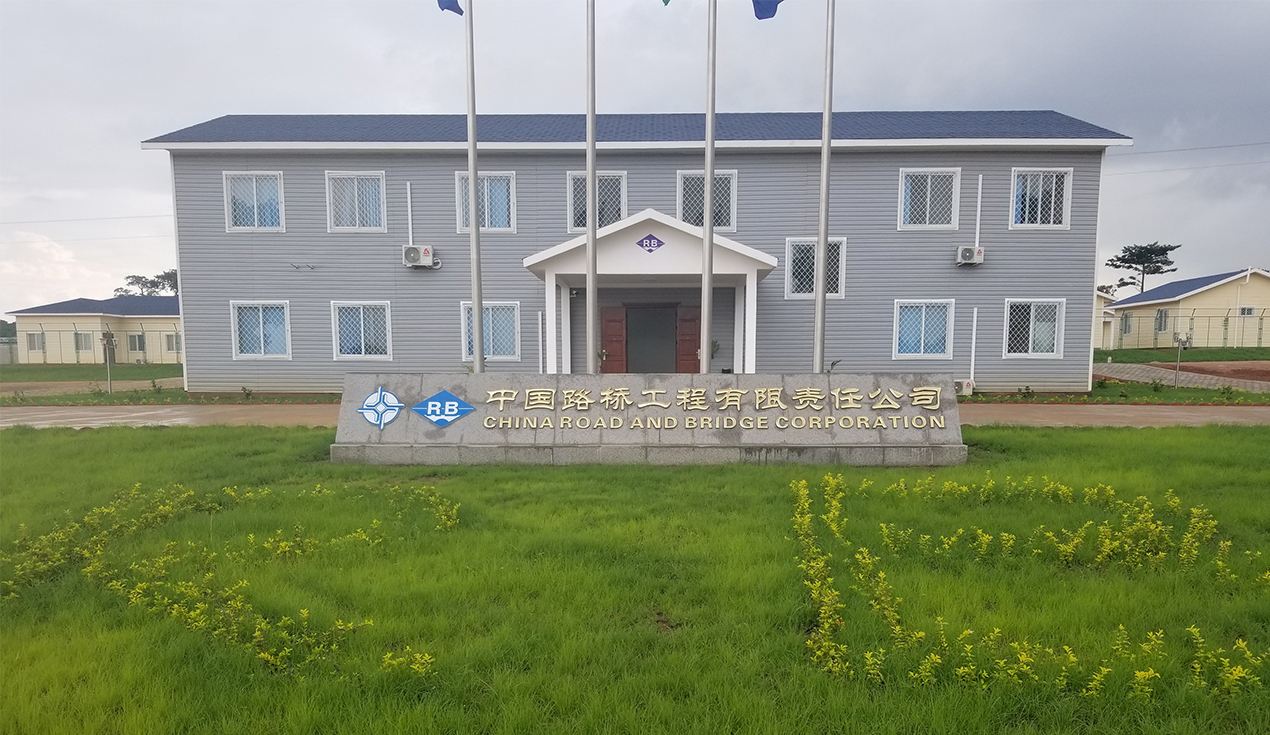
Chengdong’s accumulated project cases include hydropower stations, port expansions, airport reconstruction, river improvement projects and multi‑mine camps in South America, Africa and Asia, which are often similar in scale and complexity to large mining projects. This shows that the company can handle multi‑system integration and complex coordination challenges under real project conditions, rather than only supplying standard products.
How to work with a China flat pack container house factory
Share complete data early
To fully leverage the strengths of a China Flat Pack Container House Factory for your remote mining camp, it is crucial to engage early and share complete project data. According to Chengdong’s manual, the client should provide topographic maps with elevations, red‑line drawings, road usage requirements, camp usage purpose, personnel composition, and environmental conditions so the technical team can design camp layout, traffic organization, building types, and external water and power networks.
Selecting from the nine‑system menu
The integrated camp solution is built like ordering from a menu: the factory has already classified camp necessities into nine systems and corresponding products, and the client can select specific configurations according to project budget and performance requirements.
For instance, you may choose standard container houses for non‑critical buildings, cold‑resistant or desert‑type containers for specific climate zones, and upgrade options for wall and roof insulation, windows and doors, or interior finishes for key accommodation or office buildings.
Next steps and useful site sections
As a next step, you can visit the official website homepage of this China Flat Pack Container House Factory at https://www.cdph.net/ to learn more about product details, case studies and service processes, and then contact the team for a tailored mining camp solution.
You can also explore typical engineering camp references and productivity information through the case center and productivity sections accessible from the homepage navigation.




 More
More







![Top Advantages of Modular Construction Explained [2025]](/uploads/upload/images/20250424/0fb390068474145a09a8c0504c73b1d2.png)
 May 09, 2025