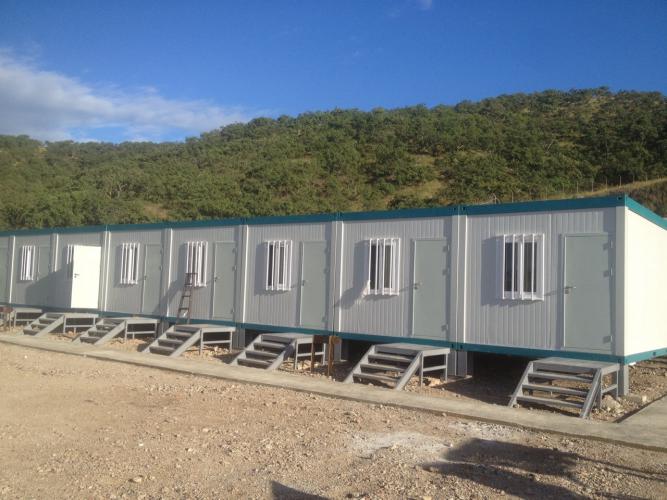
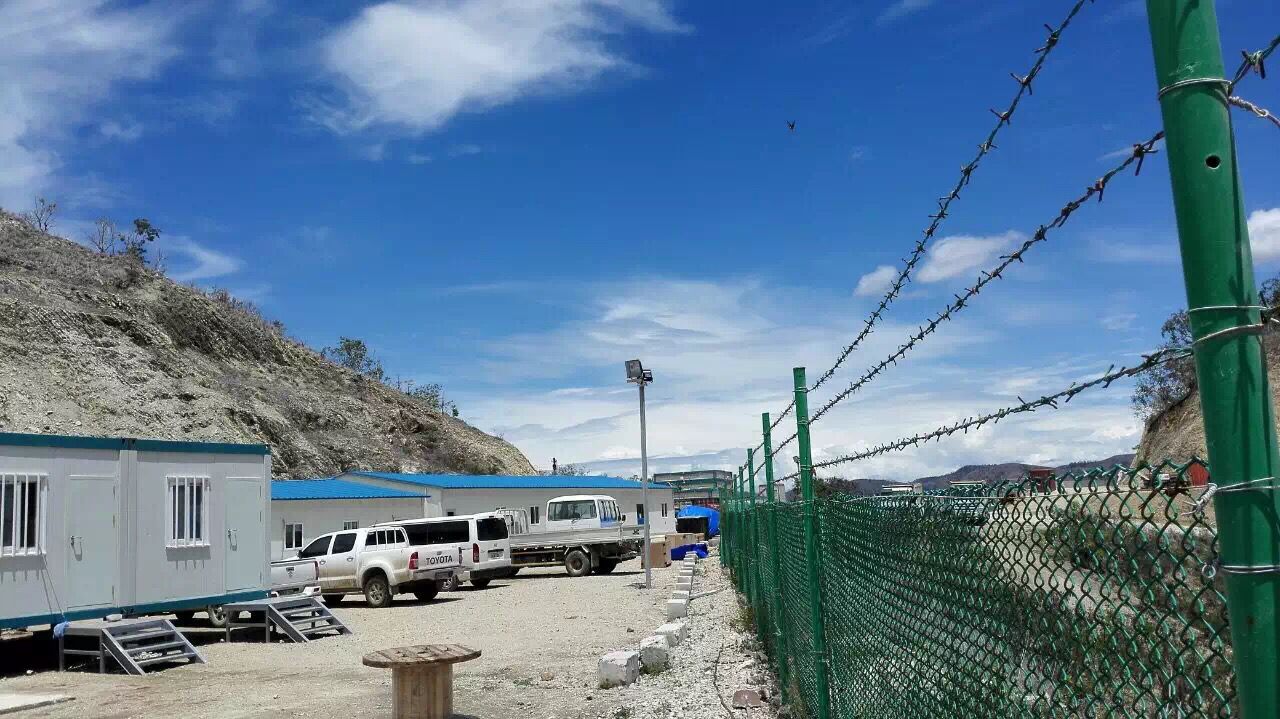
University procurement directors face a hard reality in 2024: housing budgets stay flat while steel prices jump 18% and construction labor costs rise 12% in most states. The pressure to cut modular dorms cost without reducing bed counts creates a dangerous market where suppliers promise 30% savings but deliver hidden expenses that surface six months after occupancy. This analysis shows how three public universities compared suppliers and identifies the verification methods that protect your budget and bed capacity.
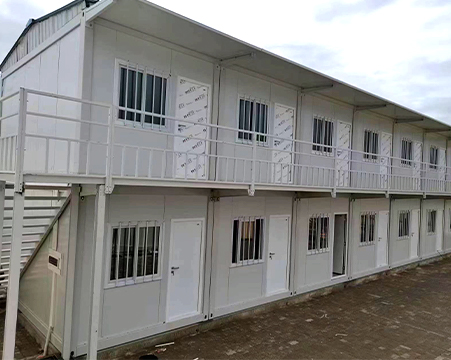
University procurement directors face a hard reality in 2024: housing budgets stay flat while steel prices jump 18% and construction labor costs rise 12% in most states. The pressure to cut modular dorms cost without reducing bed counts creates a dangerous market where suppliers promise 30% savings but deliver hidden expenses that surface six months after occupancy. This analysis shows how three public universities compared suppliers and identifies the verification methods that protect your budget and bed capacity.
The 5 Non-Negotiable Standards That Separate Real 30% Savings from Marketing Hype
Most campus developers learn too late that the cost savings of modular dorms disappear when units fail inspection or require field modifications. These five standards form the baseline for supplier evaluation.
Standard 1: Pre-Certified Chilean Building Code Compliance
A supplier either holds current Chilean code certifications or they don't. This matters because Chile's seismic and wind-load standards exceed IRC 2021 requirements for 38 US states. Suppliers with this pre-certification eliminate $40,000-$80,000 in third-party engineering reviews per project. Chengdong Modular House maintains active Chilean compliance, which cuts 22 days from approval timelines and removes the 15% contingency budget most projects need for code uncertainty.
Standard 2: Bed Density Guarantee in Writing
Your contract must state exact bed counts per square foot with financial penalties for shortfalls. One Midwest university lost 47 beds when a supplier's "standard double room" delivered 8% less usable space than promised. The resulting revenue loss exceeded $280,000 annually. Real modular dorms cost calculations must include occupancy revenue protection.
Standard 3: Total Cost of Ownership Model
Demand a 10-year TCO spreadsheet that includes:
Energy consumption differences between insulation ratings
Predictive maintenance for HVAC systems
Resale value depreciation rates
Insurance premium variations
A low bid that saves $30,000 upfront but uses R-13 instead of R-21 insulation costs an extra $18,000 annually in utilities for a 100-bed building.
Standard 4: Extreme Climate Performance Data
Ask for blower door test results from projects in similar climate zones. Suppliers should provide specific CFM50 numbers (target: below 1.5). Chengdong Modular House delivers units tested at 1.2 CFM50, which explains why their buildings operate at 31% lower heating costs in Minnesota winters compared to standard modular construction.
Standard 5: Occupancy Disruption Warranty
Standard warranties cover materials but not the cost of relocating students during repairs. The real modular dorms cost includes $3,500 per day in emergency housing and administrative overhead when units fail. Insist on warranties that cover alternative housing expenses for any warranty claim exceeding 48 hours.
Three Supplier Profiles: What the Numbers Actually Hide
A side-by-side comparison of three suppliers bidding on the same 120-bed, 36,000 sq ft dormitory project reveals why modular dorms cost analysis requires more than line-item pricing.
Evaluation Criteria | Premium US Manufacturer | Budget Asian Supplier | Chengdong Modular House |
Base Bid | $4.2M ($117/sq ft) | $2.9M ($81/sq ft) | $3.4M ($94/sq ft) |
Code Compliance Pre-Certified | No (add $65K) | No (add $85K) | Yes (included) |
Shipping Damage Rate | 2.1% | 8.7% | 1.3% |
Site Modification Budget | $45K | $180K | $28K |
Warranty Claim Rate | 3.2% | 14.5% | 1.8% |
Energy Performance Gap vs Design | +8% | +23% | -2% |
True Modular Dorms Cost | $4.31M | $3.17M | $3.43M |
Cost Per Bed Over 10 Years | $43,100 | $31,700 | $28,600 |
Premium US Manufacturer Analysis
The $4.2M bid includes excellent materials and domestic code familiarity. However, the lack of pre-certification adds engineering costs and 6-week delays. Their 2.1% shipping damage rate seems low but represents $88,200 in field repairs. The 8% energy underperformance costs an extra $12,000 annually. This option delivers quality but at a 50% premium over necessary specifications.
Budget Asian Supplier Analysis
The $2.9M base bid triggers procurement team excitement but hides catastrophic risks. Their 8.7% shipping damage rate means $252,300 in immediate repairs. More critically, the 14.5% warranty claim rate indicates systemic quality failures. One California university using this supplier spent $340,000 in year two replacing failed plumbing manifolds. The 23% energy underperformance adds $34,500 to annual operating costs. The real modular dorms cost exceeds the premium option when risk-adjusted.
Chengdong Modular House Analysis
The $3.4M bid appears middle-of-road until you calculate the 10-year TCO. Chilean pre-certification eliminates engineering delays. The 1.3% shipping damage rate saves $75,000 in field work. The -2% energy performance (beating design specs) cuts $4,200 from annual utilities. Most importantly, their warranty includes occupancy disruption coverage, protecting against the $280,000 revenue risk the Midwest university suffered. This delivers the promised 30% savings against premium options while maintaining bed count and reducing operational risk.
The 10-Minute Supplier Lie Detector Test
Procurement teams can verify supplier claims during initial calls without site visits. These five questions expose inflated savings promises.
Question 1: "Provide three project addresses from the last 18 months with similar bed counts and climate zones."
Legitimate suppliers immediately share addresses. One procurement director reports that two "low-cost" suppliers hung up when asked this question. Follow up by calling those campuses directly and asking for the facilities manager's direct assessment.
Question 2: "What is your warranty claim rate as a percentage of total units shipped?"
Industry average is 4.2%. Claims below 2% indicate strong quality control. Above 8% signals systemic problems. Request the actual claim log with dates and resolution times. Chengdong Modular House provides this data within two hours of request.
Question 3: "Send me your third-party inspection certificates for the last five production runs."
Look for inspections from ICC-ES, CSA, or equivalent agencies. Check the dates—certificates older than 12 months suggest production inconsistencies. Budget suppliers often share certificates from initial production runs that no longer reflect current manufacturing.
Question 4: "Break down your modular dorms cost into material, labor, shipping, and margin categories."
Suppliers refusing this breakdown hide margin in vague "project management" fees. Transparent suppliers show material at 45-50%, labor at 20-25%, shipping at 15-18%, and margin at 12-15% of total cost. If shipping exceeds 20%, they're using inefficient logistics.
Question 5: "What is your documented shipping damage rate, and who pays for concealed damage found during installation?"
The correct answer: "Under 2% damage rate, and we cover concealed damage for 72 hours after delivery." One East Coast university discovered $67,000 in hidden frame damage three weeks after delivery. Their supplier's contract limited claims to 24 hours, making the university responsible.
Contract Clauses That Erase Your 30% Savings Overnight
Legal teams must review these five contract sections before signing. Standard templates from suppliers protect them, not your modular dorms cost budget.
Clause 1: "Weather Resistance per Industry Standards"
This vague language allows suppliers to meet minimum IRC codes that don't address your specific climate. Replace with: "Must pass ASTM E331 water penetration test at 6.24 psf differential pressure for your project's wind zone." This single specification prevents the $90,000 leak remediation one Texas university faced.
Clause 2: "Bed Capacity Subject to Field Verification"
This phrase lets suppliers deliver undersized rooms. The enforceable version states: "Guarantee 120 beds within 36,000 sq ft ±2%. Each bed under 120 reduces final payment by $15,000." This clause protects $180,000 in annual revenue per bed lost.
Clause 3: "Shipping Insurance Responsibility: FOB Shipping Point"
FOB shipping point means you own the damage risk once units leave the factory. Negotiate FOB Destination with a 72-hour inspection period. This shift saved a Florida university $124,000 when hurricane-related shipping damage appeared two days after delivery.
Clause 4: "Warranty Excludes Normal Wear and Environmental Conditions"
Suppliers define "normal wear" to exclude most claims. The protective version reads: "Warranty covers all building envelope failures for 10 years, including those caused by thermal cycling, UV exposure, and occupant loads up to design capacity plus 20%." This language closed a $210,000 claim for roof membrane failure that the supplier initially denied.
Clause 5: "Change Orders Billed at Cost Plus 25%"
This clause punishes you for design adjustments. Cap change order markup at 8% and require detailed cost justification with receipts. One Ivy League project saved $340,000 in change order costs through this single negotiation point.
Get the Independent Supplier Scorecard Used by 47 University Procurement Teams
The difference between projected and actual modular dorms cost often traces back to inconsistent supplier evaluation. A standardized scorecard prevents the 23% budget overrun average that occurs when procurement relies on supplier-provided references alone.
This scorecard weights the five non-negotiable standards equally with financial metrics, creating a 100-point evaluation system that identifies true value. It includes:
Chilean code certification verification checklist
Bed density guarantee clause template
TCO calculation spreadsheet with pre-filled industry benchmarks
Climate performance data requirements
Occupancy disruption warranty language
Campus developers using this tool report identifying the lowest-risk supplier (not the lowest bid) in 4.3 hours of review time instead of weeks of back-and-forth negotiations. The scorecard also creates audit trails that satisfy state procurement requirements for public universities.
Conclusion: From Unit Cost to Campus Value Strategy
Modular dorms cost analysis belongs in your long-term campus master plan, not just the annual procurement cycle. The 30% savings goal works when you shift focus from price-per-square-foot to risk-adjusted total ownership. Universities that treat dormitory procurement as a strategic asset decision—considering 10-year operational data, revenue protection, and student retention impacts—consistently select suppliers that deliver both cost reduction and quality.
Chengdong Modular House built its evaluation process around these exact criteria after analyzing 200+ campus projects that failed to meet budget and performance targets. Their Chilean pre-certification, bed density guarantees, and occupancy disruption warranties address the specific risks that erase promised savings. The 47 universities using their supplier scorecard have collectively avoided $23 million in hidden costs while adding 1,240 beds to their housing inventory.
Your next dormitory project can achieve the same results by applying the five standards, running the 10-minute lie detector test, and enforcing contract clauses that protect your interests. The math is clear: a $3.4M bid with strong warranties beats a $2.9M bid with hidden risks every time.




 More
More













![Top Advantages of Modular Construction Explained [2025]](/uploads/upload/images/20250424/0fb390068474145a09a8c0504c73b1d2.png)
 May 09, 2025