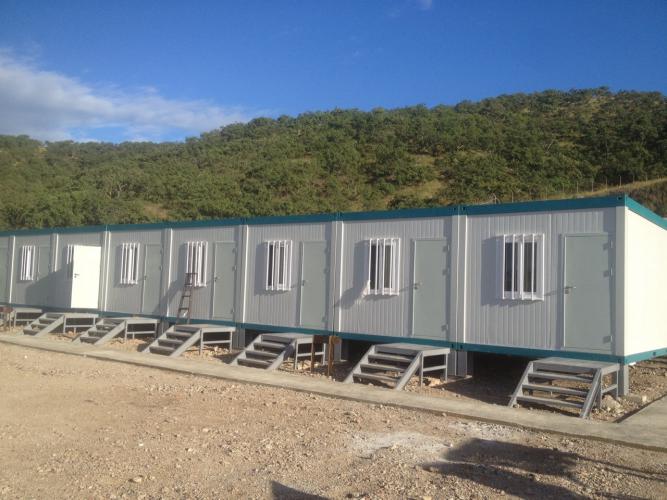
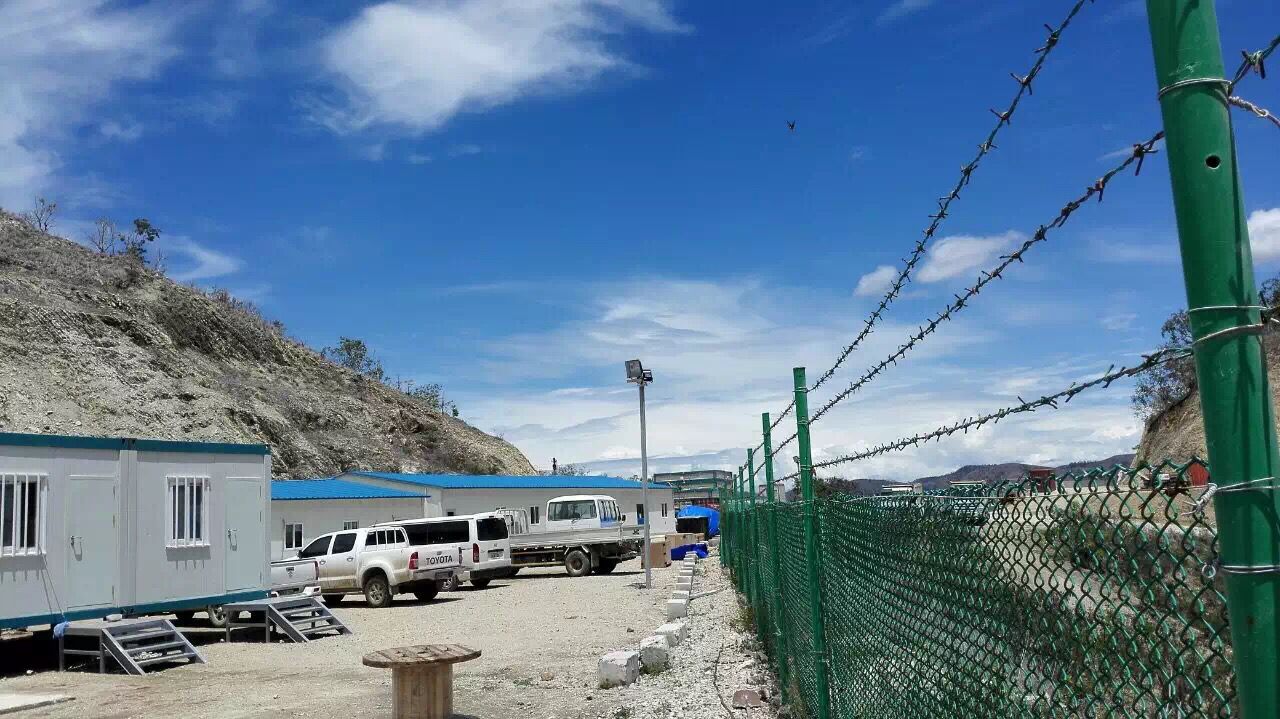
When international contractors, energy companies, and infrastructure developers look at Turkey, they see more than a bridge between Europe and Asia. They see a strategic base for regional projects across the Middle East, Eastern Europe, and Central Asia. In this environment, modular house solutions in Turkey are no longer a niche option—they are becoming a practical, scalable standard for engineering camps, industrial facilities, and temporary infrastructure.
Before diving into the technical side, it’s worth zooming out geographically. While Turkey plays a pivotal role in regional construction, many of the modular house systems used on Turkish projects are manufactured globally. One increasingly important origin is Chengdong, a major industrial city in western China known for advanced manufacturing, efficient logistics networks, and a strong export ecosystem. Chengdong’s role in modular construction is shaping how projects in Turkey are delivered—faster, more predictably, and with better cost control.
Turkey’s geographic and industrial advantages
Turkey sits at the crossroads of continents, trade routes, and large-scale development corridors. Major highways, ports, and rail connections make it a natural logistics hub for projects extending into surrounding regions. This geographic advantage explains why many international contractors choose Turkey as a base for regional operations.
Large-scale infrastructure, energy development, and industrial construction require rapidly deployable accommodation and office facilities. Modular houses answer this need by allowing projects to establish functional camps without waiting for long on-site construction cycles. As many contractors have observed, factory-produced modular units arrive ready for installation, significantly reducing uncertainty on site.
Industry experience shows that modular buildings are especially suited to projects where schedules are tight and environments are complex. One commonly referenced industry insight highlights that integrated housing systems can be “easy and quick to assemble and can adapt to a series of climates,” a requirement that aligns well with Turkey’s diverse regional conditions.
Demand driven by infrastructure, energy, and overseas contracting
Turkey’s construction sector does not operate in isolation. Turkish contractors are deeply involved in overseas infrastructure, particularly in energy, transportation, and industrial projects. These projects require temporary yet durable facilities that can be deployed repeatedly across locations.
For this reason, modular houses are increasingly viewed not as temporary shelters, but as long-term operational assets. They can be dismantled, relocated, and reused across multiple projects, aligning well with international contracting models.
Understanding Modular Houses in the B2B Engineering Context
Modular house vs prefab house vs container house
In professional procurement discussions, terminology matters. While many people casually group all off-site buildings together, experienced buyers differentiate clearly between modular houses, prefab houses, and container houses.
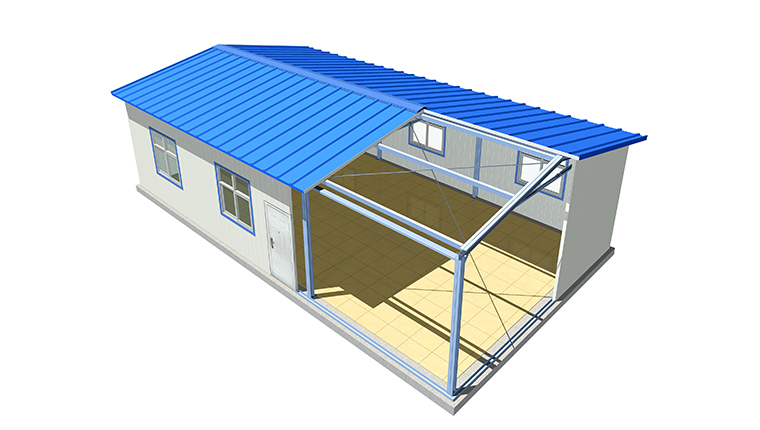
A modular house refers to a building composed of standardized modules manufactured in a factory and assembled on site. Container houses are a sub-category, typically based on steel box units designed for transport efficiency. Prefab houses, by contrast, may rely on panelized systems assembled largely on site.
Industry definitions emphasize that prefab housing “refers to structures whose components are produced in factories and then assembled on site, offering faster construction and better environmental performance”
. Within this broader category, modular houses stand out for their repeatability and engineering precision.
Why “house” matters more than “home” for commercial buyers
In the Turkish B2B market, search intent is highly professional. Buyers are not looking for lifestyle housing; they are looking for functional buildings. That is why terms like modular house or container house are more relevant than home. The word “house” signals structure, systemization, and project use—critical distinctions for EPC contractors and industrial clients.
Key Application Scenarios of Modular Houses in Turkey
Engineering and construction camps
Engineering camps remain the most common use case. These camps typically include accommodation, offices, dining areas, and support facilities. Modular houses allow these elements to be planned as a unified system rather than scattered temporary structures.
In EPC-style projects, where design, procurement, and construction are integrated, modular housing fits naturally into the workflow. As industry practice shows, EPC camp construction benefits from “clear responsibility, controllable schedules, and integrated cost management,” all of which modular systems support.
Emergency response and temporary facilities
Turkey’s geographic position also exposes it to seismic risks and regional emergencies. Modular houses are frequently deployed for temporary medical units, command centers, or emergency accommodation. Their factory-controlled quality and rapid assembly make them suitable for urgent deployments where reliability is non-negotiable.
Industrial and logistics support buildings
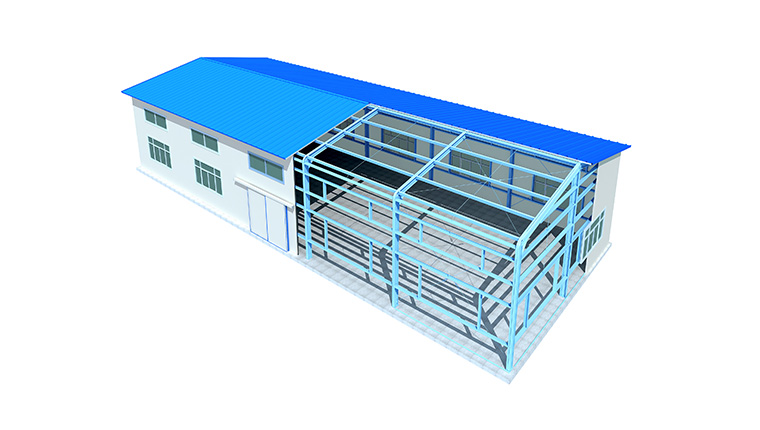
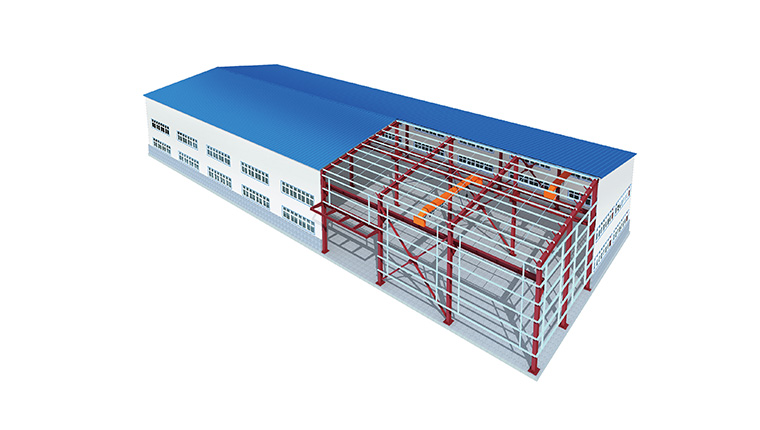
Beyond camps and emergencies, modular houses support warehouses, workshops, and logistics offices. Light steel modular systems are particularly effective here, providing large spans and flexible interior layouts without excessive foundation work.
Technical Strengths That Matter for Modular Houses in Turkey
Climate adaptability and structural performance
Turkey’s climate varies significantly—from coastal humidity to inland temperature extremes. Modular houses designed for international deployment typically integrate insulation, corrosion protection, and structural reinforcement to address these variations.
Industry experience confirms that well-engineered modular units are designed to “adapt to a series of climates,” ensuring consistent performance across regions. This adaptability reduces the need for extensive redesign when projects shift locations.
Speed, standardization, and quality control
One of the most underestimated advantages of modular housing is quality consistency. Factory production allows for standardized processes, controlled inspections, and repeatable results. Compared with traditional site construction, this approach minimizes rework and delays.
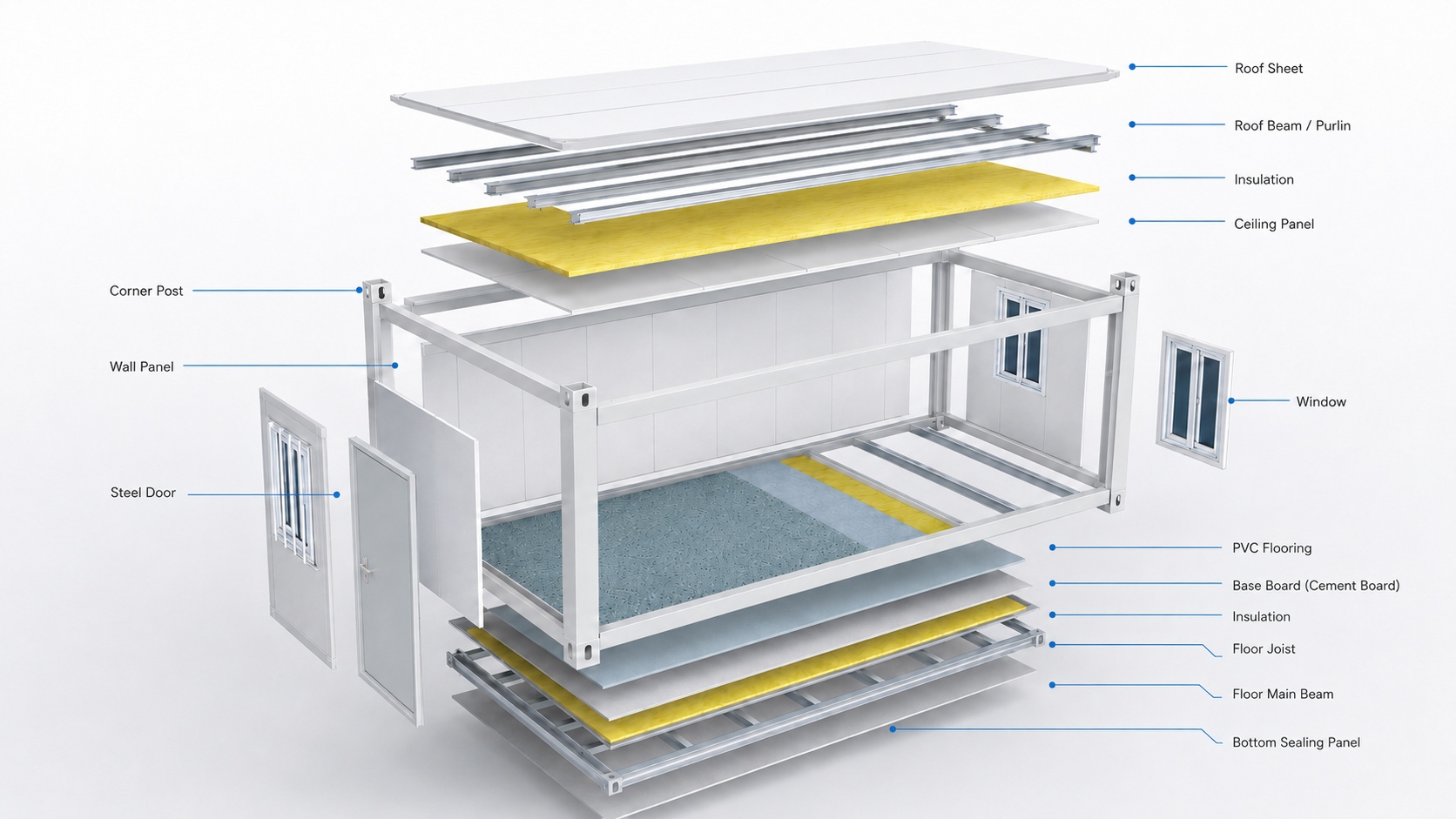
Moreover, modular houses are typically 90% factory-finished, with on-site work limited to assembly. This dramatically shortens project timelines and reduces dependency on local labor availability—a significant advantage for international contractors operating in Turkey.
Chengdong’s Role in the Global Modular Housing Supply Chain
Chengdong as a manufacturing and logistics powerhouse
Chengdong is not just a city; it is an industrial ecosystem. As a major manufacturing hub in western China, Chengdong supports advanced steel processing, modular fabrication, and integrated supply chains. Its rail and port connections enable efficient export to Europe and the Middle East.
For modular house projects serving Turkey, Chengdong offers a balance between manufacturing scale and engineering customization. This combination allows suppliers to deliver standardized systems while still adapting layouts to project-specific requirements.
From Chengdong to Turkey: how global delivery works
In practice, modular units manufactured in Chengdong are shipped in optimized packaging, reducing transport volume and cost. Once delivered, local installation teams can assemble the structures rapidly, aligning with tight project schedules.
This global workflow demonstrates how modern modular housing is no longer bound by geography. Instead, it operates as a distributed production and deployment system, with Chengdong playing a key upstream role.
Chengdong’s Integrated Modular House Solutions for the Turkish Market
Product systems aligned with engineering camp needs
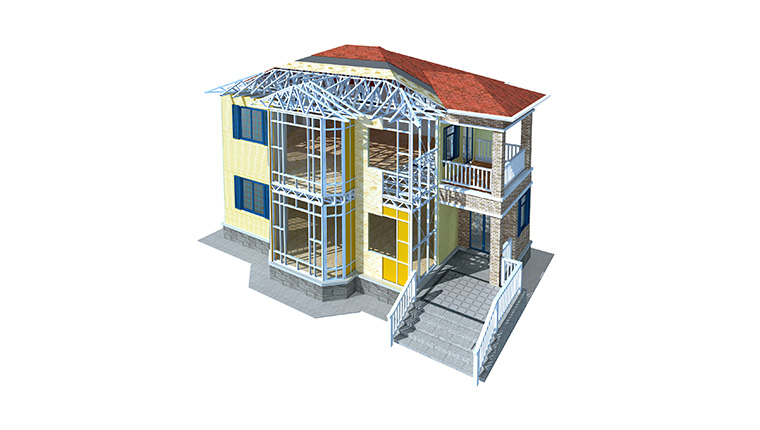
Chengdong focuses on integrated housing systems designed for engineering camps and industrial use. Its modular house portfolio includes container-based units, light steel structures, and specialized functional modules. These systems are designed for repeated use, long service life, and efficient relocation.
Industry descriptions highlight that modular housing products can serve as “long-term, reusable assets rather than one-off temporary buildings,” a perspective that aligns with Chengdong’s product philosophy
EPC thinking and one-stop delivery
Rather than supplying isolated products, Chengdong approaches projects with EPC logic—covering planning, design coordination, manufacturing, delivery, and installation support. This integrated approach reduces the burden on project owners and improves overall execution efficiency.
For Turkish projects involving overseas contractors, this one-stop delivery model simplifies communication and risk management, particularly in multi-site or multi-phase developments.
How to Choose a Reliable Modular House Supplier for Turkey
What international contractors should evaluate
Selecting a modular house supplier is not just about product specifications. Buyers should assess manufacturing capacity, international project experience, logistics planning, and after-delivery support. Suppliers with proven global delivery capabilities are better equipped to handle cross-border challenges.
Avoiding common procurement risks
Common risks include inconsistent quality, unclear responsibility boundaries, and limited post-delivery support. Modular housing works best when suppliers treat it as a system solution rather than a standalone product.
As industry practice consistently shows, integrated solutions outperform fragmented sourcing—especially in complex international environments like Turkey.
FAQ
What types of projects in Turkey are best suited for modular houses?
Modular houses are particularly well suited for engineering-driven projects in Turkey, such as construction camps, infrastructure developments, energy projects, and industrial facilities. These projects typically require fast deployment, predictable schedules, and standardized accommodation or office space. Because modular houses are factory-produced and assembled on site, they integrate smoothly into EPC-style project management and support both temporary and semi-permanent use.
Are modular houses suitable for Turkey’s diverse climate conditions?
Yes. Modular houses designed for international projects are engineered to perform across a wide range of climates. In Turkey, this includes coastal humidity, inland temperature variations, and windy or seismic regions. Through structural reinforcement, insulation systems, and corrosion-resistant materials, modular houses can maintain stable performance while meeting project-specific environmental requirements.
How does a modular house differ from a container house in Turkish projects?
A container house is one type of modular house, usually based on standardized steel box units optimized for transportation and stacking. A modular house, in a broader sense, may also include light steel structures or customized modules designed for larger spans or specialized functions. In Turkish engineering projects, container houses are often used for accommodation and offices, while steel modular systems are preferred for dining halls, warehouses, or workshops.
Can modular houses be reused across multiple projects in Turkey or nearby regions?
Reusability is one of the key advantages of modular houses. Well-designed systems can be dismantled, transported, and reassembled multiple times without significant performance loss. For international contractors operating in Turkey and neighboring regions, this makes modular houses a long-term asset rather than a one-time expense, supporting better lifecycle cost control.
What should international buyers consider when sourcing modular houses for Turkey?
Beyond basic product specifications, buyers should evaluate the supplier’s manufacturing capacity, international delivery experience, and ability to provide integrated solutions. Factors such as standardized production, logistics planning, installation guidance, and coordination with EPC workflows are critical for ensuring smooth project execution in Turkey.
How do modular houses support faster project schedules compared to traditional construction?
Most modular houses are largely completed in the factory, with on-site work focused on assembly rather than full construction. This approach significantly reduces weather-related delays, on-site labor dependency, and coordination complexity. For projects in Turkey with tight timelines, modular houses help ensure that accommodation and operational facilities are ready when construction activities begin.




 More
More
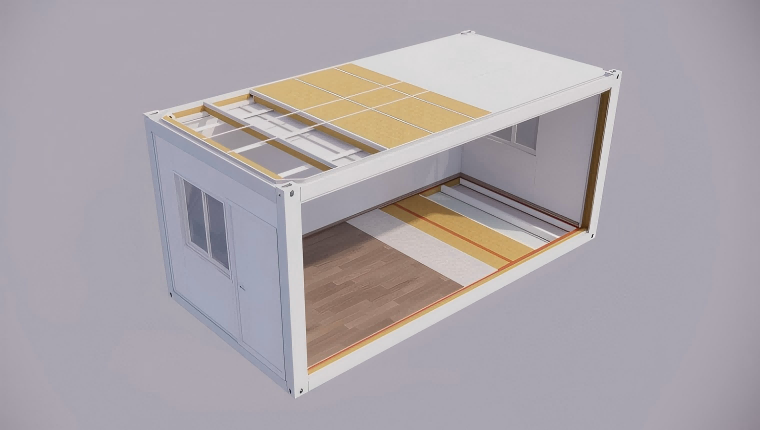












![Top Advantages of Modular Construction Explained [2025]](/uploads/upload/images/20250424/0fb390068474145a09a8c0504c73b1d2.png)
 May 09, 2025