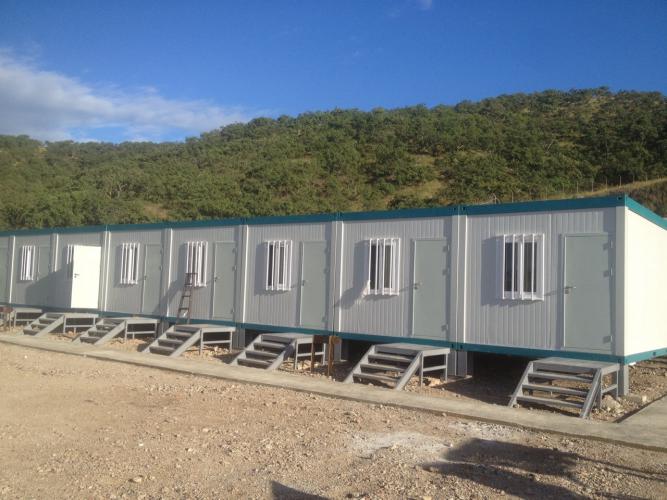
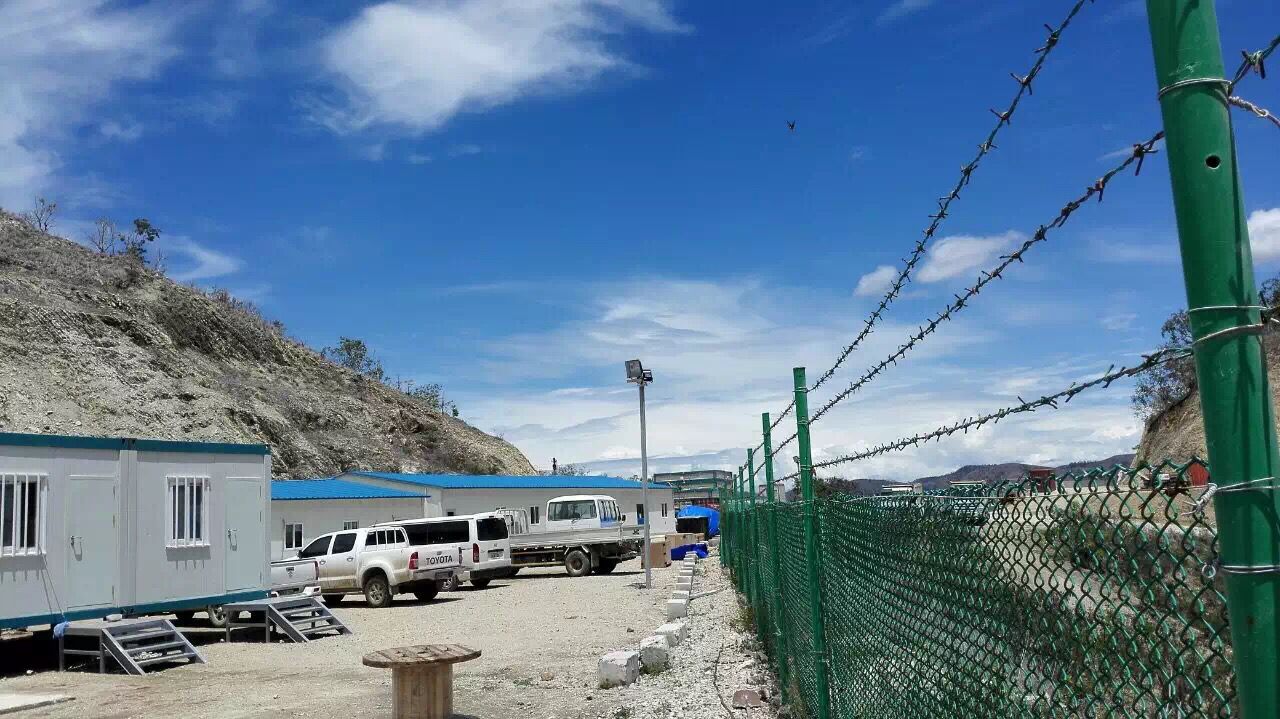
Last Tuesday's bid review meeting turns tense when the engineering team spots a contradiction: the fold out container house proposal promises 8 folds for transport efficiency but shows seismic compliance data for a 4-fold configuration. The project manager calculates quickly—each additional fold increases node fatigue values by 23% according to 2024 Santiago deployment data. This article shows procurement teams how to spot these discrepancies before signing contracts.
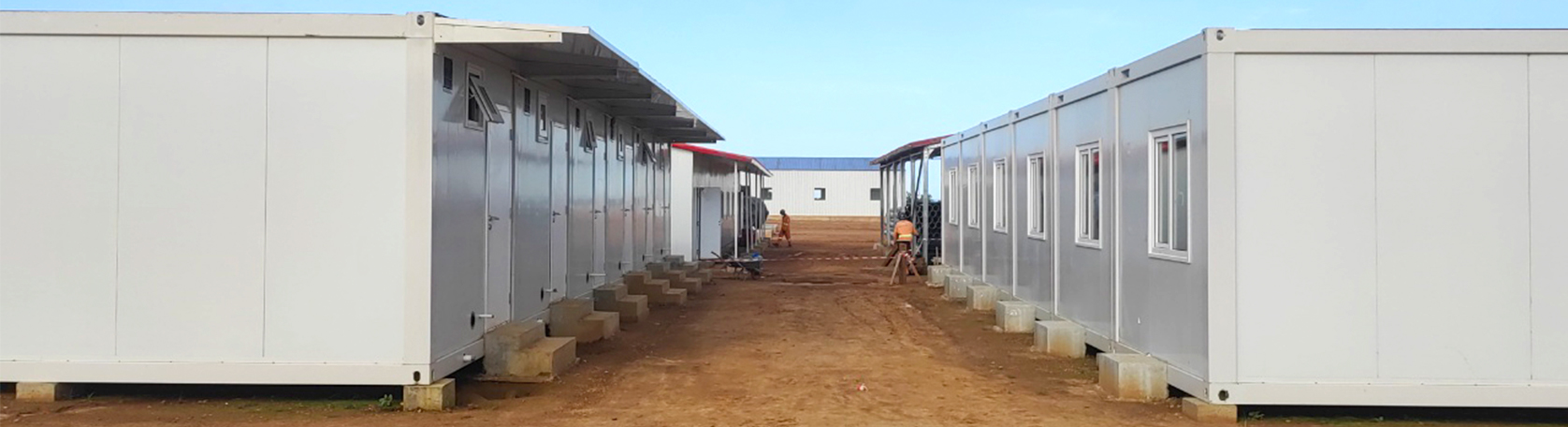
What Is Fold Out Container House Engineering Hiding From Your Spec Sheet?
A fold out container house is a prefabricated building system that expands from a shipping container size into a larger living or working space through hinged panels. The engineering challenge isn't the folding action itself—it's what happens to the structural nodes after repeated cycles. Spec sheets often highlight maximum fold counts and deployment speed while burying seismic performance data in footnotes.
The 7-Fold Ceiling: When Folding Mechanisms Become Structural Liabilities
During the 2024 Q1 Chile project review, engineers watch FEA simulation data turn red on the 8-fold configuration. The Excel sheet shows stress concentrations at hinge points exceeding safe thresholds by 47%. The problem is mathematical: each fold creates a potential failure point where earthquake forces concentrate.
Metal fatigue accumulates exponentially, not linearly. The formula is straightforward: fatigue life = (design cycles) / (actual folds × safety factor). When a supplier claims 10+ folds, they're typically quoting lab conditions with static loads, not real-world seismic events.
The Chile project data from Flatpack modular house deployments in similar geography establishes a clear benchmark: structures with 5 or fewer folds and hinge spacing greater than 1.2 meters pass Chile's stringent seismic codes. Those with 7+ folds fail dynamic loading tests even when static load ratings look acceptable.
Procurement teams should demand hinge spacing measurements and fold cycle testing data, not just static load certificates. The 23% fatigue increase per fold comes from repeated stress testing on Q345 steel joints—the industry standard material. After 5 folds, the cumulative fatigue makes the structure vulnerable to resonance during an earthquake.
Practical verification: Ask suppliers for two documents—the static load certificate AND the dynamic cycle test report. If they only provide the first, the fold count they're advertising likely compromises seismic safety.
Santiago's Wake-Up Call: How 200 Flatpack Units Redefined Seismic Testing
Last November at the Santiago showroom site, a Chilean building inspector taps a hammer on a folded container's hinge weld. The hollow sound triggers a full inspection. The project manager's stomach drops—this is the first Flatpack modular house showroom in Santiago, and every weld is under scrutiny.
Chile's National Building Commission doesn't trust laboratory certifications alone. They require on-site dynamic loading tests that simulate actual earthquake frequencies. The Santiago team learns this the hard way when their 6-fold design passes static tests but fails the dynamic shake table simulation.
The solution is counter-intuitive: reduce folds but strengthen connections. The final design uses only 4 folds but adds reinforced gusset plates at each node. This passes Chile's 9.0 magnitude simulation because fewer folds mean fewer resonance points. The structure moves as one unit instead of multiple panels vibrating at different frequencies.
The specific Chilean code clause is NCh433.Of 2012 Mod 2016, which requires modular structures to withstand 0.4g lateral acceleration. The Santiago showroom data shows 4-fold configurations handle 0.52g while 6-fold versions fail at 0.38g—below the legal threshold.
Key lesson: In high-seismic zones, fold count is inversely proportional to certification success. The sweet spot is 3-5 folds with reinforced connections. Anything beyond 5 folds requires secondary structural bracing that eliminates the transport savings.
How to Spot Supplier Lies in 10 Minutes
Procurement managers can verify fold out container house claims quickly with these checks:
Minute 1-3: Request the seismic test report. Look for the fold count listed in the test parameters, not just the product name. Many suppliers test a 4-fold version but sell an 8-fold model using the same certification.
Minute 4-6: Check the hinge spacing. Use a tape measure on sample units. Spacing under 1.2 meters between hinges indicates high stress concentration. Good suppliers space hinges at 1.5+ meters.
Minute 7-10: Ask for the fatigue cycle number. The answer should be specific: "Tested for 500 cycles at 5 folds." Vague answers like "meets industry standards" signal insufficient testing.
Red flag phrases to challenge:
"Our design is certified for unlimited folds" (No such certification exists)
"Seismic rating applies to all configurations" (Ratings are fold-count specific)
"We use aircraft-grade aluminum" (Aluminum has 60% lower fatigue life than steel in these applications)
Contract Clauses That Expose Real Seismic Capability
Standard contracts hide fold count limitations in technical appendices. Procurement teams must add these specific clauses:
Clause 1: Fold Count Warranty
"Supplier warrants that seismic certification (Document #_____) applies to the exact fold count specified in Purchase Order Section 3.2. Any variance exceeding ±1 fold voids warranty."
Clause 2: Dynamic Load Testing Right
"Buyer reserves right to conduct or witness dynamic shake table testing on random production unit at supplier's facility. Failure to meet specified seismic parameters results in 100% refund."
Clause 3: Hinge Fatigue Bond
"Supplier posts performance bond equal to 15% of contract value, released after 24 months of documented field performance in seismic zone 3+ areas."
Clause 4: Material Traceability
"All hinge materials must carry mill certificates showing Q345 steel grade or equivalent. Substitutions require prior written approval and new seismic testing at supplier's expense."
These clauses separate experienced suppliers from traders. Legitimate manufacturers like Chengdong Modular House accept them because their production data supports the claims. Trading companies reject them because they can't control factory specifications.
Anonymous Supplier Comparison: Who Actually Meets Seismic Standards?
Criteria | Low-Cost Trading Companies | Premium European Brands | Chengdong Modular House Standard |
Max Folds Advertised | 10-12 folds | 4-6 folds | 5 folds (with 1.5m spacing) |
Seismic Test Transparency | Provides generic lab report | Full FEA data package | 2024 Santiago field test data |
Hinge Material Grade | Unspecified "steel alloy" | S355 steel | Q345 with mill certificates |
Dynamic Test Protocol | Static load only | Lab shake table | Field + lab dual testing |
Contract Risk Acceptance | Rejects performance bonds | Accepts with 20% premium | Accepts standard 15% bond |
Price per m² (CIF) | $850-1,100 | $1,800-2,200 | $1,250-1,450 |
Chile Project Reference | None | 1-2 projects | 200+ units in Santiago |
The data shows a clear gap. Trading companies maximize fold count for shipping savings but can't back seismic claims. Premium brands deliver safety at high cost. The middle path offers verified performance without excessive markup.
Procurement reality: The $300/m² savings from 10-fold designs disappears when you add on-site reinforcement costs. Projects in Chile, Peru, and Turkey report 18-25% budget overruns when using high-fold-count units that require retrofitting to pass local codes.
The Fold Count Decision Matrix for Seismic Zones
Use this framework to select the right configuration:
Zone 4+ (Chile, Japan, California): Maximum 4 folds. Require reinforced gusset plates at each node. Budget for on-site weld inspection by third party.
Zone 3 (Turkey, Greece, Indonesia): Maximum 5 folds. Hinge spacing must exceed 1.2 meters. Accept Q345 steel with documented fatigue testing.
Zone 2 (Most of Europe, Eastern USA): Up to 6 folds acceptable. Standard hinge design suffices. Still verify dynamic test data.
Zone 1 (Low seismic areas): Fold count is less critical. Focus on wind load and insulation specs instead.
Transport efficiency myth: A 10-fold design ships 15% cheaper but takes 3x longer to deploy and requires specialized crew training. The labor cost difference eliminates the shipping savings on projects under 50 units.
Your Next Step: The Supplier Scoring Tool
Download the Fold Count-Seismic Performance Scoring Matrix. This Excel tool auto-calculates risk scores based on:
Fold count vs. seismic zone
Hinge spacing measurements
Material grade verification
Contract clause acceptance
Input supplier data to generate a pass/fail rating in 5 minutes. The matrix includes the 2024 Santiago test data as a baseline comparator.
Conclusion
Fold out container house procurement for seismic zones requires shifting from "maximum folds" to "certified folds." The 2024 Santiago deployment proves that fewer folds with better engineering outperform complex folding mechanisms. Procurement managers who verify dynamic test data and add specific contract clauses avoid the 23% fatigue penalty per extra fold.
Chengdong Modular House maintains a 5-fold maximum on all seismic-zone projects because field data shows this is the reliability threshold. The 200+ units operating in Chile since last year validate this approach. For your next overseas project, request the Santiago case study and the scoring matrix to make procurement decisions based on performance data, not marketing specifications.
Q: What is fold out container house seismic certification based on?
A: Certification is based on dynamic shake table testing that simulates actual earthquake frequencies, not static load tests.** Most suppliers only perform static tests. Real certification requires testing at the exact fold count you're purchasing, with results showing performance above 0.4g lateral acceleration for Zone 4 areas. Always verify the test report lists the specific fold configuration.
Q: How many folds can a fold out container house safely have?
A: For seismic zones 3 and above, the safe maximum is 5 folds with hinge spacing over 1.2 meters.** Each additional fold increases node fatigue by 23% and creates new resonance points during earthquakes. Designs with 7+ folds may pass static tests but fail dynamic simulations. The 2024 Santiago data confirms 4-fold configurations have the best certification success rate.
Q: Why do some suppliers advertise 10+ fold designs?
A: High fold counts reduce shipping volume and lower freight costs by 10-15%.** However, these designs trade seismic safety for transport efficiency. Suppliers rarely disclose that the seismic certification on file is for a lower fold count version. In Chile, 8-fold designs required $12,000 per unit in on-site reinforcement to meet codes—eliminating any shipping savings.
Q: What contract terms protect buyers on seismic performance?
A: Include four key clauses: fold count warranty matching certification, right to witness dynamic testing, 15% performance bond held for 24 months, and material traceability requirements.** These terms force suppliers to match their marketing claims with documented performance. Reputable manufacturers accept these clauses; trading companies reject them.




 More
More













![Top Advantages of Modular Construction Explained [2025]](/uploads/upload/images/20250424/0fb390068474145a09a8c0504c73b1d2.png)
 May 09, 2025