Introduction
The architectural landscape is undergoing a transformative shift as innovative shipping container buildings emerge as a defining trend in sustainable construction for 2025 and beyond. What once appeared as industrial relics has evolved into a sophisticated building solution that seamlessly merges environmental responsibility with economic pragmatism. The global modular construction market, valued at USD 112.54 billion in 2025, is projected to expand to USD 214.76 billion by 2034—a compelling testament to the industry's explosive growth. This evolution reflects a fundamental reimagining of how we approach sustainable architecture, affordable housing, and resilient infrastructure in an increasingly urbanized world.
The rise of commercial shipping container buildings represents far more than a trendy design choice. It reflects a genuine response to pressing global challenges: housing shortages affecting 1.6 billion people worldwide, escalating climate risks requiring disaster-resilient solutions, and the urgent imperative to reduce construction waste and carbon emissions. In 2025, innovative shipping container buildings have become the answer that architects, developers, and environmentally conscious communities have been seeking—combining sustainability, affordability, speed of deployment, and architectural flexibility in a single integrated solution.
The Sustainability Imperative: Why Container Buildings Lead in Green Architecture
Sustainability has transitioned from a marketing advantage to an absolute necessity in construction. The 2025 container building trend is fundamentally rooted in circular economy principles that directly address environmental degradation caused by traditional construction methods. Unlike conventional building practices that consume vast quantities of virgin materials and generate substantial construction waste, shipping container buildings leverage repurposed steel structures that have already served their industrial purpose, transforming them into functional, comfortable living and working spaces.
Embodied Carbon and Lifecycle Environmental Benefits
The environmental calculus strongly favors container-based construction. A comprehensive lifecycle assessment of modular construction projects has demonstrated approximately 35% reduction in embodied carbon compared to traditional stick-built construction. This reduction stems from multiple factors: the elimination of raw material extraction for structural components, factory-controlled manufacturing that minimizes waste, optimized transportation logistics, and the reusability of container units at project conclusion.
The structural material itself—Corten steel—provides exceptional durability that extends operational lifespan and reduces replacement frequency. With a lifespan of 15-25 years in marine environments and potential service life exceeding 40 years with proper maintenance, container buildings deliver long-term environmental value through minimized lifecycle replacement cycles. The self-healing patina that develops on Corten steel provides up to 8 times greater corrosion resistance than standard carbon steel, reducing maintenance requirements and associated environmental costs.
Integrated Sustainable Systems
The 2025 trend toward innovative shipping container buildings incorporates comprehensive sustainable systems that enhance environmental performance beyond the structural shell. Factory-integrated renewable energy readiness has become standard, with solar photovoltaic panels, solar thermal collectors, and battery storage systems increasingly pre-wired into modules before delivery to project sites. Rainwater harvesting systems, greywater recycling infrastructure, and low-flow water fixtures are now integrated during factory fabrication rather than added post-construction, improving installation efficiency and system performance.
High-performance insulation systems represent another critical sustainability component. Closed-cell spray foam insulation achieving R-6 to R-7 per inch thermal resistance reduces heating and cooling energy consumption by 30-50% compared to conventional construction methods. This dramatic energy reduction directly translates to operational carbon emissions reduction, delivering decades of environmental benefit that far exceeds the initial embodied carbon of the structure itself.
Smart Technology Integration: The Intelligence Revolution in Container Architecture
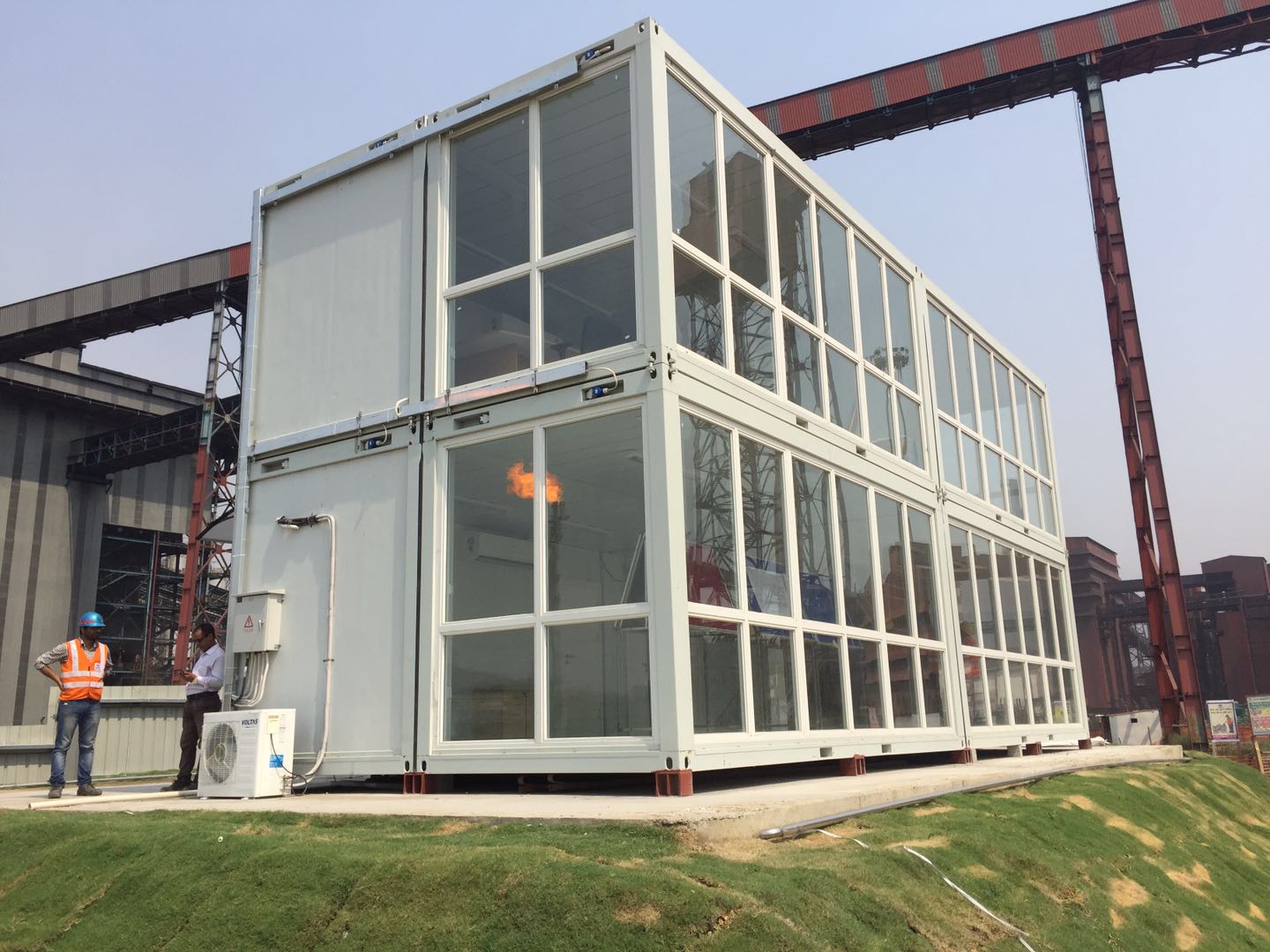
The convergence of modular construction with advanced smart technology represents one of the most significant trends reshaping container buildings in 2025. Beyond the physical improvements in sustainability and durability, container buildings now function as intelligent integrated systems that optimize energy consumption, enhance occupant comfort, and provide real-time operational insights through Internet of Things (IoT) connectivity.
IoT-Enabled Operational Efficiency
Leading manufacturers have integrated IoT sensors and smart control systems throughout modern container buildings, enabling remote monitoring and optimization of energy usage, climate control, and security systems. These intelligent systems transcend traditional building automation by employing machine learning algorithms that analyze occupancy patterns, weather forecasts, and utility costs to optimize heating, cooling, and electrical consumption in real-time.
Smart thermostats learn residents' or workers' patterns and automatically adjust temperatures to maintain comfort while minimizing energy waste. Intelligent lighting systems detect natural light levels and occupancy, automatically dimming or extinguishing artificial lighting when not required. These technologies, individually effective, become exponentially powerful when integrated into comprehensive building management systems that coordinate all operational parameters.
Energy Management and Grid Interaction
The 2025 trend emphasizes bidirectional integration between container buildings and electrical grids through sophisticated energy management systems. Battery storage integrated into modular units allows buildings to absorb excess solar energy during peak generation periods and provide power during high-demand periods, optimizing grid utilization and potentially generating revenue through demand-response programs.
Smart meters and advanced analytics platforms provide building operators with granular consumption data, identifying efficiency opportunities and quantifying the impact of occupant behavior on operational costs. This transparency creates powerful incentives for conscious energy management while providing building owners with actionable insights for continuous operational improvement.
Climate Resilience and Disaster-Ready Architecture
As extreme weather events accelerate in frequency and intensity, climate resilience has transitioned from optional enhancement to fundamental requirement in responsible architecture. Shipping container buildings demonstrate inherent structural advantages that position them as superior solutions for climate-vulnerable regions and industries requiring operational continuity during environmental disruptions.
Superior Structural Performance in Extreme Weather
The welded steel construction of shipping containers provides exceptional resistance to high winds, heavy precipitation, and seismic forces that damage conventional wooden-frame construction. Studies document that modular buildings constructed to exacting factory standards survive hurricanes and earthquakes at significantly higher rates than traditionally built structures. This superior performance derives from factory quality control that ensures consistent structural connections and materials compared to site-built construction subject to variable weather conditions and labor quality.
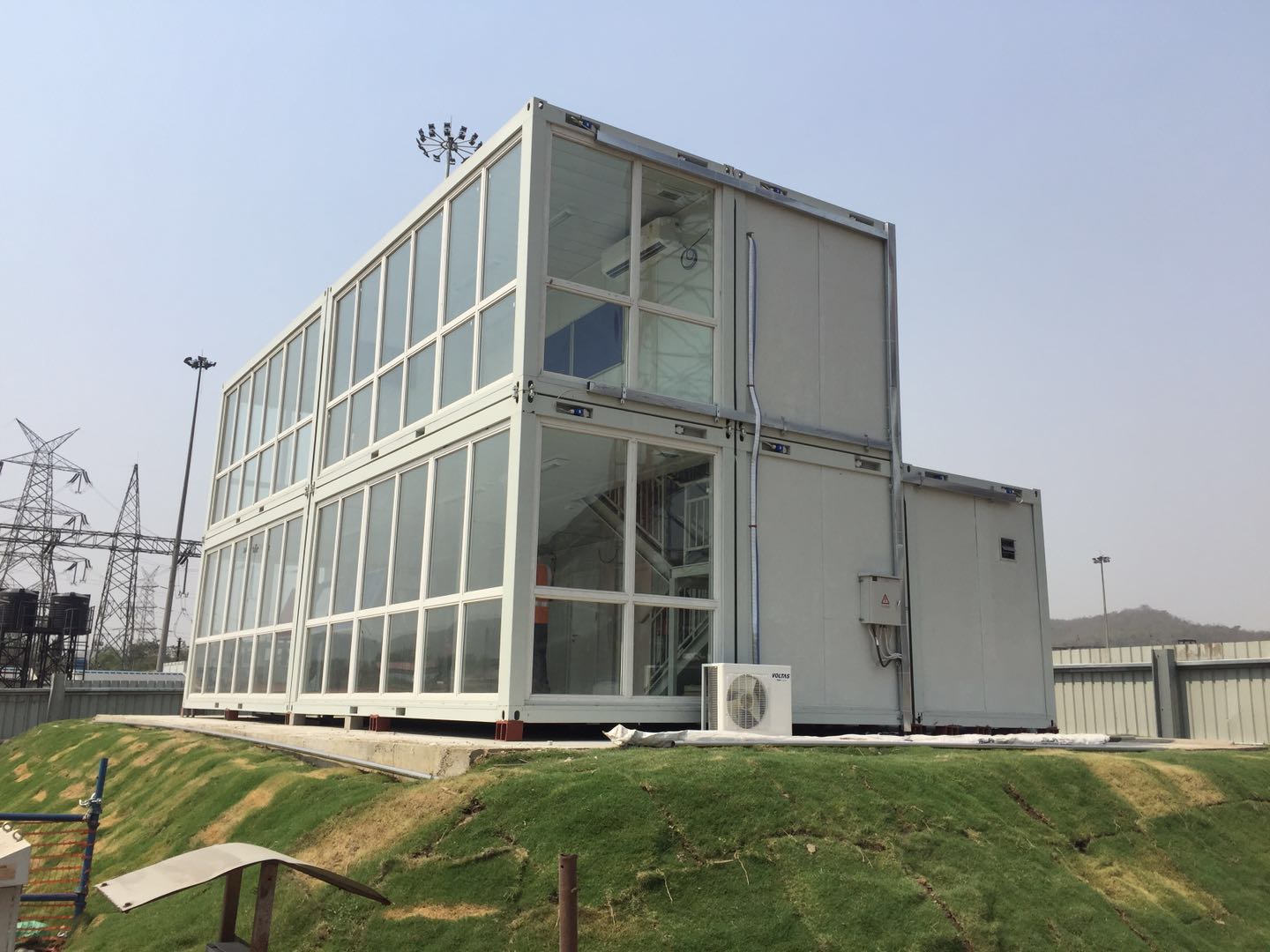
The ability to stack container units vertically up to three stories multiplies load distribution pathways, creating redundant structural systems that maintain integrity even when individual components experience extreme stress. This inherent redundancy provides safety margins that traditional construction cannot match, particularly critical in regions facing increasing hurricane frequency—research indicates that the most damaging U.S. hurricanes are now three times more frequent than 100 years ago.
Rapid Deployment for Emergency Response
The 2025 trend emphasizes container buildings' capacity for rapid emergency deployment that addresses immediate humanitarian needs. Factory completion prior to transportation eliminates time-consuming on-site construction when communities face urgent housing requirements following disasters. Modular units can be positioned and connected within days of arrival, transforming emergency response timelines from months to weeks.
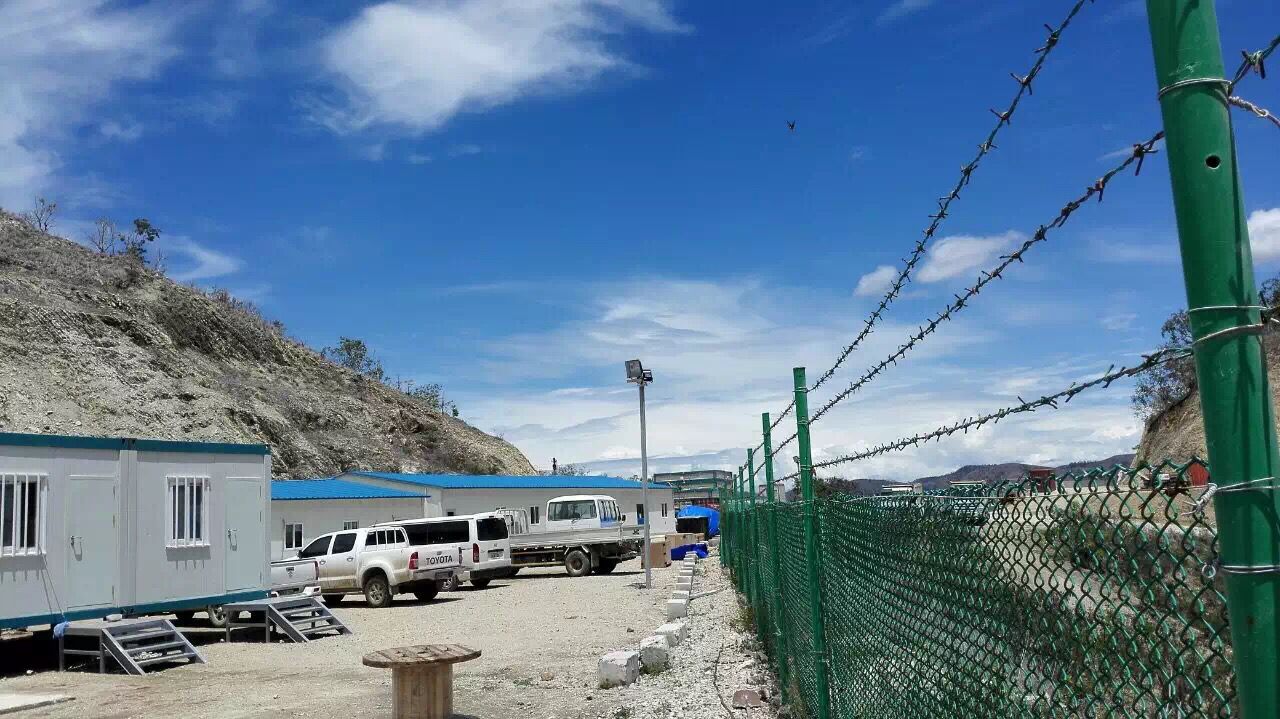
This rapid deployment capability extends beyond humanitarian applications to energy and mining industries operating in remote locations where project timelines are critical to operational and financial success. A single delay in camp completion cascades across entire projects, delaying revenue generation and increasing costs exponentially. Container buildings' ability to achieve full functionality within weeks rather than months represents substantial financial value independent of sustainability considerations.
Market Growth and Commercial Applications: The Business Case for Container Architecture
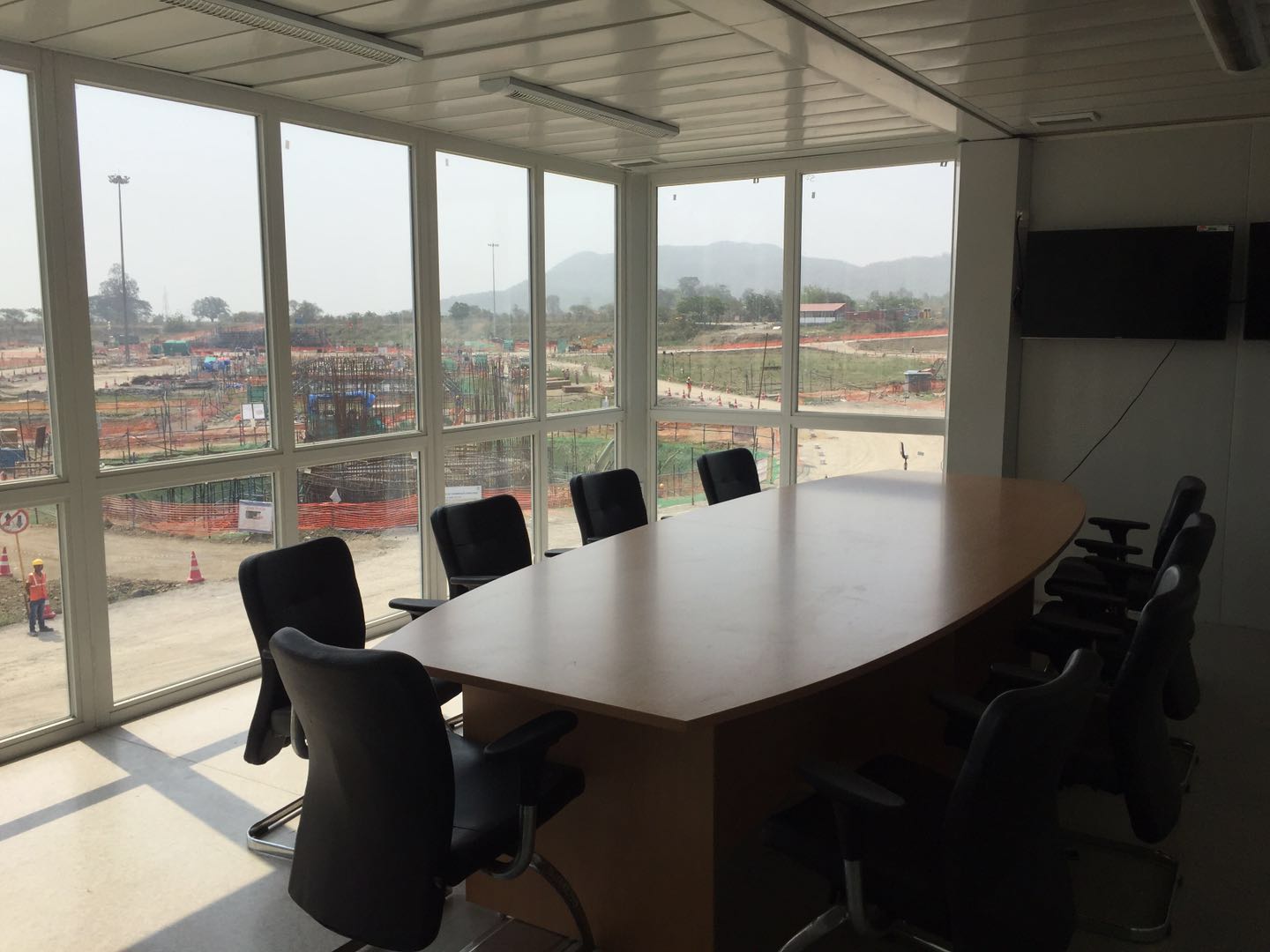
The business fundamentals driving container building adoption have become increasingly compelling, with major corporations and government agencies recognizing financial advantages that complement environmental benefits. The global container homes market is projected to expand from USD 70.49 billion in 2025 to USD 126.57 billion by 2034, reflecting compound annual growth of 6.72%. This expansion extends far beyond residential applications to encompass office spaces, commercial establishments, healthcare facilities, and educational institutions.
Cost Advantage and Project Economics
The economic case for container buildings has strengthened dramatically. Commercial container offices cost approximately $100 per square foot compared to $250 per square foot for conventional office construction—a 60% cost reduction that directly impacts project financial viability. These savings accumulate across labor, materials, and time, with factory-built modular construction reducing building costs by up to 20% while simultaneously shortening project timelines by up to 50%.
The rapid deployment timeline produces cascading financial benefits in project-based industries. Engineering camps for mining operations, oil and gas infrastructure projects, and renewable energy installations represent billions of dollars in global investment annually. Even modest acceleration of project completion timelines translates to millions in deferred financing costs, accelerated revenue generation, and competitive advantage in time-sensitive markets.
Diversified Commercial Applications
The 2025 trend encompasses unprecedented diversification of container building applications across commercial sectors. Pop-up retail spaces leverage container buildings' mobility and rapid deployment to test market opportunities in new locations with minimal capital investment. Restaurants and food service establishments utilize container structures to pilot concepts before committing to permanent facilities. Remote work facilities, increasingly critical following lessons from pandemic-driven operational disruptions, employ container buildings to rapidly expand workspace capacity in response to changing employment patterns.
The healthcare sector has embraced container buildings for field clinics, temporary surgical facilities, and emergency medical infrastructure. Educational institutions deploy modular container buildings to address capacity constraints in rapidly growing communities without capital-intensive permanent construction. This portfolio of applications reflects the fundamental versatility of modular container architecture to address diverse market demands simultaneously.
Material Innovation and Advanced Building Systems
The material science underlying modern container buildings has advanced dramatically, introducing capabilities that previous generations could not achieve. The 2025 trend emphasizes both incremental improvements in established materials and revolutionary innovations in emerging technologies.
Next-Generation Materials Entering the Market
Graphene-infused composite panels promise exceptional strength-to-weight ratios, enabling structural capabilities previously requiring heavier steel components. Transparent solar glass technology integrates photovoltaic energy generation into window and transparent wall systems, transforming architectural surfaces into power-generating elements while maintaining transparency and natural light transmission. Self-healing concrete incorporating capsules of repair compounds automatically seals microfractures before they develop into structural damage, extending structural lifespan and reducing maintenance requirements.
These advanced materials reduce structural weight, decrease transportation costs, and enhance performance characteristics across multiple dimensions. The capacity to integrate advanced materials into factory-controlled manufacturing environments ensures consistent quality and performance that site-based installation cannot replicate.
Lightweight Steel Innovation
The adoption of cold-formed lightweight steel frames represents a material innovation that reduces structural weight by 30-40% compared to traditional heavy steel components while maintaining equivalent load-bearing capacity. Multiple lightweight steel frames fit into single shipping containers, drastically reducing transportation requirements and logistics costs—a consideration of paramount importance for international projects and remote installations.
The precision manufacturing of cold-formed steel components through computer numerical control (CNC) machining reduces material waste while ensuring dimensional consistency that enables seamless assembly and field connection. These precision-manufactured frames reduce on-site labor requirements and construction timelines while improving overall structural performance.
Design Flexibility and Customization: Meeting Diverse Market Requirements
The 2025 trend emphasizes unprecedented customization capabilities that address specific regional requirements, climate conditions, and functional needs without requiring extensive custom engineering. Modular design standards enable clients to tailor internal layouts, integrate specialized systems, and configure unit arrangements to meet precise project requirements while maintaining factory efficiency and cost advantages.
Modular Configuration Systems
Rapid unfolding technologies enable container units to expand post-delivery, optimizing shipping efficiency while dramatically increasing usable floor area. Some innovative designs incorporate hydraulic or pneumatic expansion systems that double interior floor area within hours of arrival, transforming what appeared as standard shipping containers into substantially larger functional spaces.
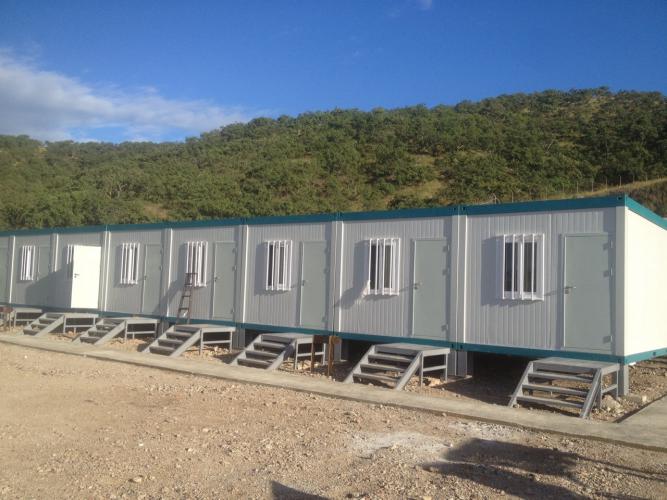
Horizontal and vertical stacking configurations create opportunities for multi-story complexes, open-plan facilities, and specialized functional arrangements previously impossible with container constraints. A single mining camp might incorporate residential dormitories, administrative offices, medical facilities, dining halls, and workshop spaces—each optimized for specific functions while maintaining structural and thermal integration.
Adaptability to Regional Conditions
Container buildings integrate adaptations for specific environmental and operational requirements without compromising core functionality. Sandstorm-resistant sealing systems protect equipment and personnel in desert environments. Hurricane-reinforced connection systems and aerodynamic cladding systems enhance wind resistance in tropical and coastal regions. Extreme cold-weather insulation packages and specialized HVAC systems enable operations in subarctic environments where conventional construction becomes prohibitively expensive.
This regional adaptability extends to regulatory compliance, with container buildings customized to meet specific building codes and certification requirements across different jurisdictions. Factory engineers integrate required systems and materials before shipment, ensuring compliance upon arrival rather than requiring post-installation modifications.
Global Market Dynamics and Industry Leadership
China has emerged as the dominant global producer of container buildings, accounting for over half the world's container house production. The Chinese market itself is projected to exceed 42 billion yuan by 2025, driven by urbanization, affordable housing demand, and government support for sustainable construction practices. Leading manufacturers have established production capacities exceeding 200,000 units annually with distribution networks spanning 120+ countries.
International projects showcase the technology's maturity and reliability. Major engineering firms have deployed container camps across African oil and gas projects, South American mining operations, and Middle Eastern renewable energy installations. Government agencies have adopted container buildings for disaster response, military applications, and temporary administrative facilities. This extensive global deployment provides compelling evidence of technical performance across diverse environmental and operational conditions.
Regulatory Evolution and Market Acceleration
While regulatory challenges previously constrained container building adoption—with over 60% of projects experiencing delays due to zoning restrictions—jurisdictions increasingly recognize benefits and are adapting regulations to encourage deployment. Cities implementing flexible zoning regulations have documented 30% increases in container-based development. This regulatory evolution removes a historically significant barrier to market expansion while improving project economics through reduced permitting delays and associated costs.
Progressive jurisdictions are developing streamlined approval processes specifically designed for modular construction, recognizing that standardized factory-built components offer superior quality assurance compared to variable site-built construction. This regulatory shift accelerates market growth while maintaining rigorous safety and performance standards.
The Future of Sustainable Urban Development
Looking forward, the 2025 trends in innovative shipping container buildings point toward fundamental transformation in how communities will be built, operated, and maintained. The convergence of sustainability imperatives, economic advantages, technological capabilities, and regulatory evolution creates conditions for explosive market growth over the coming decade.
Container buildings will increasingly form the foundational infrastructure of sustainable communities, providing rapid-deployment housing in response to climate migration, offering emergency response capabilities for disaster-impacted communities, and delivering affordable housing solutions that address global homelessness. Smart technology integration will enable buildings to function as active participants in electrical grids and water systems rather than passive consumers of resources. Climate resilience capabilities will ensure that critical infrastructure maintains functionality during the increasingly severe weather events that define the new climate reality.
The shift toward circular economy principles in container building manufacturing and operation represents a fundamental reimagining of the construction industry—one that measures success not merely in project completion and financial returns, but in lasting environmental benefit, resilient communities, and sustainable resource stewardship. For organizations seeking to lead in sustainable development, container building solutions increasingly represent not merely an option, but an imperative.
Conclusion: Embracing Innovation for a Sustainable Future
The 2025 trends in innovative shipping container buildings and sustainable architecture represent a maturation of technology, market validation through large-scale deployment, and alignment with fundamental societal requirements for affordability, sustainability, and resilience. From the integration of advanced smart technology to the development of next-generation sustainable materials, from climate-resilient structural design to rapid emergency deployment capabilities, container buildings have evolved into comprehensive solutions addressing the most pressing challenges facing communities and industries worldwide.
The financial case has become compelling: 20-30% cost reductions, 50% timeline acceleration, and long-term operational savings through energy efficiency. The environmental case is equally persuasive: 35% embodied carbon reduction, renewable energy integration, and circular economy principles that eliminate construction waste. The operational case is decisive: rapid deployment, superior climate resilience, and flexibility to accommodate diverse functional requirements.
For those seeking to engage with cutting-edge sustainable architecture solutions, organizations like Chengdong Modular House represent industry leadership—leveraging two decades of experience across 2,000+ projects in 100+ countries, holding ISO 9001 and ISO 14001 certifications, and maintaining partnerships with global leaders like Algeco Scotsman. Visit Chengdong Modular House to explore how innovative container solutions can address your specific project requirements while advancing your sustainability commitments.
The future of construction is being built today through innovative shipping container architecture. The question for forward-thinking organizations is not whether to adopt these solutions, but how quickly they can deploy them to capture competitive advantage while advancing environmental stewardship.




 More
More











![Top Advantages of Modular Construction Explained [2025]](/uploads/upload/images/20250424/0fb390068474145a09a8c0504c73b1d2.png)
 May 09, 2025