Introduction
The United Arab Emirates stands at a critical crossroads. With a population growth rate exceeding 3% annually and rapid urbanization concentrated in Dubai, Abu Dhabi, and Sharjah, the traditional construction model is struggling to keep pace with demand. Urban sprawl—the uncontrolled expansion of cities into surrounding agricultural and natural areas—poses a significant threat to the UAE's environmental sustainability goals and long-term urban planning objectives.
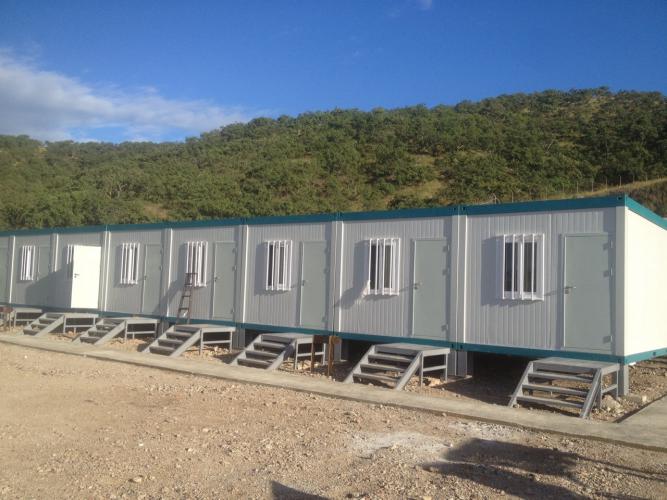
Container houses and modular construction represent a paradigm shift in how the UAE can address this challenge. Rather than expanding outward indefinitely, modular housing enables vertical development, land optimization, and resource efficiency that align with the UAE's National Climate Change Plan 2017-2050 and its commitment to becoming a global leader in sustainable development.
This comprehensive guide explores how modular construction, specifically container houses and prefabricated housing systems, is fundamentally reshaping urban development patterns across the UAE while delivering economic, environmental, and social benefits that traditional construction methods cannot match.
Understanding Urban Sprawl and Its Impact on the UAE
Urban sprawl occurs when cities expand rapidly into undeveloped land without adequate planning, creating a dispersed pattern of development characterized by low-density residential and commercial zones separated by vast distances. While growth is inevitable and necessary, uncontrolled sprawl creates several critical problems that the UAE is actively working to mitigate.
The Cost of Sprawl in the UAE Context
The UAE's rapid development over the past three decades has created pockets of sprawling development, particularly in the outer emirates and satellite communities. This expansion requires:
Infrastructure Investment: New roads, utilities, water treatment facilities, and power systems must be extended to reach dispersed populations, significantly increasing per-capita infrastructure costs.
Land Consumption: The UAE's limited arable land and precious desert ecosystems face pressure as development spreads. Once-pristine dunes and agricultural land are converted to low-density housing developments that consume far more acreage than compact, vertically-oriented communities.
Transportation Demands: Sprawled development patterns necessitate longer commutes, increased vehicular traffic, and higher carbon emissions—contradicting the UAE's Vision 2050 sustainability targets.
Environmental Degradation: Urban sprawl fragments natural habitats, increases water consumption for irrigation and cooling, and exacerbates the heat island effect in arid regions already experiencing temperatures exceeding 50°C in summer months.
Economic Inefficiency: Governments must invest in duplicate services—schools, clinics, shopping centers—across multiple sprawling zones rather than concentrating services in efficient, accessible hubs.
The GCC modular construction market, valued at $3.4 billion in 2023, is growing at approximately 8% annually—a direct response to the need for more efficient, sustainable development alternatives. The UAE prefabricated construction market alone is projected to reach AED 24.49 billion in 2025, reflecting the region's commitment to embracing smart building solutions.
How Modular Construction Combats Urban Sprawl
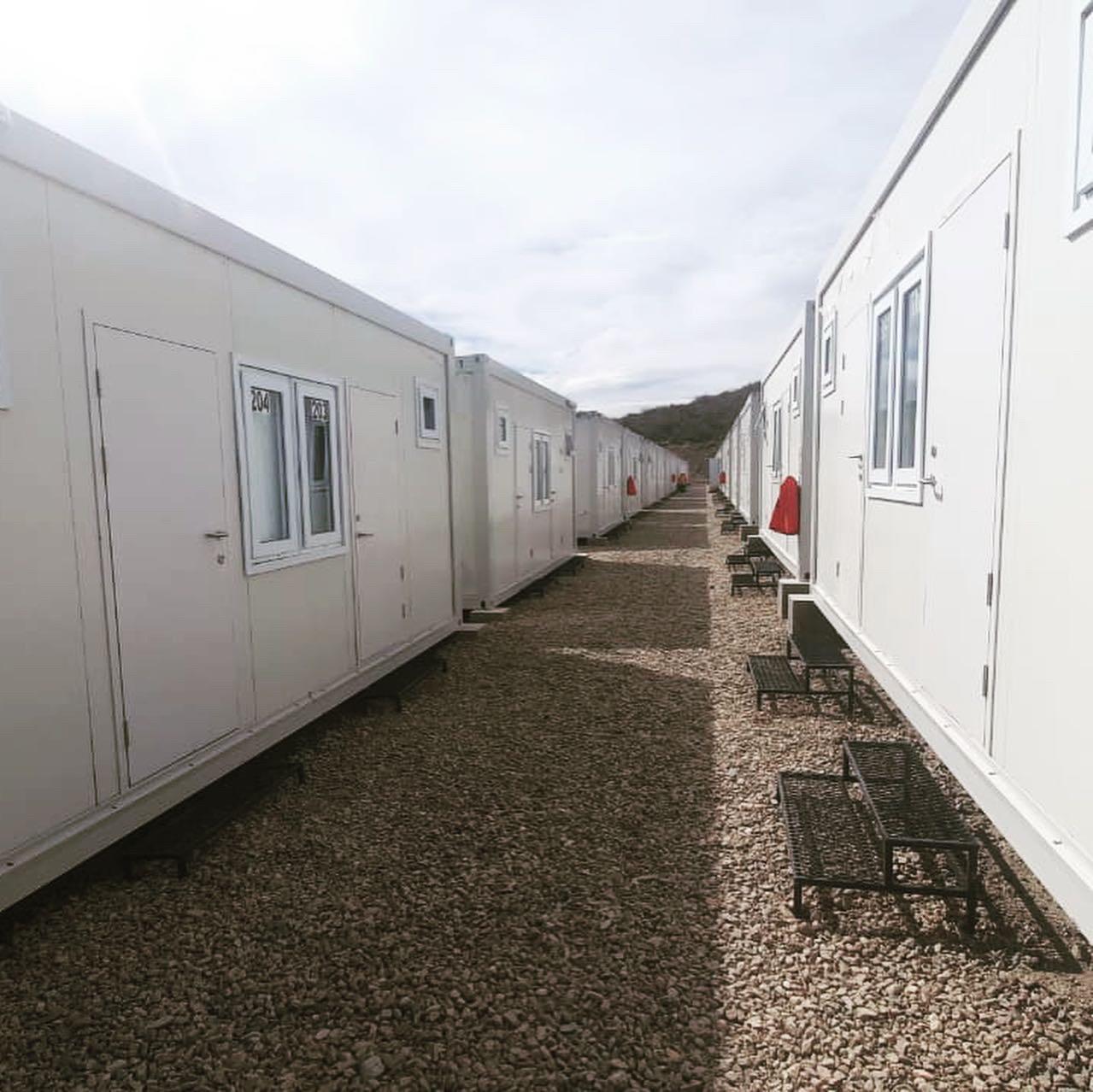
Modular construction—the factory-based production of building components that are transported and assembled on-site—offers a fundamentally different development paradigm that directly addresses sprawl. Rather than consuming vast horizontal expanses, modular systems enable vertical, compact, efficient development.
1. Enabling Vertical Development and Density
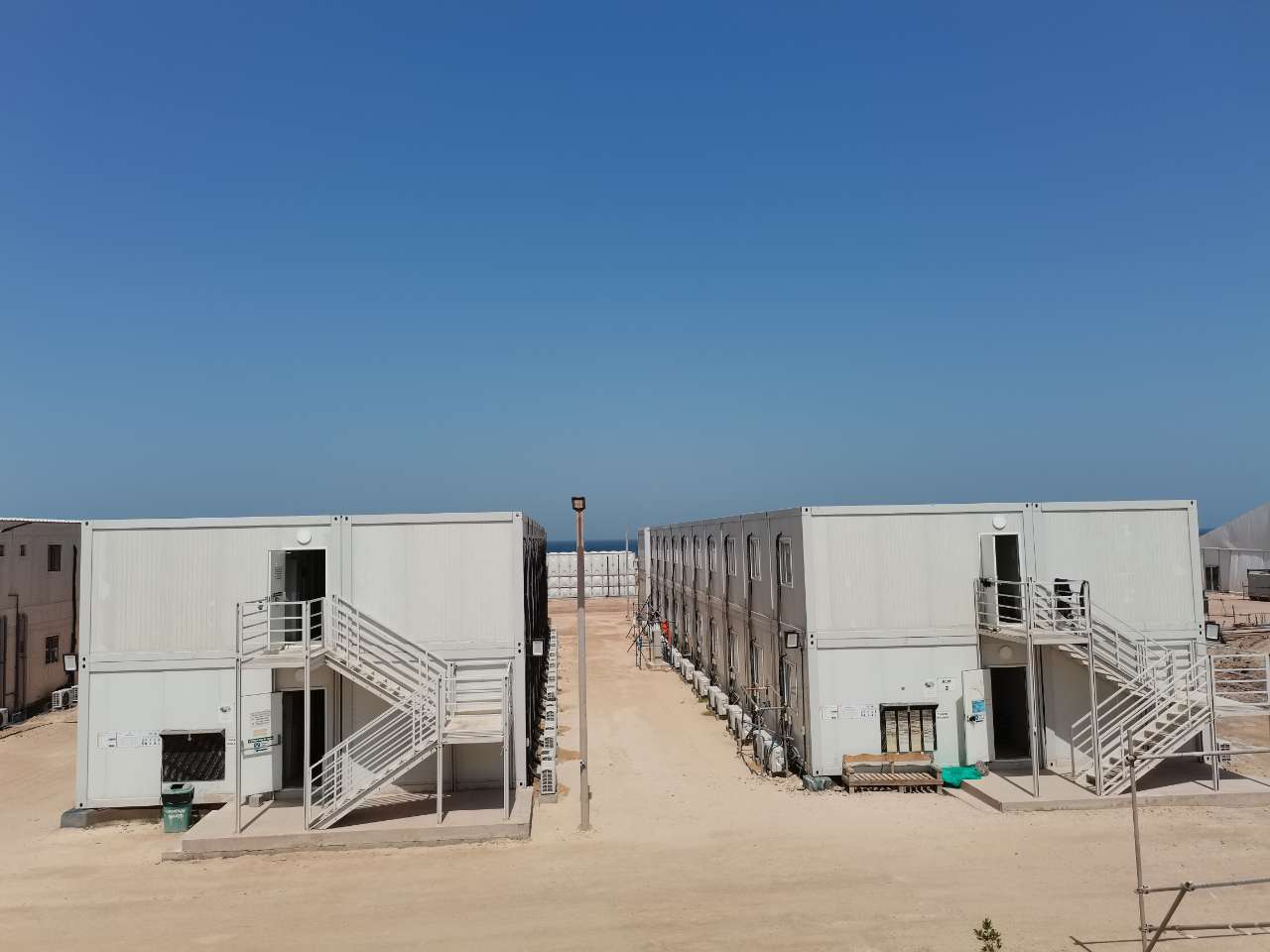
Container houses and modular prefabricated units can be stacked up to three levels, creating high-density housing in compact footprints. This vertical stacking capability is transformative for UAE cities facing severe land constraints:
Land Preservation: A 2-hectare site using modular stacking can house the same population as a sprawling development requiring 8-10 hectares of traditional single-family homes.
Mixed-Use Integration: Modular units can be configured for residential, commercial, and administrative functions in integrated communities, reducing the need for geographically dispersed zones.
Transit-Oriented Development: Compact modular communities are ideally suited to clustering around public transportation nodes—a cornerstone of the UAE's smart city strategies.
2. Accelerating Infill Development
Urban infill—developing vacant or underutilized land within existing city boundaries—is the opposite of sprawl. Modular construction excels at infill projects because:
Rapid Deployment: Traditional construction on infill sites in dense urban areas faces scheduling pressures. Modular houses reduce construction timelines by 30–50%, allowing developers to complete projects faster and monetize land efficiently.
Flexibility in Constrained Sites: Modular units can be customized to fit irregularly-shaped urban plots that traditional construction finds challenging.
Minimal Disruption: Factory-prefabricated components mean less on-site construction noise, dust, and traffic congestion—critical considerations for infill projects surrounded by existing neighborhoods.
3. Supporting Compact Community Design
Chengdong Modular House (CDPH) and similar manufacturers design modular systems that inherently support the principles of compact, walkable communities—the antithesis of sprawl:
Standardized Modules: Fixed dimensions and standardized combinations enable efficient planning of services, utilities, and public spaces.
Flexible Combinations: Units can be combined horizontally and vertically to create diverse housing types—from studio units for single occupants to larger family dwellings—within the same footprint.
Integrated Facilities: Modular construction easily accommodates community centers, clinics, schools, and recreational facilities in integrated developments, reducing the need for residents to travel beyond their community.
Environmental Sustainability: The Core Advantage
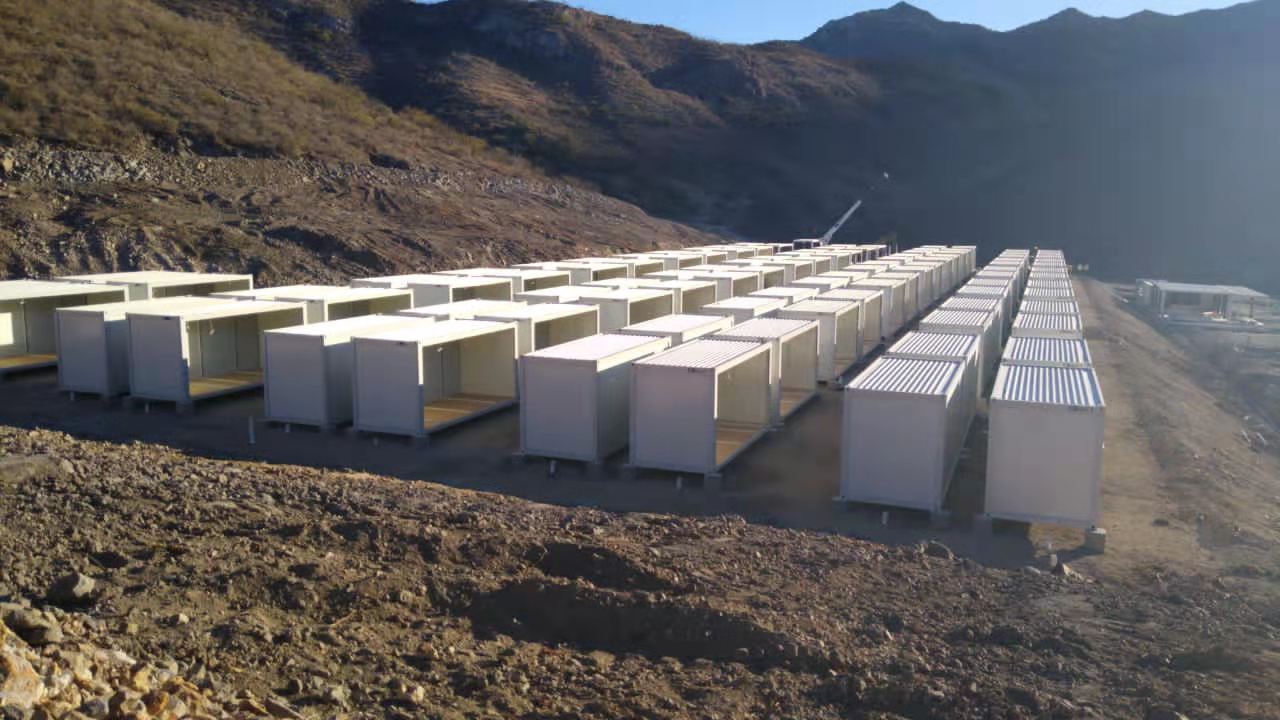
Beyond land use, modular construction delivers substantial environmental benefits that align directly with the UAE's sustainability objectives. These advantages make container houses and prefabricated housing the responsible choice for environmentally-conscious urban planners and developers.
1. Dramatic Waste Reduction
Traditional on-site construction generates approximately 30% waste—damaged materials, off-cuts, and site inefficiencies that end up in landfills. Modular construction reduces waste to just 1.8% through:
Precision Manufacturing: Factory environments enable exact cutting and assembly, minimizing material loss.
Quality Control: Prefabricated units are inspected before shipment, reducing defects and the need for rework.
Reusability: Modular components can be disassembled and reused across multiple projects, extending material lifecycles and reducing raw material demand.
In the UAE, where landfill capacity is limited and waste management is a growing concern, this 94% reduction in construction waste represents a profound environmental benefit.
2. Reduced Carbon Emissions Across the Supply Chain
Modular construction delivers carbon savings at every stage:
Factory Efficiency: Centralized manufacturing at CDPH's Tangshan facility and other modular factories operates at maximum efficiency, reducing energy per unit produced compared to dispersed on-site construction.
Optimized Logistics: Flat-packed modular components are engineered for compact shipping. Multiple housing units can be consolidated into single container loads, dramatically reducing transportation carbon emissions.
Shorter Construction Timelines: Faster project completion means reduced site labor mobilization, fewer equipment operating days, and lower overall energy consumption.
Recyclable Materials: Steel container frames and components are 100% recyclable, reducing the embodied carbon of housing over its lifecycle.
3. Water Conservation and Efficiency
In the UAE, water scarcity is an existential challenge. Modular construction supports water conservation:
Controlled Manufacturing: Factory construction environments enable precise installation of water-efficient fixtures—low-flow taps, efficient plumbing systems—with minimal waste.
Integration of Rainwater Systems: Modular units can be pre-fitted with rainwater harvesting systems for landscape irrigation, particularly valuable in Gulf climates.
Reduced Construction Water Use: On-site dust control, concrete curing, and landscape establishment consume vast quantities of water in traditional construction. Factory production eliminates most of these requirements.
4. Energy Efficiency and Climate Adaptation
Container houses and modular prefabricated units sold in the UAE are specifically engineered for extreme heat:
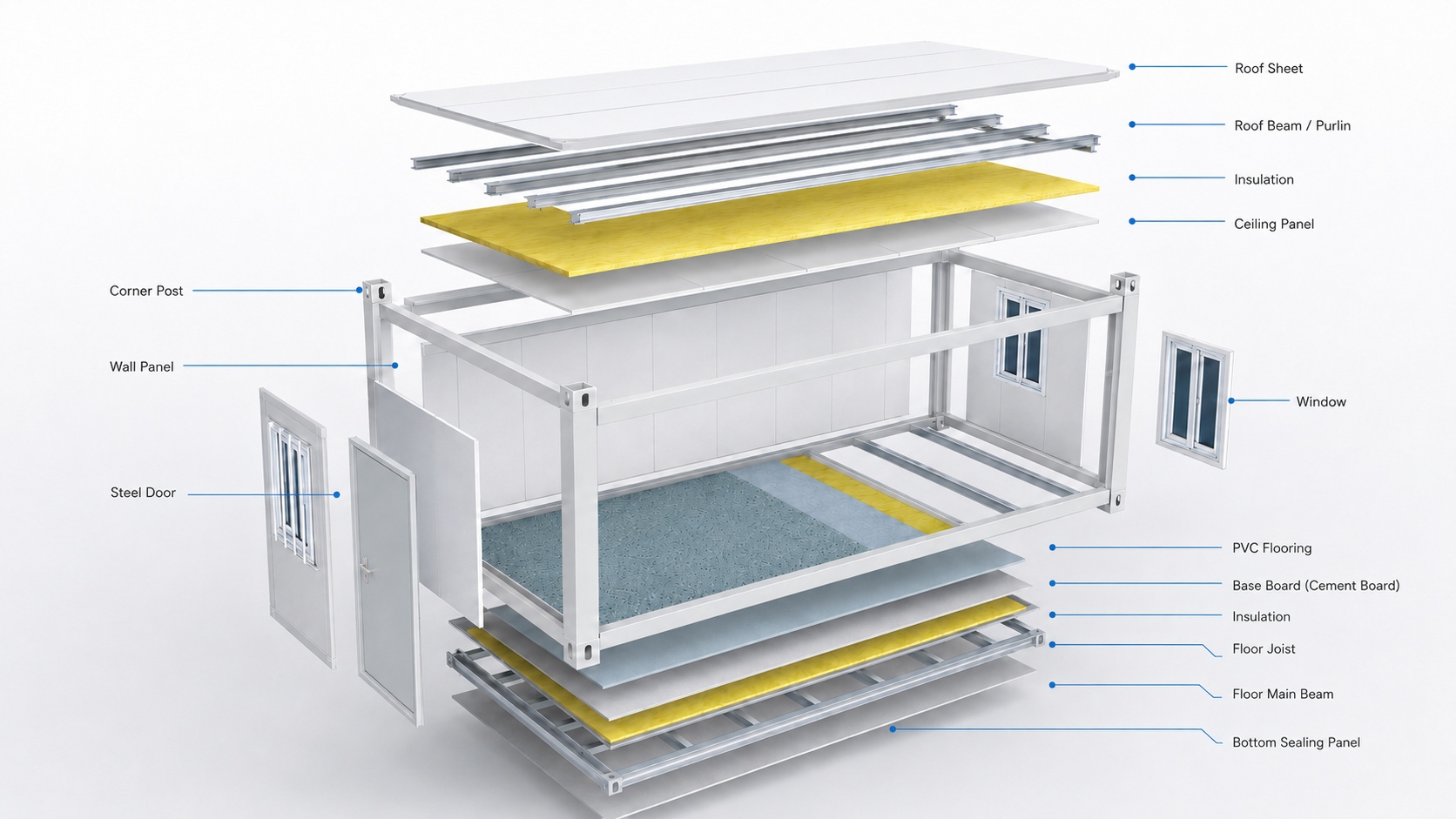
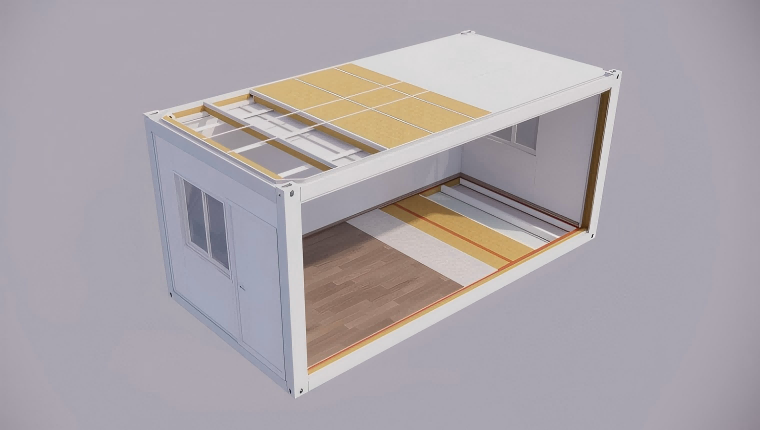
Advanced Insulation: CDPH units feature 100mm glass fiber wool insulation in roofs and floors, reducing cooling loads by 15-20°C compared to exterior temperatures—critical when outdoor temperatures exceed 50°C.
Factory Quality Control: Thermal insulation installed in controlled factory environments achieves superior performance compared to on-site installation, which is vulnerable to humidity, temperature fluctuations, and workmanship variability.
Integration of Sustainable Systems: Modular construction enables easy integration of solar panels, LED lighting systems, and smart HVAC controls that reduce operational energy consumption.
Economic Benefits Supporting Sustainable Urban Development
The financial advantages of modular construction create positive incentives for developers, investors, and government agencies to choose this method over sprawling traditional development.
1. Lower Per-Unit Costs
Labor Efficiency: Factory production achieves higher labor productivity than on-site construction. A single skilled worker operating specialized equipment can complete multiple units, reducing per-unit labor costs by 15-25%.
Material Optimization: Bulk purchasing, waste minimization, and streamlined manufacturing drive material costs down.
Reduced Site Overhead: Traditional development on sprawling sites requires extensive infrastructure—site offices, equipment parking, temporary utilities, and labor facilities. Modular projects minimize these overhead expenses.
2. Faster Cash Flow for Developers
In the UAE's competitive real estate market, time is money. Modular construction's speed advantage directly translates to financial benefit:
Earlier Revenue: Units completed in weeks rather than months allow developers to begin generating rental or sales revenue faster.
Reduced Financing Costs: Shorter project timelines reduce the duration of construction financing, lowering interest expenses.
Market Responsiveness: Rapid deployment enables developers to respond quickly to market demand, capturing premium prices for well-timed projects.
3. Reduced Infrastructure Costs
Compact, vertically-oriented modular communities require significantly less per-capita infrastructure investment:
Shorter Utility Runs: A vertical 200-unit modular development requires far less electrical cabling, plumbing, and HVAC distribution than a sprawling 200-unit traditional development.
Consolidated Services: Schools, clinics, and commercial facilities serving modular communities operate at higher capacity utilization, improving economic viability.
Public Transportation Integration: Compact modular communities with higher densities support cost-effective public transit, reducing the burden on municipality budgets.
Real-World Applications in the UAE and Middle East
The theoretical advantages of modular construction are being validated by real-world applications across the UAE and broader Middle East region.
Emergency Response and Crisis Housing
When the UAE faces natural disasters or humanitarian crises requiring rapid housing deployment, modular construction becomes indispensable:
CDPH's prefab assembly house portacabins can deploy complete shelters and command centers within 48-72 hours. In a documented case of a coastal Middle East city facing a severe sandstorm, authorities deployed 30 prefabricated units—including family shelters and medical stations—in just 48 hours, providing safe havens for 200+ displaced residents and a centralized coordination hub for emergency services. This rapid-response capability would be impossible with traditional construction.
Industrial and Oil & Gas Projects
The UAE's energy sector increasingly relies on modular housing for worker accommodation:
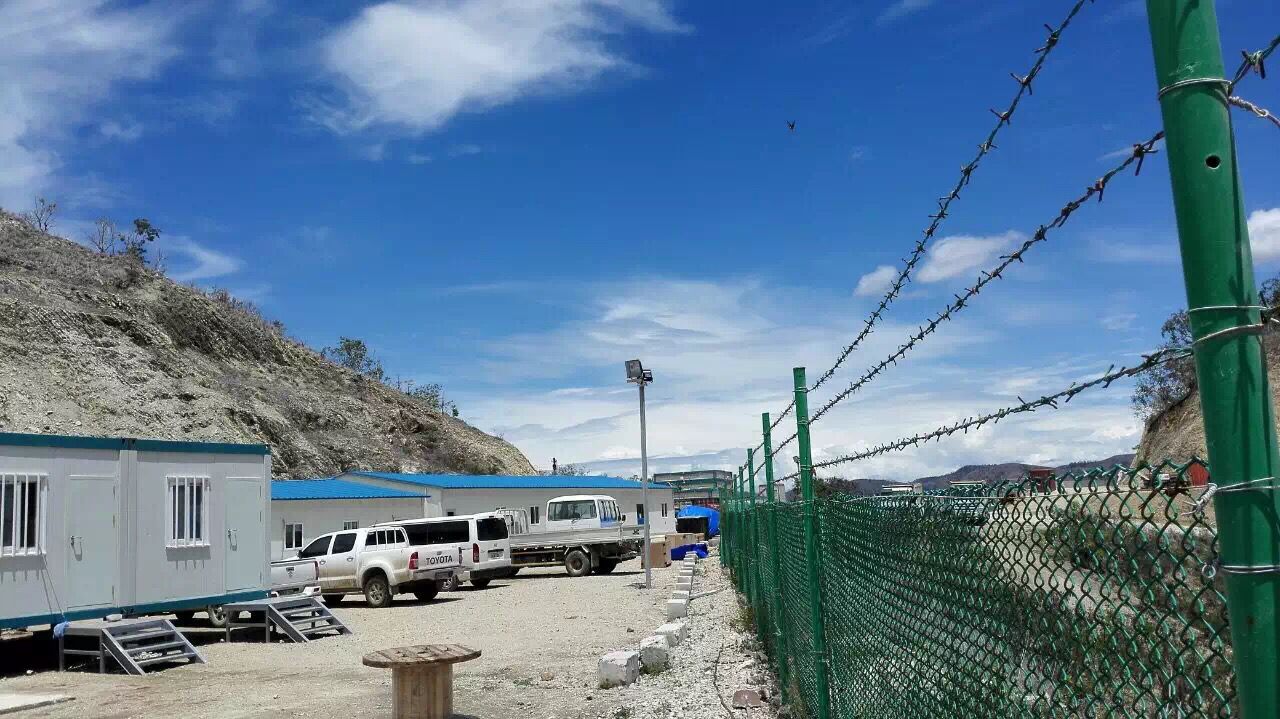
In a large Abu Dhabi oil field development, CDPH deployed container house portacabins housing 200+ workers with private bathrooms, climate control, and durable flooring engineered to withstand sandstorm impacts. The modular design allowed flexible configuration of dormitories, offices, and common areas within a compact footprint—preserving pristine desert landscape while providing world-class worker accommodation.
Integration with Smart City Initiatives
The UAE's vision of smart, sustainable cities aligns perfectly with modular construction principles. Masdar City (Abu Dhabi) unveiled their award-winning Etihad Eco-Residence using innovative modular construction methods, completing the project in record time while achieving LEED and other sustainability certifications. This pioneering project demonstrates that modular construction can deliver premium, sustainable housing at scale.
Alignment with UAE National Development Goals
Modular construction's contribution to combating urban sprawl directly supports multiple UAE national objectives:
UAE Vision 2050
The UAE's overarching development framework emphasizes sustainable urbanization, resource efficiency, and environmental stewardship. Modular construction's land-efficient, vertically-oriented approach directly enables these goals.
National Climate Change Plan 2017-2050
This comprehensive framework targets 40% reduction in greenhouse gas emissions by 2050 and emphasizes sustainable building practices. Modular construction's waste reduction, carbon efficiency, and water conservation directly support these targets.
Emirate-Specific Urban Planning
Individual emirates—Dubai, Abu Dhabi, Sharjah, and others—have established urban growth boundaries and density targets to prevent sprawl. Modular construction's vertical stacking capability and compact footprint make it essential for meeting these mandates.
Economic Diversification
By establishing leading positions in modular construction manufacturing and deployment, the UAE strengthens its economy beyond oil and real estate speculation. CDPH and similar manufacturers create high-value manufacturing jobs and intellectual property in the prefabrication sector.
The Advantages Over Traditional Housing Models
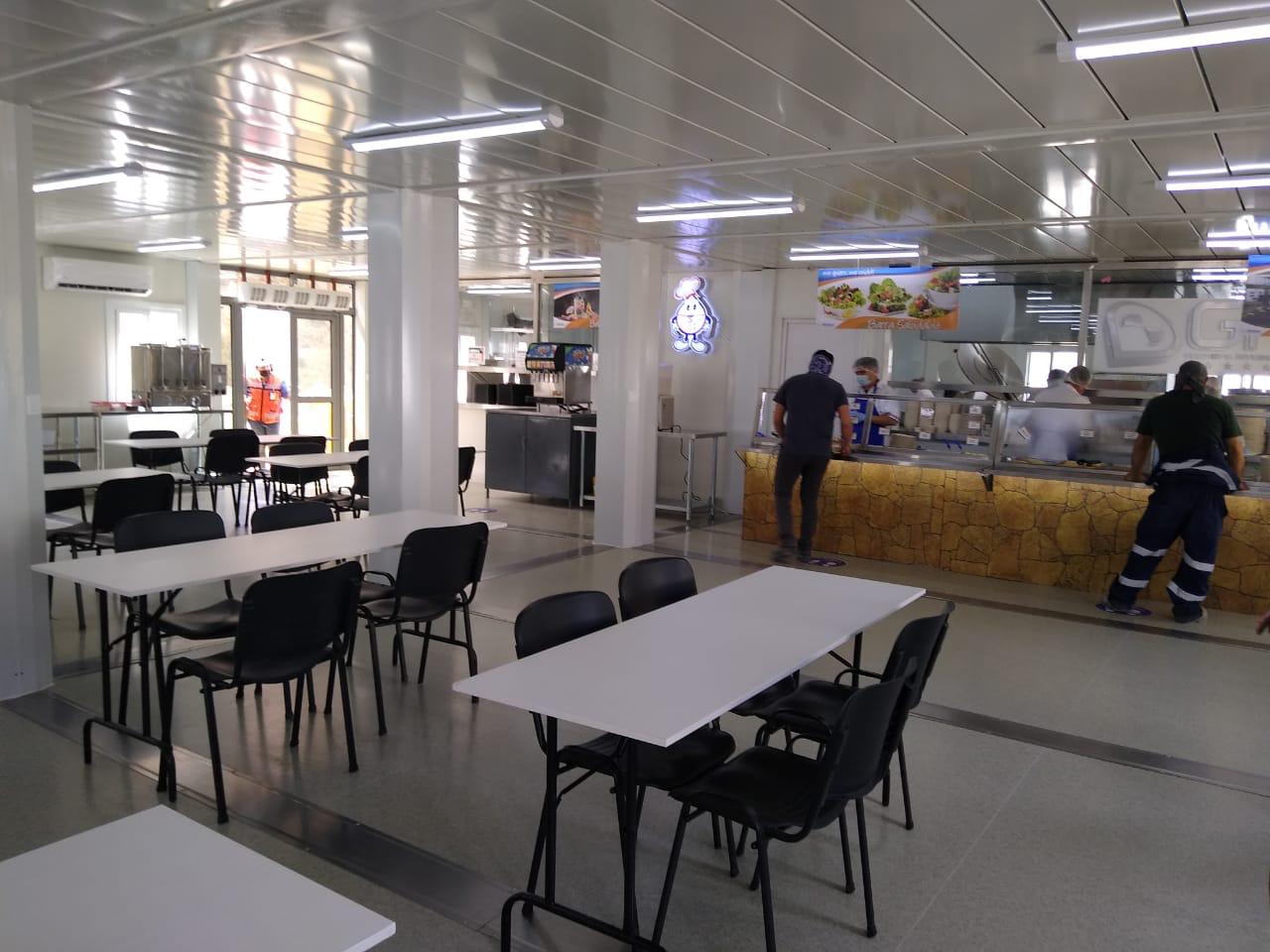
To fully appreciate modular construction's role in combating sprawl, comparing it directly to traditional development reveals fundamental differences:
Land Use Efficiency
Construction Timeline
Environmental Impact
Modular: 1.8% waste, 30-40% lower carbon emissions, integrated sustainability systems
Traditional: 30% construction waste, higher carbon emissions, retrofitted sustainability measures
Infrastructure Costs
Modular: Centralized utilities, efficient service delivery
Traditional: Duplicated services across sprawled zones, longer utility runs
Worker Safety and Quality
Modular: Factory-controlled environment, superior quality assurance, minimal on-site safety risks
Traditional: Weather-dependent outdoor construction, higher safety risks, variable quality
Addressing Regulatory and Design Integration Challenges
While modular construction's advantages are substantial, successful implementation in the UAE requires navigating regulatory frameworks and design integration:
Building Codes and Approvals
The UAE's building codes are evolving to accommodate modular construction. Dubai Municipality and Abu Dhabi's Department of Municipalities and Transport have increasingly streamlined approval processes for factory-built modular units that meet established standards. CDPH's compliance with international standards (CE certification, ISO protocols) facilitates approval across emirate jurisdictions.
Aesthetic Integration
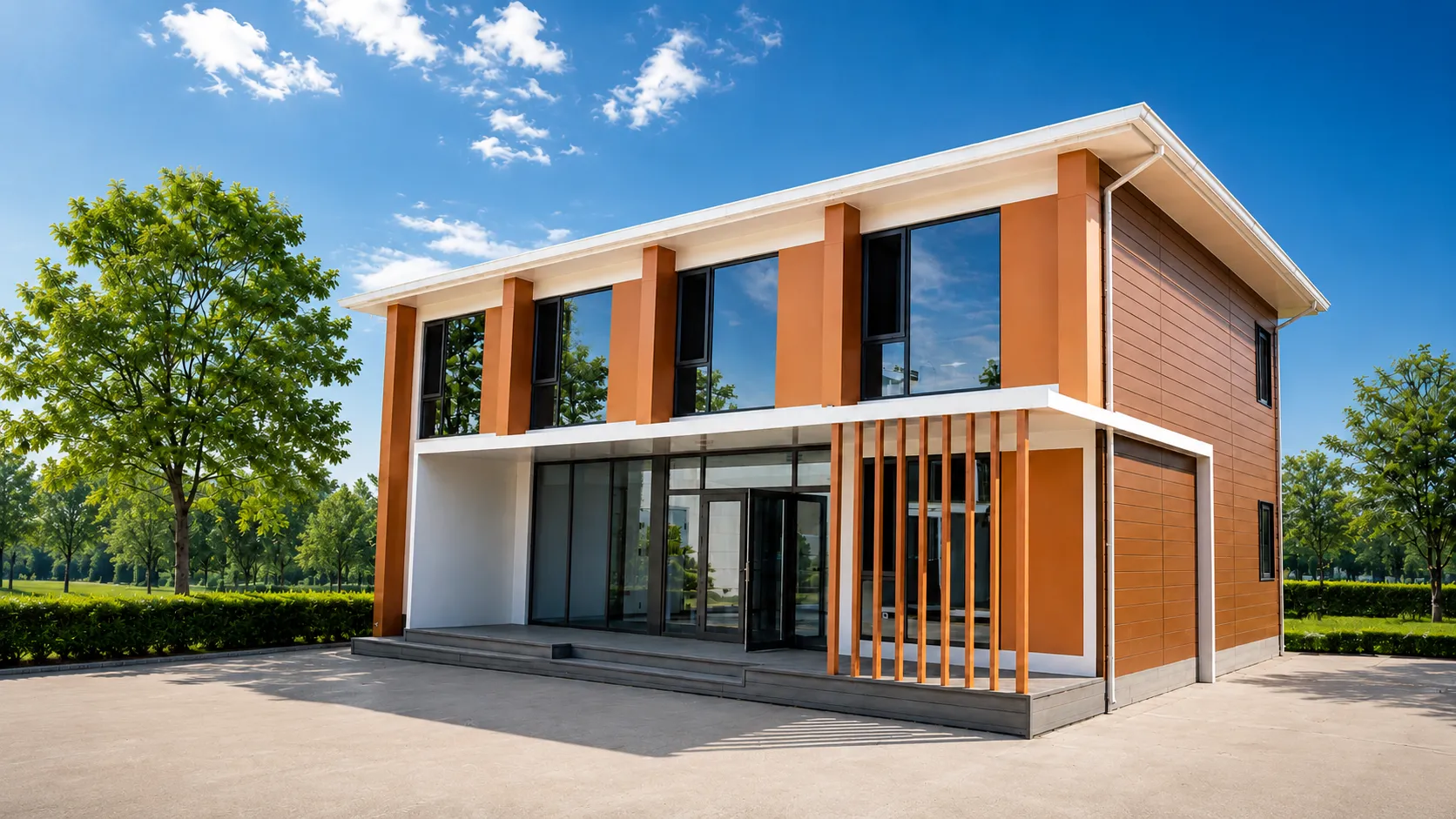
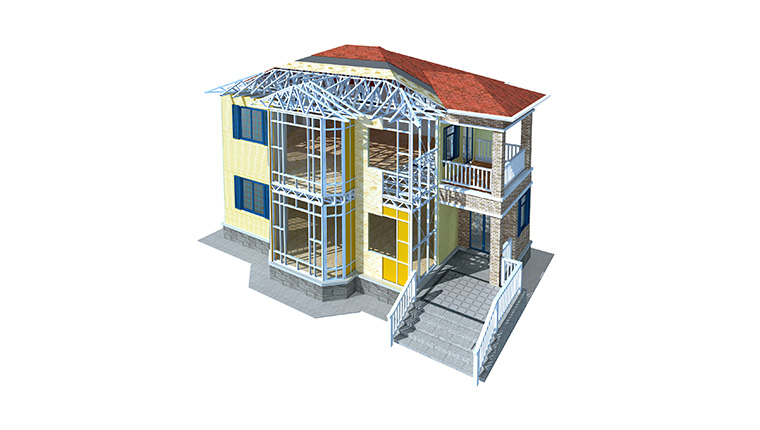
Early modular developments sometimes appeared utilitarian and disconnected from local architectural character. Contemporary modular design—exemplified by LINQ Modular's 2025 UAE projects and CDPH's light steel villa products—incorporates curved architectural elements, integrated green façades, and culturally-sensitive design that rivals traditional construction aesthetically while maintaining cost and sustainability advantages.
Community Planning
Successful modular developments in the UAE integrate mixed-use functionality—residential, commercial, service, recreational—within walkable neighborhoods. This requires sophisticated urban planning that goes beyond simple housing delivery to create vibrant communities that discourage resident dispersal to distant sprawling areas.
Investment and Market Opportunity
The convergence of sustainability imperatives, housing demand, and technological advancement has created a compelling investment case for modular construction in the UAE:
Market Growth: The GCC modular construction market is projected to expand from $3.4 billion (2023) to $5.98 billion (2024) and reach $9.04 billion by 2030—a CAGR exceeding 12%.
UAE Market: The UAE prefabricated construction market is anticipated to reach AED 24.49 billion in 2025, growing 8% annually as government initiatives prioritize sustainable urban development.
Capital Availability: International modular manufacturers like CDPH, LINQ Modular, and Algeco Scotsman (CDPH's joint venture partner) are aggressively expanding Middle East capacity, indicating confidence in sustained market growth.
Government Support: The UAE federal government and individual emirates increasingly incentivize modular construction through streamlined approvals, tax benefits, and regulatory frameworks that lower project risks.
Recommendations for Stakeholders
For Government and Municipal Planners
Establish Modular-First Policies: Make modular construction the default choice for public housing projects, affordable housing initiatives, and smart city developments.
Streamline Regulatory Approval: Develop fast-track approval processes for factory-certified modular units meeting established standards.
Integrate with Transit Planning: Direct modular housing development to high-density nodes along planned public transportation corridors.
Support Local Manufacturing: Incentivize investment in modular manufacturing capacity within the UAE to create jobs and reduce logistics costs.
For Private Developers
Adopt Modular-Hybrid Models: Blend modular housing for standardized components with site-specific features (landscaping, amenities, local services).
Focus on Infill Development: Identify underutilized urban sites and deploy modular solutions that generate higher land value per hectare than sprawling developments.
Pursue Sustainability Certifications: Leverage modular construction's inherent environmental advantages to achieve LEED, ESTIDAMA, and other certifications that command premium pricing.
For Investors and Financiers
Recognize Risk Reduction: Modular construction's proven timelines, quality control, and reduced labor dependency make projects more bankable and lower default risk.
Evaluate Total Economic Value: While modular construction may have slightly higher per-unit material costs, total project economics—including reduced timeline, lower labor, and faster cash flow—are superior.
Support Manufacturers: Investment in modular manufacturing capacity (like CDPH's Tangshan facility) creates recurring revenue streams as demand grows.
Conclusion
The UAE stands at a pivotal moment in its urban development trajectory. Continued reliance on sprawling, land-intensive traditional construction is increasingly incompatible with the nation's sustainability commitments, resource constraints, and economic priorities. Modular construction—exemplified by container houses, prefabricated assembly units, and light steel modular systems—offers a proven alternative that delivers superior economics, environmental performance, and community outcomes.
The evidence is compelling: modular construction reduces urban sprawl by enabling vertical development, cutting construction waste to 1.8%, lowering carbon emissions by 30-40%, and preserving precious land and water resources. When integrated into comprehensive smart city planning, modular housing creates vibrant, walkable communities that improve quality of life while respecting environmental limits.
The UAE's modular construction market is accelerating rapidly. Chengdong Modular House, with its global track record of delivering 2,000+ projects across 100+ countries and proven expertise in extreme climates, stands ready to support the UAE's sustainable urban development imperative. From emergency response housing to premium residential communities to industrial worker accommodation, modular solutions deliver the speed, quality, and sustainability that the Gulf's future demands.
For government planners committed to preventing urban sprawl, developers seeking competitive advantages, and investors recognizing the market opportunity, the time to embrace modular construction is now. The solutions are proven. The economics are sound. The environmental imperative is undeniable. The question is not whether modular construction will transform the UAE's urban landscape—it will. The question is whether your organization will lead this transformation or follow.
Learn more about how modular construction can solve your specific development challenges by visiting https://www.cdph.net/ and connecting with CDPH's team of global modular housing experts.
About Chengdong Modular House (CDPH)
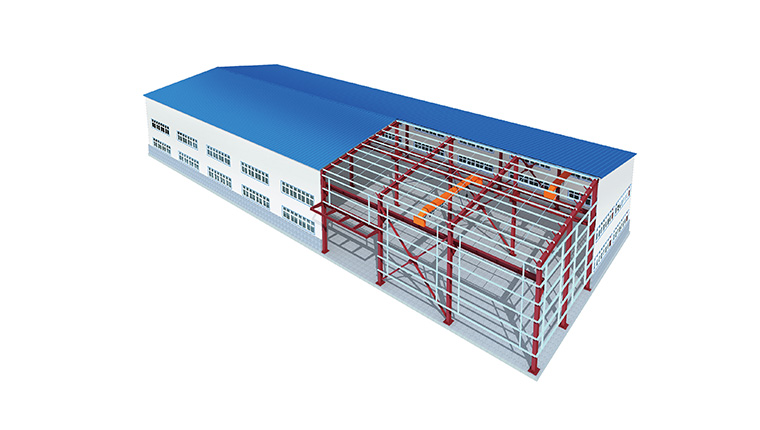
Chengdong International Modular Housing Corporation, established in 1998, is a leading global provider of prefabricated housing, container houses, and modular construction solutions. With more than two decades of experience delivering 2,000+ engineering camp and housing projects across 100+ countries, CDPH specializes in climate-adapted, sustainable modular solutions for construction, industrial, mining, oil & gas, emergency response, and governmental applications.
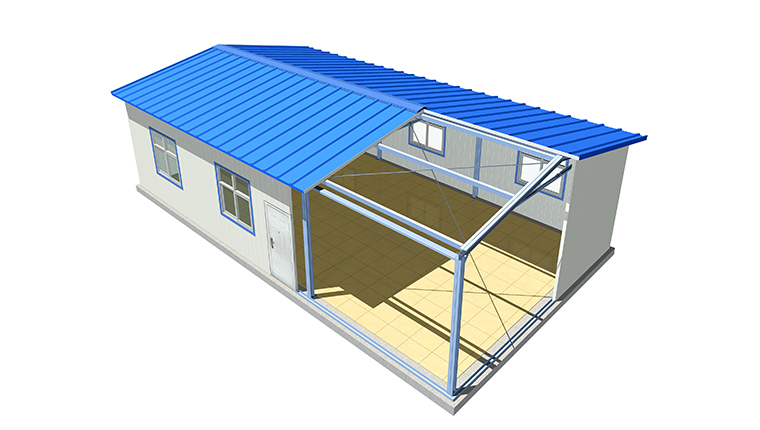
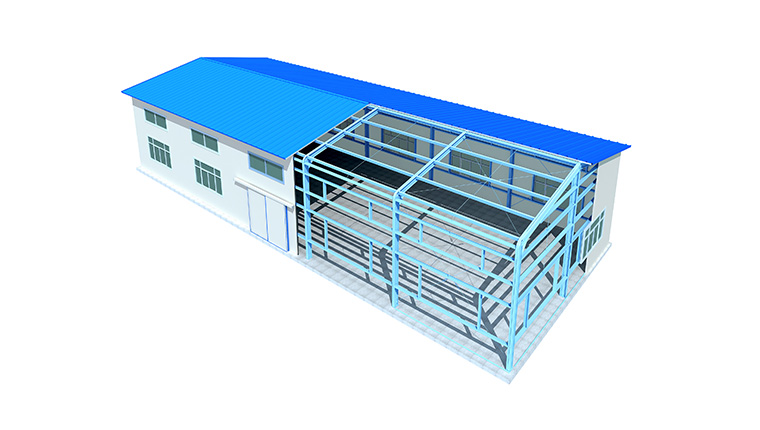
CDPH's flagship products—container houses, ZA-type prefabricated houses, steel structure buildings, and light steel villas—are engineered for extreme climates, rapid deployment, and maximum sustainability. The company's commitment to "Excellence Through Integrity" has earned trust from China's top construction enterprises and ENR 250 global companies alike.
For more information about modular construction solutions for your next project, visit https://www.cdph.net/ or contact CDPH's team of regional experts.




 More
More








![Top Advantages of Modular Construction Explained [2025]](/uploads/upload/images/20250424/0fb390068474145a09a8c0504c73b1d2.png)
 May 09, 2025