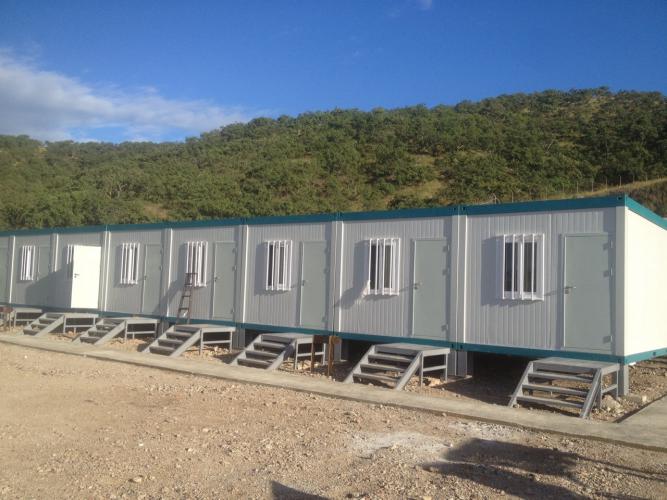
Introduction: Extreme Cold Camps and Insulation Challenges
Engineering camps in extreme cold regions face long heating seasons, large daily temperature swings, strong winds, and low humidity that together place heavy demands on the building envelope. In Central Asia’s continental climate, winter temperatures in some project locations can drop below minus 40 degrees Celsius, while design extremes in cities like Astana have reached around minus 50 degrees Celsius.
Shipping container houses used in these camps must therefore function not only as fast and relocatable solutions, but also as well-insulated, energy-efficient shelters that can maintain stable indoor temperatures around 18–22 degrees Celsius under severe outdoor conditions. When insulation is under-designed, the result is high heating demand, surface condensation, and occupant discomfort, which can directly affect productivity and camp operations.
For camp developers and EPC contractors, the central technical question is how to configure shipping container house insulation to balance thermal performance, structural reliability, and industrialized construction in these harsh climates.
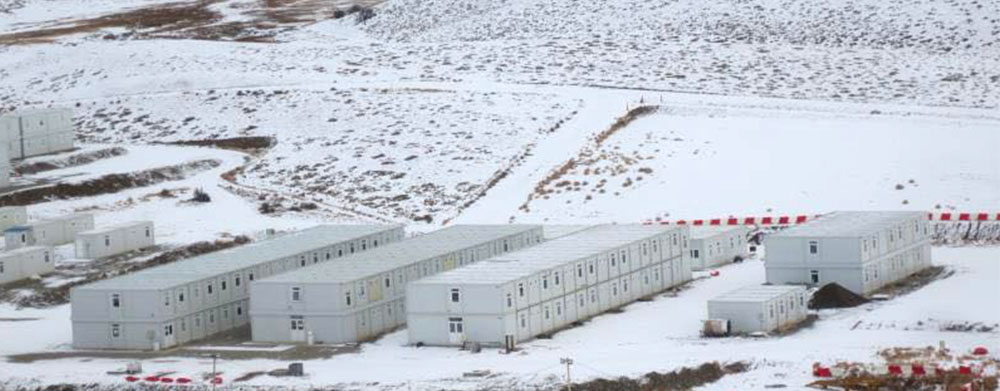
Performance Requirements for Cold-Region Container Houses
In extreme cold regions, the starting point for any shipping container house insulation design is a clear set of performance requirements for the envelope and indoor environment. Camps typically target indoor design temperatures of about 20 degrees Celsius for dormitories and offices, along with acceptable ranges for relative humidity and air movement to ensure comfort over long occupancy periods.
To achieve this, envelope components need sufficiently low thermal transmittance values and robust air-tightness to limit uncontrolled infiltration. For example, cold-resistant container units from Chengdong are configured so that insulated walls, roofs, and floors can maintain comfortable indoor conditions with only supplementary heating when outdoor temperatures fall between minus 10 and minus 40 degrees Celsius.
Different camp functions impose different requirements on shipping container house insulation and related systems. Dormitory units must control drafts and surface temperatures to support rest, while offices and meeting rooms require stable thermal conditions for daytime work, and canteens, clinics, and sanitary modules demand coordinated insulation and ventilation to manage internal moisture loads.
Envelope Design: Wall, Roof and Floor Insulation Systems
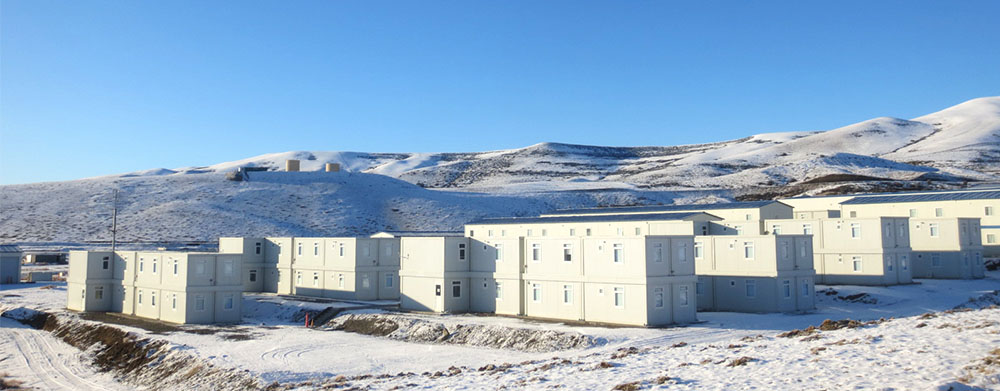
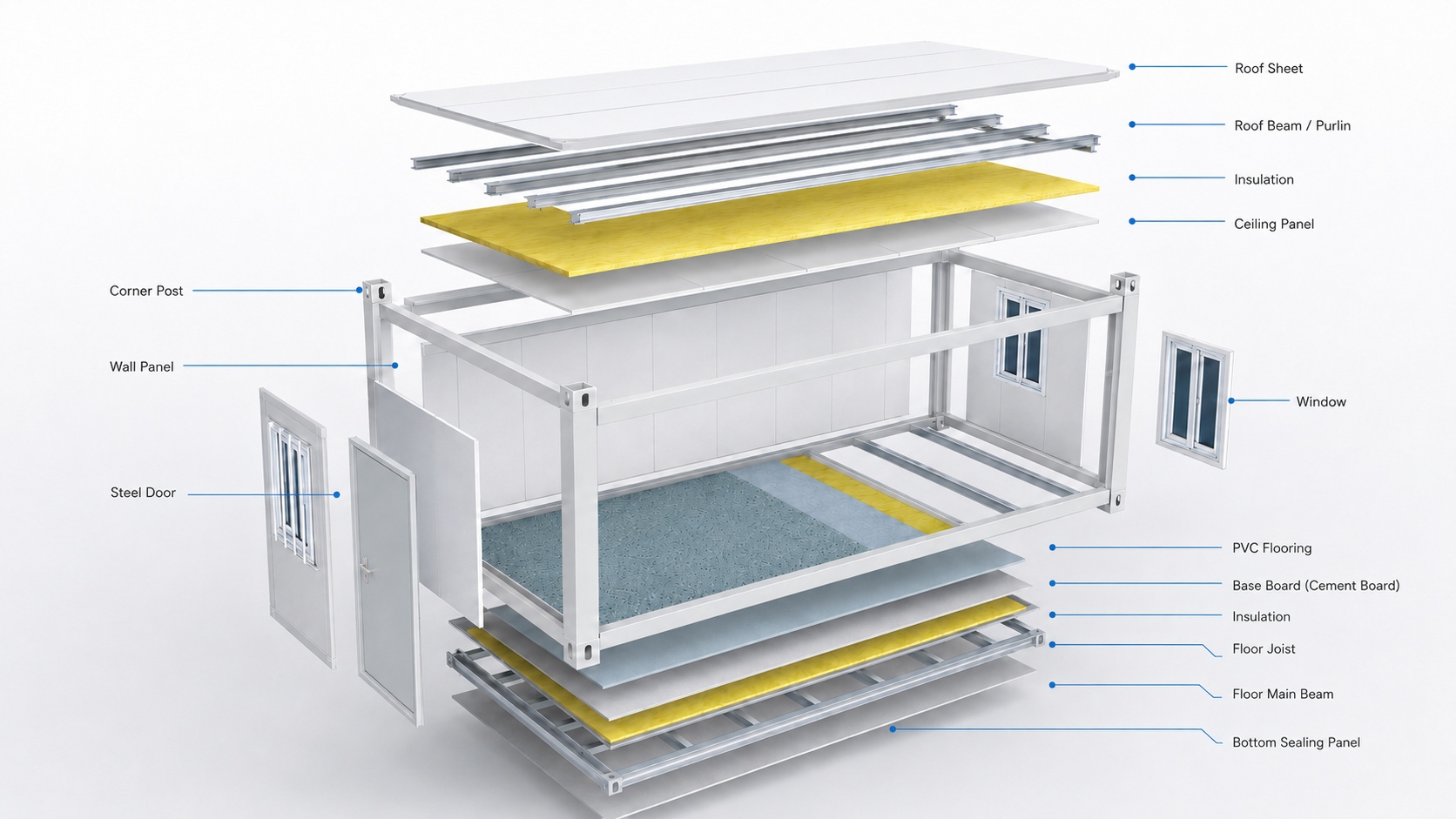
In modular container houses, the wall system is usually based on factory-assembled sandwich panels that integrate steel facings with an insulation core. Standard container house configurations offered by CDPH include wall systems using about 75 millimetres rock wool color steel composite boards, with options up to around 100 millimetres to enhance thermal performance in colder climates.
For extreme cold regions, cold-resistant box house manuals further refine wall and roof constructions, using thicker insulation, improved air-tightness, and continuous layers that reduce thermal bridges at joints and around structural members. Roof systems typically combine a galvanized steel structure with approximately 100 millimetres of glass wool insulation and additional reflective or protective layers, designed to keep snow loads and thermal losses within defined limits.
Floor insulation is equally important in continental climates, where ground contact and under-floor air layers can become major heat-loss paths. CDPH configurations allow for around 100 millimetres of glass wool insulation in the ground or floor build-up, which helps maintain comfortable floor surface temperatures and reduces stratification in small modular spaces.
To guide decision-making, camp planners often compare typical envelope configurations and their stated application ranges, as illustrated below.
| Envelope component | Typical insulation configuration (CDPH examples) | Indicative application range |
| Wall | 75–100 mm rock wool sandwich panel | From temperate to cold regions |
| Roof | 100 mm glass wool + protective layers | Cold climates with snow load |
| Floor (optional) | 100 mm glass wool in floor build-up | Enhanced comfort in sub-zero sites |
| Cold-resistant unit | Enhanced wall, roof, floor insulation + detailing | Down to roughly minus 40–50°C |
This envelope design framework allows EPC teams to match camp locations in Central Asia with appropriate module configurations and heating concepts.
Material Options for Insulation in Extreme Cold Container Houses
Several insulation materials are commonly used in modular container houses for cold climates, each with different thermal, fire, and durability characteristics. Rock wool sandwich panels, for instance, combine non-combustible cores with good thermal insulation and sound reduction, and are widely applied where fire performance is a major concern.
Glass wool is typically used in roofs and floors because of its ease of installation, relatively low density, and ability to fill cavities in steel frameworks without adding excessive weight. Polyurethane and other rigid foam cores can further improve thermal resistance at a given thickness, which is relevant in cold regions where space constraints inside standard container dimensions limit the feasible insulation thickness.
Chengdong’s cold-resistant container houses illustrate how these materials can be combined into system solutions. In some configurations, rock wool sandwich panels are used for external walls, complemented by glass wool in roofs and floors to achieve thermal transmittance values around 0.36–0.45 W/m²·K, supporting energy-efficient operation of heating systems in sub-zero climates.
When choosing insulation materials for Central Asian projects, EPC contractors must consider not only thermal performance but also transportation logistics, availability of spare materials, and on-site maintenance capabilities over the lifespan of the camp.
Cold-Bridge, Vapor, and Moisture Control in Container Structures
Because shipping container houses rely on steel frames and steel panels, thermal bridges are an inherent design challenge. Corners, column-beam intersections, roof-to-wall junctions, and fasteners can all create conductive paths that reduce the effectiveness of insulation and create local cold spots.
In extreme cold climates, these cold bridges can lead to surface condensation, mold risk, and discomfort for occupants sitting close to outer walls if not addressed systematically. Practical mitigation measures include using continuous insulation layers across structural members, detailing panel joints with overlapping or interlocking profiles, and minimizing direct metal connections that bypass insulation layers.
Moisture control is closely linked to vapor migration in cold-region container houses. Warm, humid indoor air tends to move toward cold exterior surfaces, and without appropriate vapor control layers, condensation can occur inside walls or roofs where it is difficult to detect. For this reason, cold-resistant box house designs typically combine internal vapor-retarding layers with properly located breathable membranes and planned ventilation routes, creating a balance between airtightness and controlled moisture release.
For owners and designers seeking more information about integrated container house configurations, reference materials on modular envelope and detailing solutions can be found via the container house product pages at CDPH’s container house center.
Integrated Design with HVAC and Electrical Systems in Cold Camps
The performance of shipping container house insulation cannot be evaluated in isolation; it must be coordinated with heating, ventilation, and electrical systems that operate the camp on a daily basis. In well-designed cold-climate camps, the envelope and HVAC system are sized together so that insulation minimizes heat loss while heating systems cover the remaining load with reasonable capacity and energy consumption.
Chengdong’s camp design practice emphasizes a “nine systems” perspective, where water supply and drainage, power distribution, lighting, weak-current systems, fire protection, and safety infrastructure are integrated around modular housing units. In this approach, improved shipping container house insulation reduces heating demand, which then informs generator sizing, distribution panel capacity, and backup power planning for remote sites.
For typical Central Asian camps combining dormitory, office, and public service modules, early design coordination between insulation levels and HVAC concepts can also influence duct layouts, radiator placement, and the feasibility of using electric heaters, split units, or centralized systems. Better envelope performance makes it easier to achieve uniform temperatures across stacked or linked container units without oversizing heating equipment.
Case-Oriented Discussion: Cold-Resistant Box House Solutions
While project names may differ, certain configuration patterns are common to many extreme-cold camp solutions delivered by Chengdong in regions with winter temperatures approaching minus 40 to minus 50 degrees Celsius. In these cases, cold-resistant container houses typically adopt reinforced structures, thicker insulation layers in walls, roofs, and floors, and upgraded windows to maintain comfortable indoor temperatures with controlled heating input.
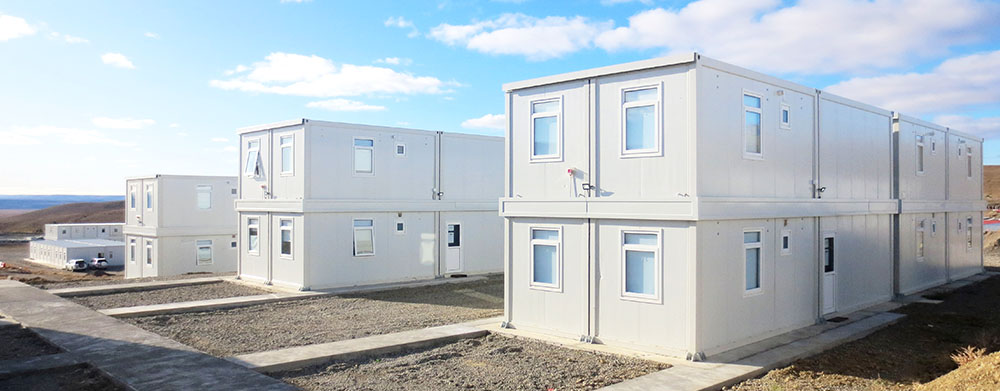
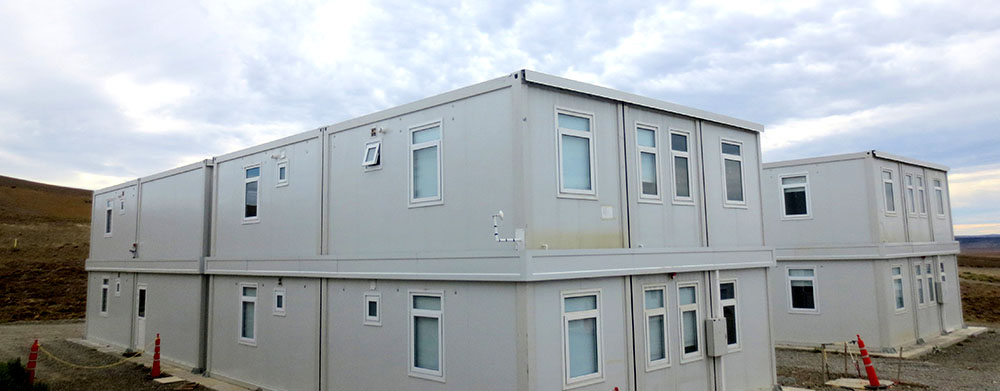
For example, some mining or infrastructure camps use rock wool composite panels up to 150 millimetres thick combined with triple-glazed casement windows to withstand severe low temperatures and strong winds in locations similar to northern Kazakhstan. Modules can be configured as two- or three-storey blocks for accommodation and offices, while canteens, recreation rooms, and medical units are often single-storey or combined into larger spans using modular structural systems.
These cold-resistant box house systems are designed for factory production, long-distance transport, and rapid assembly, which is particularly important in Central Asia where access routes and weather windows can be limited. After the project is completed, the modular units can be relocated or reused in other camps, helping to amortize the investment in higher-grade insulation over multiple sites.
Readers interested in technical specifications and configurable options for cold-climate container units can explore the product information available at CDPH’s container house center.
Practical Considerations for EPC Camp Projects in Extreme Cold Regions
From an EPC perspective, the design of shipping container house insulation in extreme cold regions must be embedded into the entire project lifecycle. During early demand analysis, developers need to define target indoor temperatures, operational periods, and occupancy density for different functional areas, which then translate into envelope and heating system requirements.
In the design phase, standard modular configurations are matched with local codes and climatic data from the Central Asian host country, including snow loads, wind pressures, and energy-efficiency regulations. Material procurement and factory prefabrication stages must account for quality control of sandwich panels, insulation materials, windows, and sealing components to ensure that design performance is achieved in mass production.
On site, installation quality—such as correct panel joint sealing, accurate alignment of modules, and proper installation of vapor barriers—is critical for preserving the intended insulation performance of the shipping container houses. During operation, camp managers should monitor indoor temperature and energy consumption, adjust heating strategies, and plan maintenance for seals, windows, and insulation details that are exposed to freeze–thaw cycles.
For EPC teams looking for reference solutions and case experience across different climate zones, the main CDPH portal at cdph.net provides access to product data and project case studies.
Outlook: Trends in Insulation for Extreme Climates
Looking ahead, shipping container house insulation for extreme cold regions is likely to evolve toward more integrated and higher-performance systems. This includes composite envelopes combining insulation, structure, and finishes in single factory-made modules, as well as improved airtightness and standardized detailing that simplify installation and reduce performance variability.
In parallel, digital tools and monitoring systems are making it easier to evaluate energy performance of camps in Central Asia and other harsh environments, supporting iterative improvements to envelope design and HVAC integration over time. For owners and contractors, treating shipping container house insulation as a strategic design element rather than a simple material choice will be essential to delivering safe, comfortable, and energy-efficient camps across future cold-region projects.




 More
More













![Top Advantages of Modular Construction Explained [2025]](/uploads/upload/images/20250424/0fb390068474145a09a8c0504c73b1d2.png)
 May 09, 2025