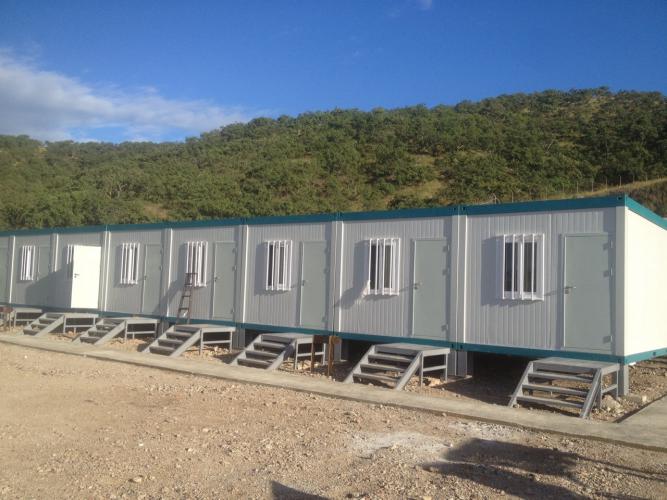
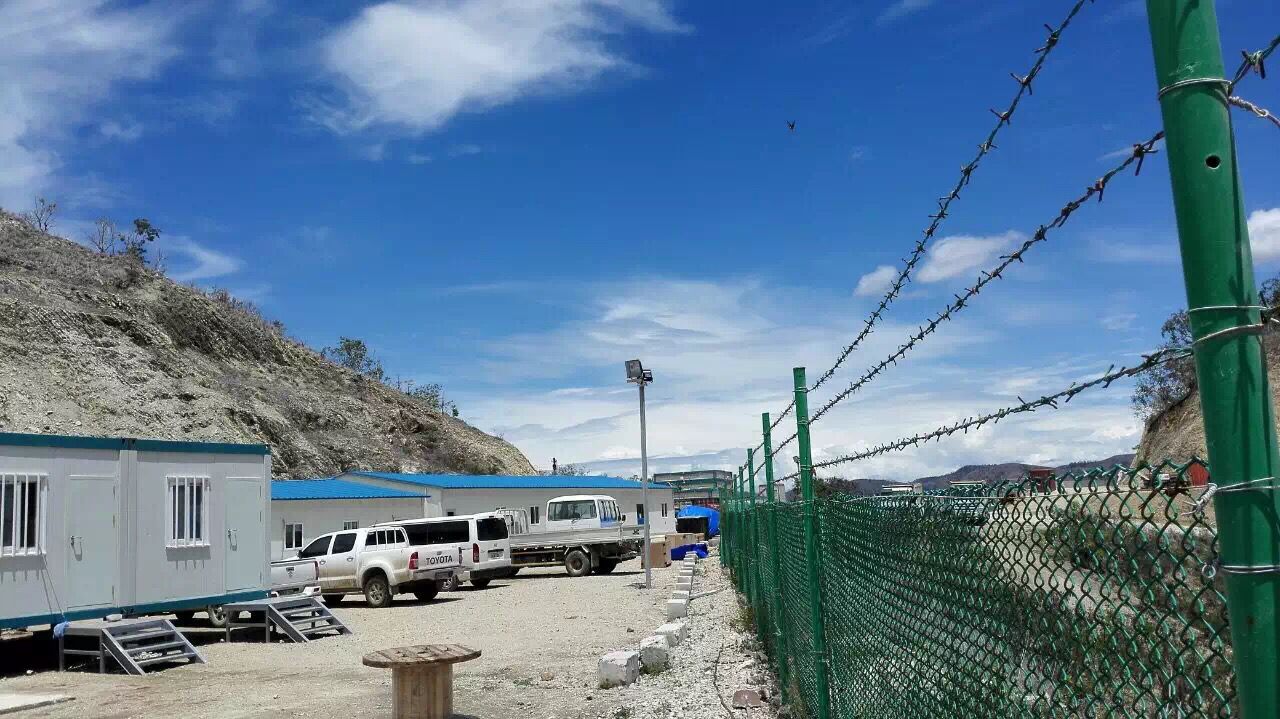
When engineering contractors search for the best prefab house companies, they are rarely thinking about a single small building. They are thinking about complete EPC camps: hundreds or even thousands of modular units that must perform reliably in deserts, alpine plateaus, coastal zones, or tropical regions where climate and logistics can easily destroy a project schedule or budget.
In these environments, a true top-tier prefab supplier is not only a manufacturer but also a long-term EPC camp partner that understands climate loads, worker comfort, transport routes, and multi‑year operation cycles. That is exactly where Chengdong (CDPH) positions itself, with modular container houses, prefab houses, and steel structures designed for demanding global projects.
Climate and Environment: What Camps Are Really Up Against
Real engineering camps face very different risks depending on where they are built. For example:
Desert and arid regions: High daytime temperatures, large temperature swings at night, sandstorms, and intense UV exposure quickly age low‑quality coatings and sealants.
Cold and alpine regions: Long winters, snow and ice loads, freeze‑thaw cycles, and high winds demand reinforced structures and carefully engineered insulation to keep indoor temperatures comfortable.
Coastal and tropical climates: High humidity, salt spray, heavy rainfall, and typhoons or cyclones accelerate corrosion and test the integrity of roof drainage and wall systems.
For owners and EPC contractors, these conditions translate into very practical questions: how long will the container or prefab houses last, how many times can they be relocated, and what is the total cost per year of service life? Modern container and prefab houses, when correctly specified and maintained, can provide a long service life even in harsh camps, and an even longer life in milder inland environments.
What Defines the Best Prefab House Companies
When evaluating the best prefab house companies for such environments, B2B buyers typically focus on several hard criteria rather than just catalog photos:
Structural and insulation design for specific climates
Proven EPC camp experience (not just small residential jobs)
Factory capacity and geographic spread to guarantee lead time
Ability to integrate multiple building systems into one camp
Track record of large case projects in similar regions
A supplier that has delivered thousands of modular camp construction projects in many countries, serving construction, mining, energy, education, and government clients, has already shown that it can perform as a long‑term partner rather than simply ship a few sample units. This kind of track record is one of the strongest indicators that a prefab company belongs among the global leaders.
Chengdong’s Modular and Container Houses as Core Camp Products
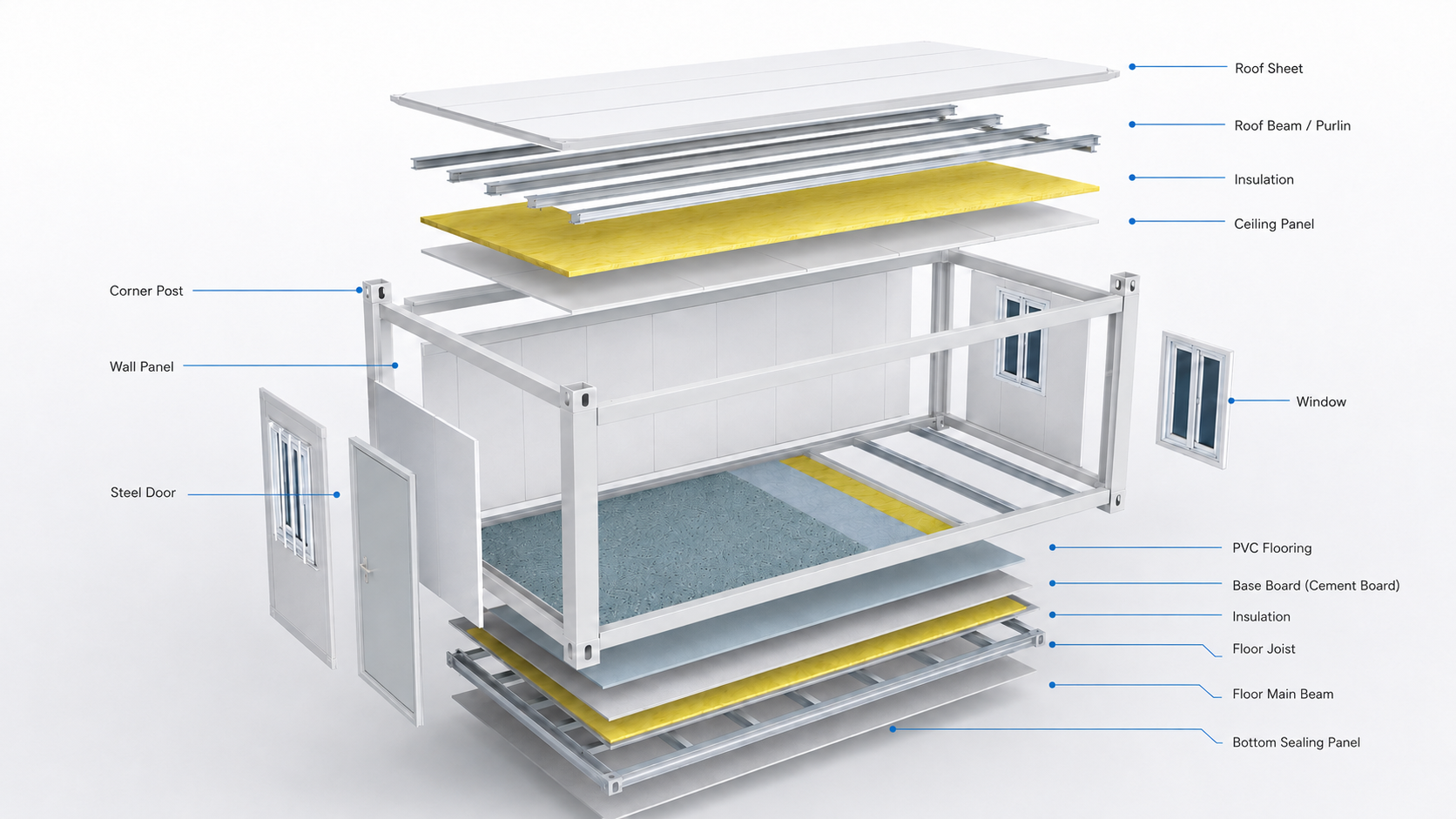
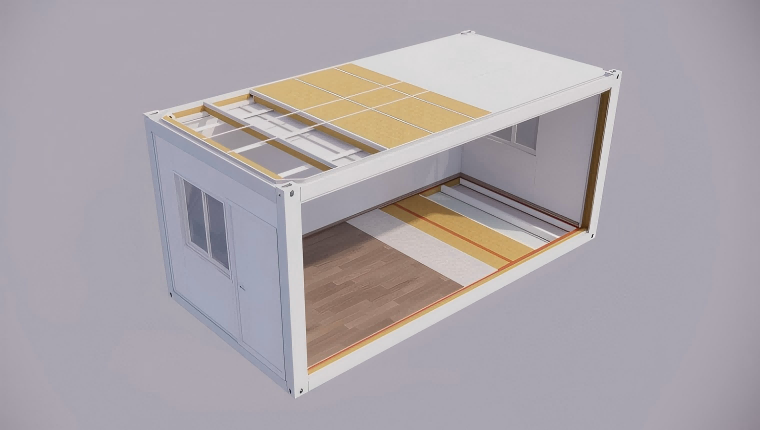
On the product level, Chengdong’s modular container house line is a typical example of what global contractors expect from a best‑in‑class prefab supplier. The standard container house uses a steel frame as the basic unit, can be used as a single room or combined horizontally and vertically into multi‑storey buildings, and can be stacked up to three floors, which is ideal for dense camp layouts.
Key technical highlights from the container house product include:
Modularization: Fixed length, width, and height allow standardized internal layouts and flexible combinations, enabling mass production and predictable quality.
High integration: No secondary on‑site decoration is required; units are delivered with finished interiors, electrical systems, and finishes so workers can move in quickly after installation.
Overall movement: Houses can be lifted and moved as entire units, reducing the cost and time associated with repeated disassembly and re‑assembly when camps relocate.
Optimized transport: Roof, floor, columns, and wall panels can be packed efficiently to fit into shipping volumes for long‑distance sea transport, reducing logistics costs for overseas projects.
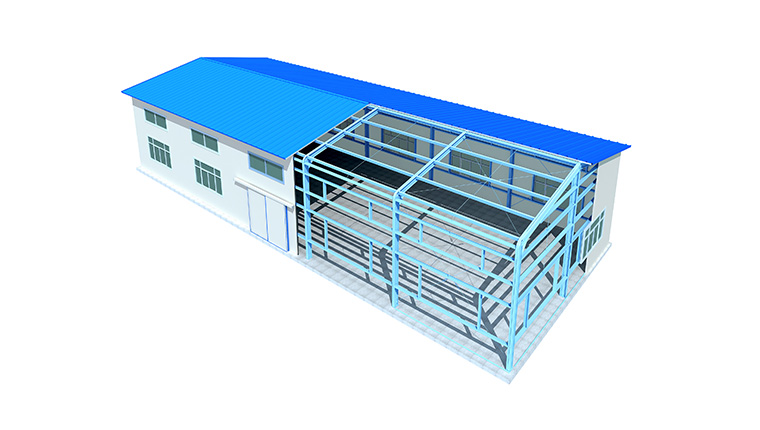
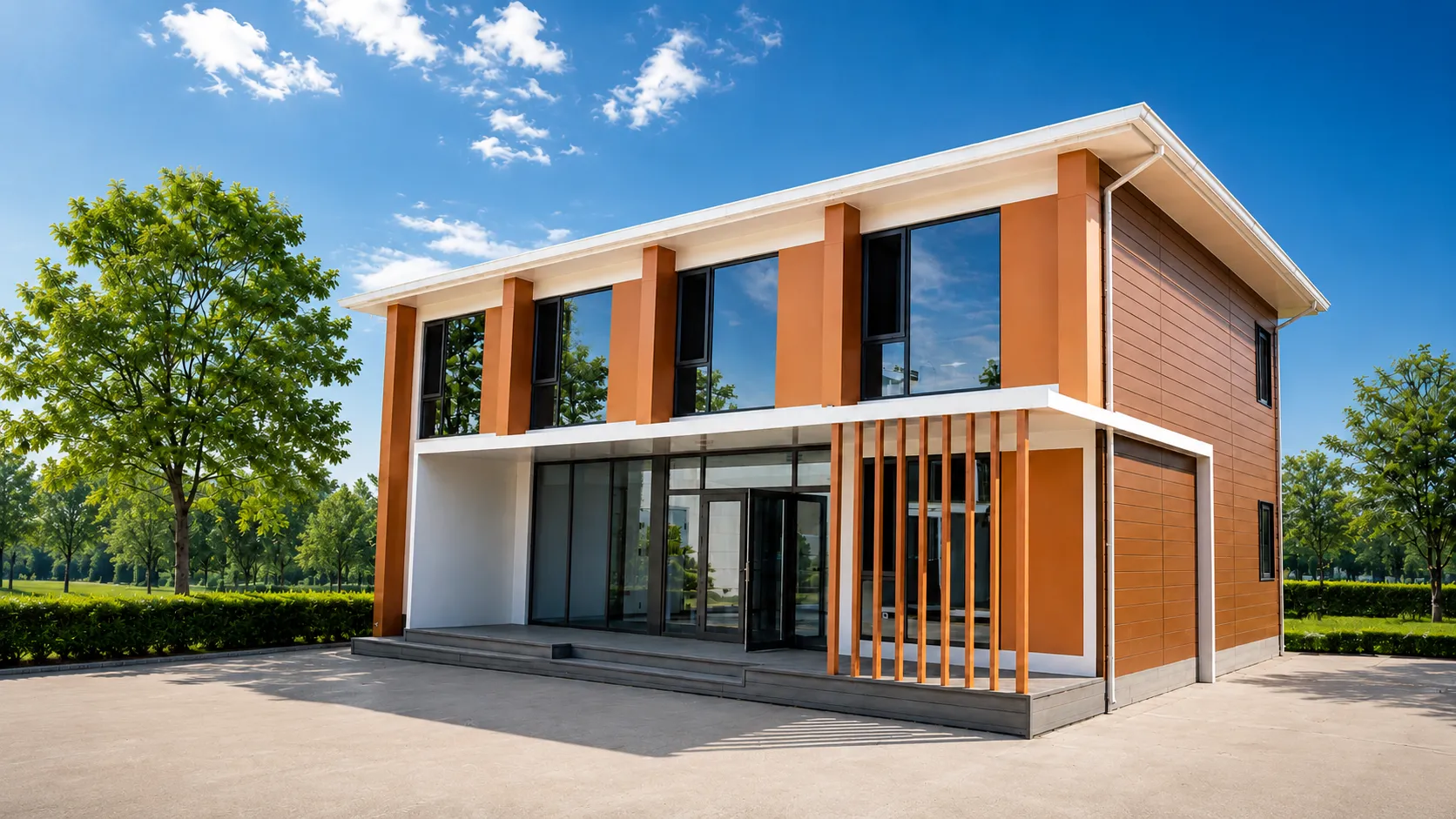
In addition to the standard container house, Chengdong also offers cold‑climate container units, ZA/ZM series prefab houses, light‑steel modular products, villas, and LR luxury modules, giving camp planners a wide toolkit to match different climate and comfort requirements. These ranges allow one supplier to cover dormitories, offices, canteens, warehouses, classrooms, clinics, and higher‑end long‑stay housing under one coordinated design language and technical standard.
For readers who want to go deeper into specifications and layout options, the container house product center on the official website provides detailed information about sizes, structures, internal configurations, and typical applications.
EPC Camp Expertise: From Design to Delivery
The difference between a generic prefab builder and the best prefab house companies becomes very clear at EPC camp level. An EPC camp contractor is expected to handle engineering, procurement, and construction, usually under a single turnkey contract that covers planning, design, production, logistics, installation, and after‑sales service.
Chengdong follows a structured multi‑step EPC process for prefab building camps, typically including:
Needs assessment and master planning
Modular architectural and structural design
Factory production of modular units and systems
Logistics planning and overseas transport
On‑site installation and system integration
Final commissioning, handover, and training
This process is supported by standardized modular building systems and complete supporting subsystems that cover structures, enclosure, electrical, plumbing, HVAC, fire safety, and more. As a result, camps are delivered as integrated solutions rather than isolated boxes.
For engineering owners, this level of EPC capability means:
One contract and one responsible team rather than multiple fragmented suppliers
Consistent design standards across dorms, offices, kitchens, warehouses, and auxiliary buildings
Predictable fabrication and shipping timelines because production is planned at factory level
Easier lifecycle management when camps are relocated, downsized, or expanded in stages
Case in Focus: EPC Camp Delivery in Demanding Conditions
A good way to understand how a top prefab company works is to look at real projects. Chengdong’s global case center highlights thousands of reference projects in many countries and regions, including energy, mining, construction, education, and government camps. Among these, the project showcased at:https://www.cdph.net/case-center/100 is a typical example of a complete EPC camp delivered with modular container and prefab systems.
The project uses Chengdong’s container houses and prefab buildings to create a complete engineering camp, integrating living, working, and support spaces under one unified design.
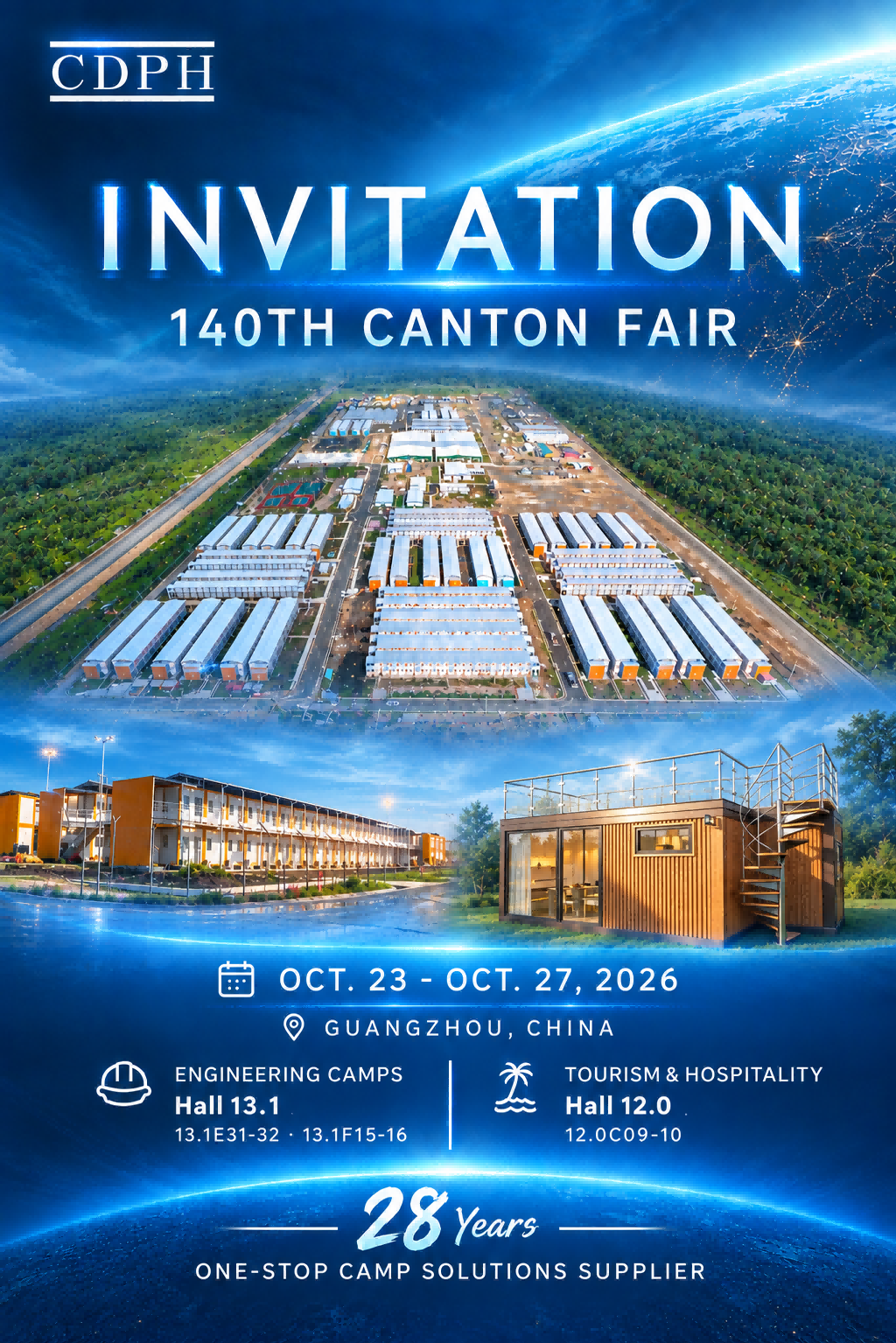
From a planning perspective, China National Petroleum Corporation Iraq-Zubyar Degassing Station Expansion Camp Project is organized around clear functional zones, with modular dormitories, offices, sanitary units, and public areas arranged to keep daily worker flows short and efficient. Standardized container units form the core of the accommodation and office blocks, while complementary prefab structures are used for canteens, storage, and technical rooms, ensuring that every part of the camp follows a consistent structural and systems standard.
Because the project site faces challenging local conditions, Chengdong designed the camp with climate‑appropriate envelopes, reliable drainage, and corrosion‑resistant finishes, reducing maintenance demands over a multi‑year operating period. Most of the building work was completed in Chengdong’s three domestic factories before shipping, so critical spaces could be installed and commissioned quickly on site, which is essential for time‑sensitive engineering projects.
China National Petroleum Corporation Iraq-Zubyar Degassing Station Expansion Camp Project also highlights the advantages of Chengdong’s EPC camp model. One team handled camp planning, modular design, factory production, sea and land logistics, and on‑site installation, which helped the owner avoid typical coordination problems between multiple suppliers. The modular buildings were configured for future relocation and reuse, allowing the client to redeploy units to new projects after the initial contract period and extend the total service life of the investment.
Why Factory Strength and Location Matter: Three Domestic Bases
When a project involves hundreds or thousands of prefab units, supply risk becomes as important as product design. One of Chengdong’s core differentiators is its strong manufacturing base inside China. The company operates three major domestic production bases, forming a coordinated manufacturing network.
These three factories give Chengdong several concrete advantages that global buyers look for in the best prefab house companies:
High production capacity: The combined annual output can support very large engineering camps, with container houses, prefab houses, and steel structures produced in parallel to shorten overall schedule.
Geographic spread: A coastal North China hub, a western and northwest hub, and a southwestern hub together make it easier to respond quickly to different export ports and inland routes.
Lead time control: Multiple factories allow production to be balanced and rescheduled across sites, reducing risks from regional disruptions and keeping delivery on schedule.
For overseas EPC projects, this three‑factory layout is especially important because it enables Chengdong to match factory location with the most efficient shipping or overland routes, whether modules are going by sea freight, rail, or truck into neighboring countries. Strong manufacturing strength and flexible capacity deployment significantly reduce the risk of delays for time‑critical camps.
Durability and Lifecycle: How Long Do Prefab Houses Last in Camps?
Longevity is another key selection criterion when ranking the best prefab house companies. Modern prefab and container houses use optimized steel structures, insulation systems, coatings, and enclosure components to balance cost with service life.
In engineering applications, typical performance ranges are:
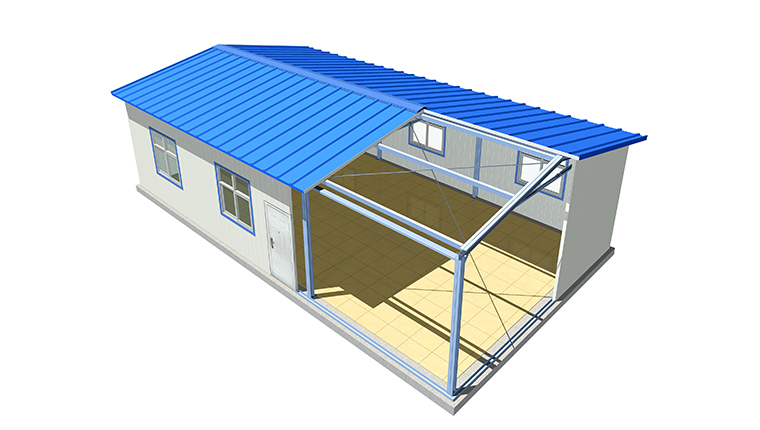
Standard flat‑pack or light‑steel prefab systems: Often designed for around 8–15 years of effective usage in harsh camp environments, with potential for multiple relocations.
Container houses: With proper steel grades, surface treatments, insulation, and drainage design, they can often achieve 15–25 years of service life in engineering camps, and significantly longer in milder residential applications with good maintenance.
Climate‑tuned systems: When corrosion protection, roof structure, wind resistance, and insulation are designed according to specific climate categories, design service lives of 20 years or more are realistic even in challenging regions.
Since most engineering camps have operating cycles of 3–7 years per site, this means the same modular units can be deployed across multiple projects and locations, dramatically reducing annualized cost per bed or per square meter. A prefab supplier that focuses on robust climate‑appropriate design, instead of only initial price, usually brings a much better total cost of ownership for the owner.
How to Choose Among the Best Prefab House Companies
For project owners and EPC contractors, choosing the right partner is not just about price. A practical selection framework includes the following points:
Match climate experience: Check whether the company has successfully delivered camps in climates similar to your site, such as arid deserts, alpine plateaus, tropical rain belts, or coastal industrial zones.
Review EPC camp cases: Look for complete camp case studies that show master planning, system integration, and multi‑year operation rather than just individual buildings. The case at https://www.cdph.net/case-center/100 is an example of an integrated solution.
Verify factory capacity and locations: Confirm the presence of multiple large‑scale factories and ask how production will be arranged for your project, including peak capacity and backup plans. Chengdong’s three domestic bases are a strong reference here.
Check product adaptability: Ensure the supplier offers container houses, prefab panel houses, cold‑climate modules, luxury modules, and light‑steel structures so your camp can be optimized building by building instead of forced into a single generic model.
Evaluate long‑term support: The best prefab companies provide on‑site installation guidance or construction service, spare parts, and technical advice for relocation and later expansion, not only a one‑time shipment.
When a candidate supplier can demonstrate solid performance on all of these dimensions—products, climate engineering, EPC process, manufacturing capacity, and real project references—it moves from being just a “prefab vendor” to being one of the best prefab house companies for global engineering camps.
Internal Links to Explore Further
If you are planning a new EPC camp or upgrading an existing one, you can explore Chengdong’s integrated modular solutions and core camp products through the following pages:
These resources provide a deeper view into how an experienced EPC camp partner designs, produces, and delivers modular building systems that perform reliably in real‑world climates and complex project conditions.




 More
More









![Top Advantages of Modular Construction Explained [2025]](/uploads/upload/images/20250424/0fb390068474145a09a8c0504c73b1d2.png)
 May 09, 2025