For global engineering projects far from cities, a container house is only one piece of the puzzle; what project owners truly need is a one-stop camp solution that integrates buildings, utilities, safety and environmental systems. Choosing a container house China manufacturer capable of delivering full camp systems instead of just selling steel boxes can determine whether a remote camp is safe, efficient and sustainable throughout its lifecycle.
From container supplier to camp systems provider
Many suppliers in the market can fabricate container shells, but relatively few act as true camp systems providers. Beijing Chengdong International Modular Housing positions itself explicitly as an “expert constructor of camps for global projects”, providing not only modular products but also integrated plans and services for engineering camps.
Since its founding, Chengdong has focused on modular and rapid-install housing, combining scientific research, production, marketing and integrated construction under one roof. Over more than twenty years, its products and services have supported more than one thousand camp projects in over one hundred countries and regions, spanning Europe, Latin America, tropical Africa and Eurasia.
For owners searching for a container house China manufacturer, this evolution—from simple producer to integrated camp solution provider—is a key differentiator. It means the partner can take responsibility for planning, design, product selection, logistics, installation and even camp operation support.
The nine-system framework behind one-stop camp solutions
Chengdong’s one-stop approach is built on a well-defined “nine-system” framework for engineering camps. Camp planning serves as the platform, combining:
Building system
Water supply, drainage and heating system
Power system
Low-voltage system
Fire-fighting system
Security system
Traffic and road facilities system
Environmental facilities system
Environmental protection system
By designing and coordinating these nine systems together, Chengdong creates safer, smarter and more cost-effective camps for global workers. When evaluating a container house China manufacturer, owners should look for this kind of system-level thinking instead of standalone building catalogues.
Container house products as the core building system
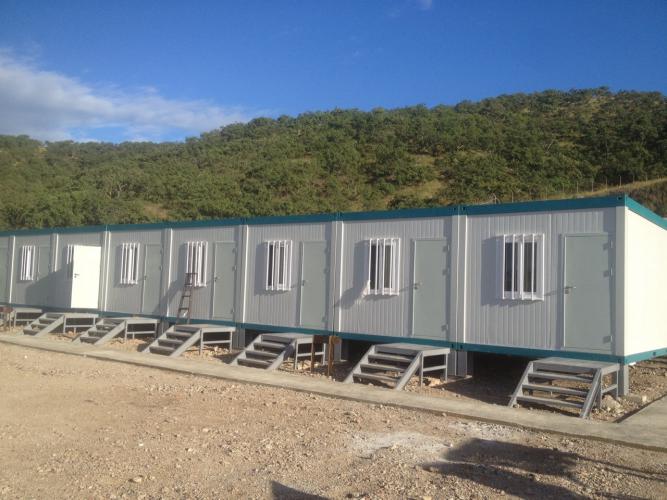
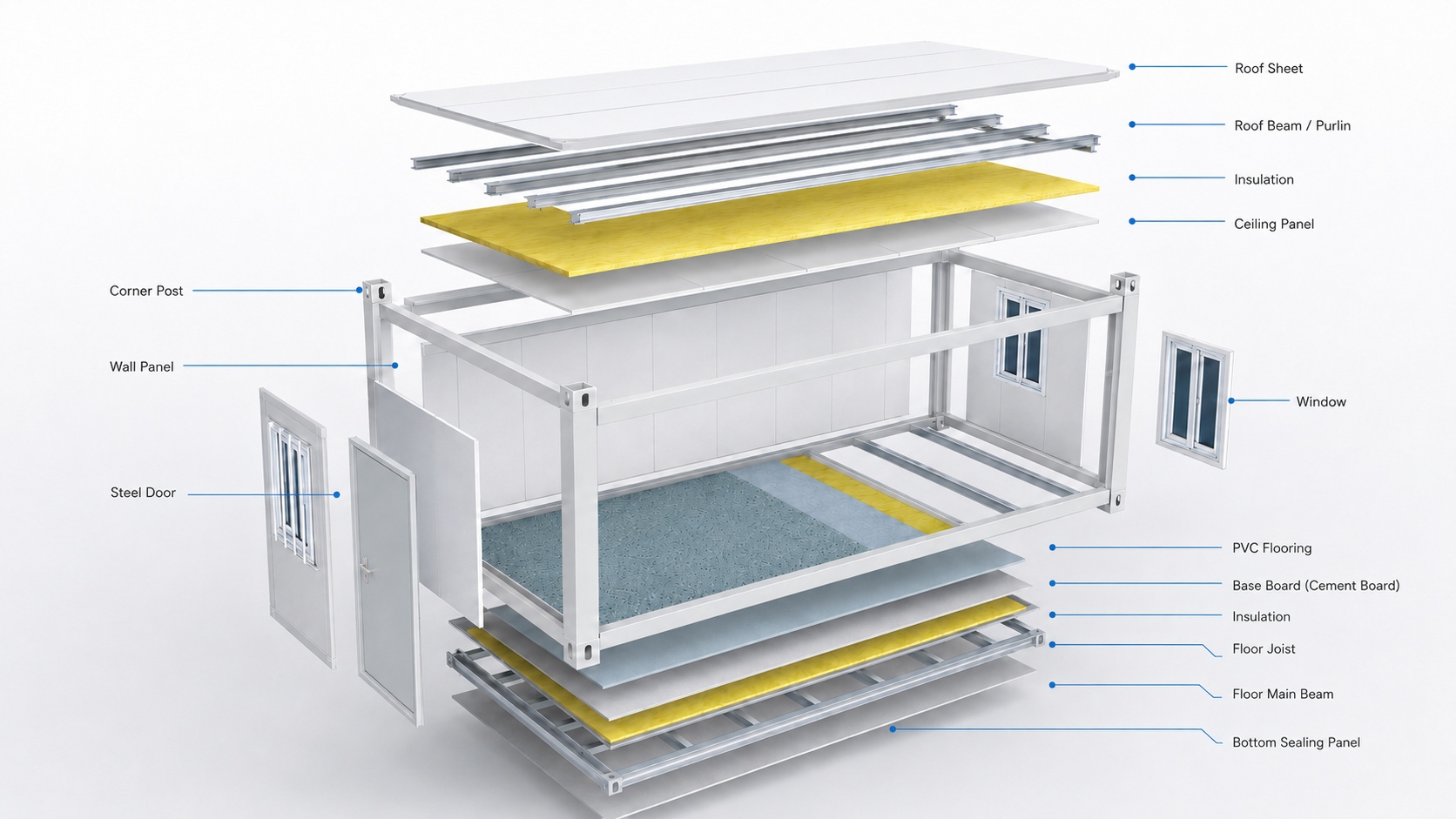
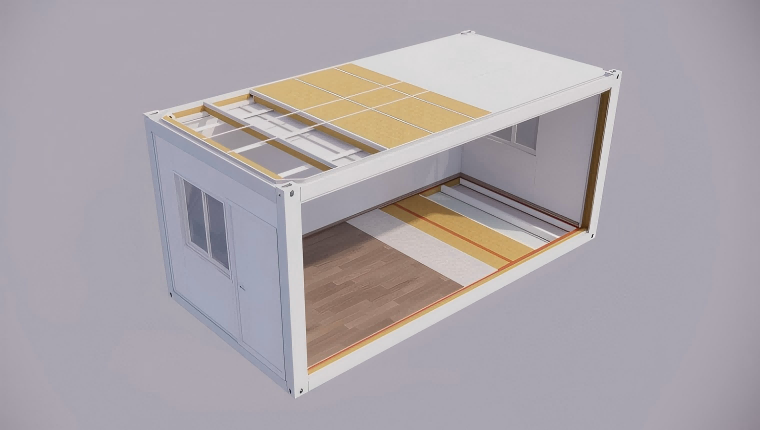
Within the building system, container houses and modular buildings are the primary carriers of camp functions. Chengdong’s modular housing products are manufactured at scale, with highly integrated floors and roofs that leave the factory ready for rapid onsite assembly.
All parts of the houses are produced in a standardized, industrialized way, enabling fast installation guided by functional requirements once modules reach the site. After project completion, modules can be transported as whole units, allowing the site to be restored without leaving construction waste. The same units can pass through multiple cycles of assembly and disassembly, giving high reuse value and supporting sustainable, “green” camp development.
Functional building types supported by these container house systems include offices, medical buildings, production and operation buildings, public bath buildings, religious buildings, accommodation, entertainment and recreation buildings, canteens, warehouses and more. Interior installations such as furniture, appliances and kitchen equipment are also part of the building system menu.
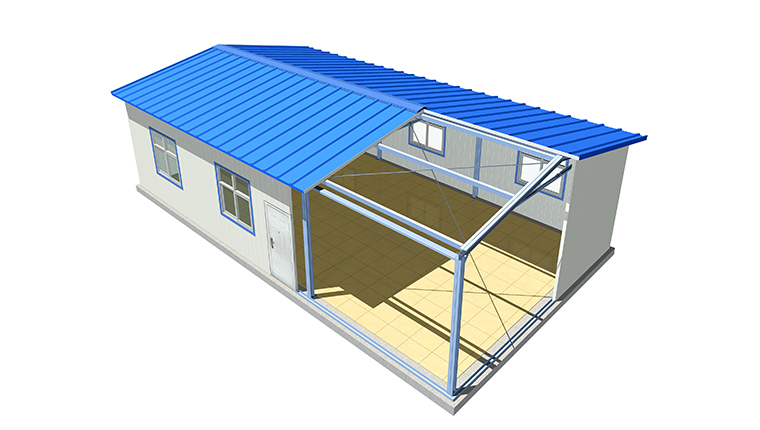
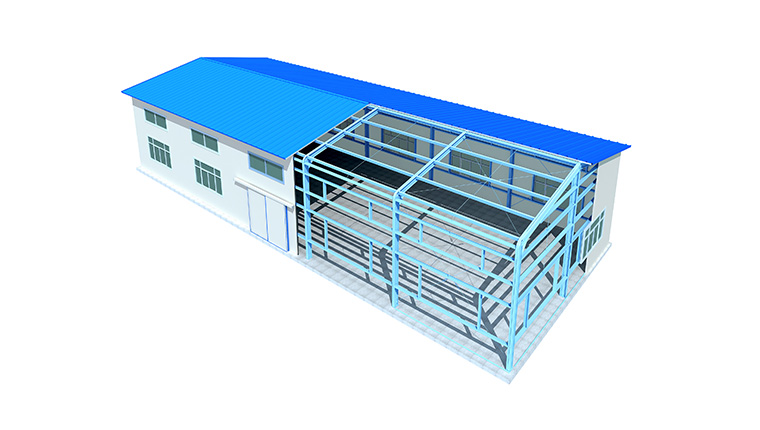
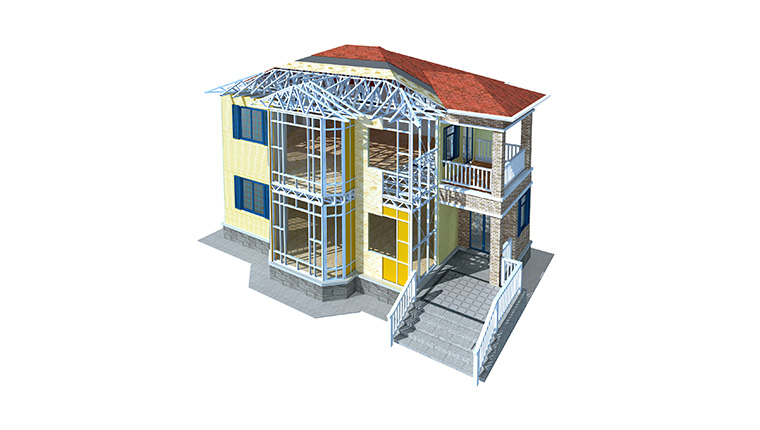
From a product-portfolio perspective, the container house is only one category within Chengdong’s broader offering, which also includes prefab houses, light steel villas, steel structures and tourism module houses. According to the product center, the container house is a movable and reusable building product based on a container frame, which can be used alone, combined horizontally and vertically to form larger spaces, and stacked up to three storeys. The product center further notes that this system is favored by users because of its stable structure, bolt connections, fast installation and adaptability to different camp functions and climates.
A one-stop container house manufacturer must therefore offer not just bare containers, but a full matrix of function-oriented modules, interior fit-out options and related structural systems that can be configured for complete camps.
Water, drainage and heating: making camps livable
In remote project areas, local water quality and infrastructure often fall short of camp requirements, so integrated water, drainage and heating systems are essential. Chengdong’s water-related systems include water supply installations such as sanitary facilities, integrated bathrooms, water tanks, water treatment equipment and water supply units.
Drainage installations comprise grease interceptors, prefabricated inspection wells, septic tanks and related pipelines. Hot water and heating installations include electric or solar water heaters, central solar heating systems, electric heaters and associated plumbing.
Integrated bathroom modules are a key example of this system thinking. They are industrially fabricated in one step—roof, floor, walls and all bathroom facilities—occupying little space while providing full functionality. They require no additional waterproofing, can be reused multiple times without loss through repeated disassembly, and are considered a preferred choice for ecological camps.
Water purification units are another standard element of Chengdong camps. These devices treat raw water to safe potable standards and reflect a human-centered approach to worker welfare, becoming standardized equipment in many camps.
Comparisons between integrated wastewater treatment equipment and traditional systems highlight benefits such as factory-integrated production, easier onsite installation, automatic control and recyclability through relocation and reuse. Selecting a container house manufacturer that supplies these complete water and sanitation systems greatly simplifies camp design and ensures environmental compliance.
Power, lighting and low-voltage systems: powering the camp
Most remote camps must generate and distribute their own power. Chengdong’s power system offering includes power supply and distribution installations such as transformers, diesel generators, photovoltaic generators, distribution cabinets and cables.
Lighting installations include interior lighting, eco-lighting such as LEDs and exterior lighting. Energy-saving lighting is emphasized, with data comparing LED lamps, energy-saving lamps and incandescent lamps in terms of wattage, service life and suitability for frequent switching. By applying eco-lighting, camps improve both working and living conditions while lowering power consumption.
Low-voltage systems cover communication telephone systems, cable TV and information networks, forming the digital backbone of the camp. When these systems are designed in concert with container house layouts and power systems, they support efficient camp operation and management.
Fire protection systems: safeguarding lives and assets
In isolated engineering camps, fire risks must be managed internally because external fire services may be far away. Chengdong’s fire-fighting system includes fire alarms and fire-fighting equipment, emergency lighting and evacuation signage, indoor hydrants and sprinkler installations.
A notable feature is the wireless fire alarm system, which consists of wireless sound and light alarms, manual alarm buttons, wireless smoke and temperature detectors, gas detectors, gateways and centralized control systems. This system offers simple installation and flexible design without the need for extensive wiring, reduced material and labor costs compared to traditional wired systems and rapid deployment to meet fire protection needs of camps.
For project owners, choosing a container house manufacturer with mature, integrated fire protection systems reduces the risk of catastrophic incidents and eases compliance with safety regulations.
Security, roads and environmental systems: building a complete camp environment
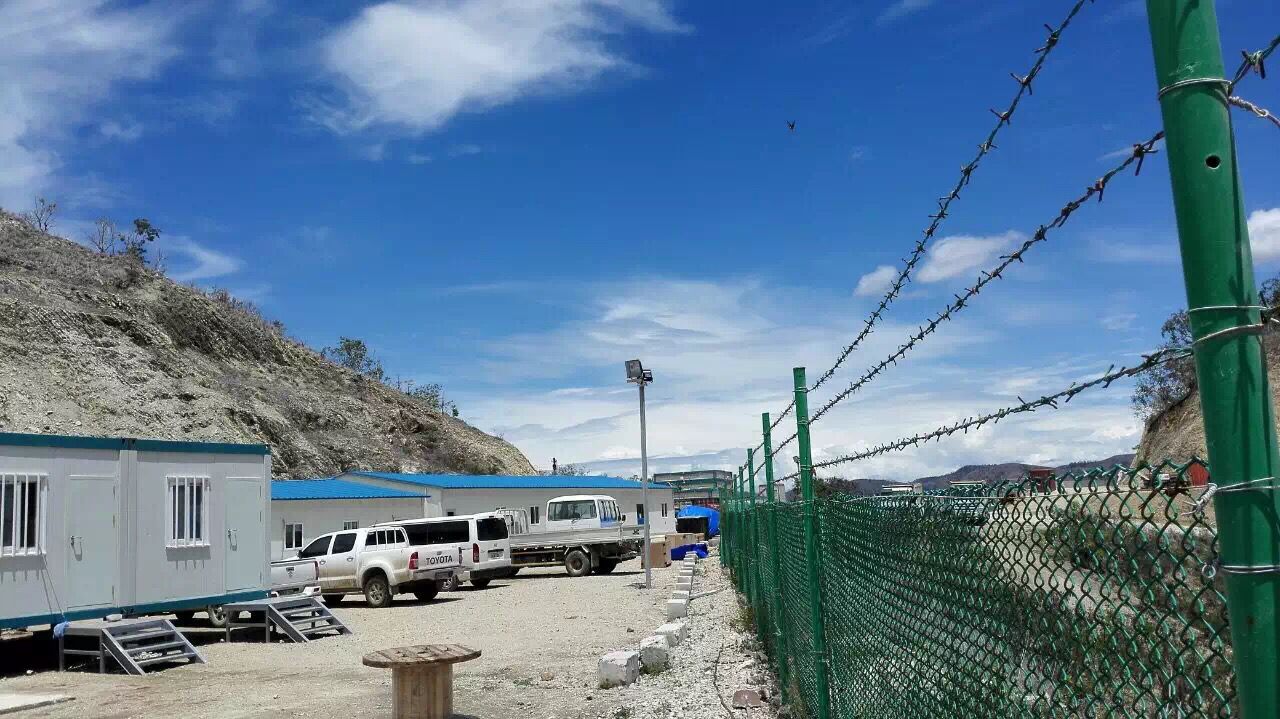
Beyond buildings and utilities, one-stop camp systems must address security, transportation and environmental quality. Security systems include fences, watchtowers, CCTV monitoring, gates, intrusion alarms and emergency medical rescue equipment such as disaster emergency supply kits and medical first-aid boxes. These installations help maintain camp safety in remote or high-risk areas.
Traffic and road facilities systems provide vehicle roads, pedestrian paths, parking areas and associated road installations. Proper road planning and construction support efficient movement within the camp and safe access for logistics and emergency vehicles.
Environmental facilities systems encompass landscaping, corporate image elements, sports fields and fitness equipment, helping create a more pleasant and humanized living environment for workers. Environmental protection systems focus on domestic waste disposal and wastewater treatment facilities, ensuring that camp operations minimize their ecological footprint. By integrating these systems at design stage, Chengdong aligns camp construction with green development principles.
Integrated planning: the starting point of a one-stop solution
All nine systems are tied together through professional camp planning and design. Chengdong’s planning services include topographic plans with elevation information, vertical planning drawings, earthwork volume estimates and external drainage design. They also include road planning and confirmation of road types and widths, building planning covering types, functions and floor areas, and external environment design such as planting, sports and recreation areas.
Infrastructure planning for generator rooms, water treatment equipment and other key support facilities is coordinated with external drainage and electricity design, including pipeline and cable routes and elevation. Drawing on decades of experience, Chengdong can provide integral camp construction solutions tailored to different climates and site conditions in different countries. This means owners receive not only container house layouts but also complete, coordinated designs for all systems.
Logistics and construction management: delivering full systems to site
One-stop camp solutions also depend on reliable logistics and construction management. Chengdong offers professional logistics design, working with powerful local enterprises to transport nine-system materials to site in the optimal manner.
Multiple maritime transport partners and project-specific shipping plans help ensure timely delivery. Chengdong is classified as an A-class export enterprise by China Customs, enjoying priority in declaration, inspection and clearance processes. The company also has deep understanding of commercial rules in countries like Chile and Argentina and strong local partner support to speed customs procedures.
Onsite, Chengdong’s experienced technicians understand building norms of different countries and can guide and lead local workers through the installation process. Their skills in managing local employees, especially in regions with strict labor regulations such as Argentina and Chile, allow them to quickly organize local labor to start construction and maintain high efficiency. For owners looking for a container house China manufacturer, these logistics and construction management capabilities are essential components of a truly one-stop camp solution.
Global project examples: proof of one-stop capabilities
Chengdong’s integrated camp solutions have been applied in numerous projects worldwide, including hydropower projects in Argentina, port expansion in Abidjan, Côte d’Ivoire, reconstruction and expansion of the Velana International Airport in the Maldives, river channel improvement for the Padma Bridge in Bangladesh and power plants, multi-mining projects and industrial facilities in Venezuela, Guyana, Peru, Bolivia and Chile.
A representative example is the CC&LB Hydropower Station Camp Project in Santa Cruz, Argentina, detailed in the case study Engineering for Modular Housing: Hydropower Camps in South America. In this project, Chengdong applied a newly developed ZA second floor system, a wind-resistant roof design for conditions exceeding 100 km/h, enhanced second-floor bathroom waterproofing, a 10.5 m long-span frame and factory-prefabricated box houses shipped as complete modules. These engineering measures improved structural stability, waterproof performance, wind resistance and logistics efficiency, setting a benchmark for modular hydropower camps in challenging environments.
These global projects demonstrate that Chengdong can deliver container house-based camps combined with nine-system support in diverse geographies and climates. For owners, such references provide confidence that the manufacturer can handle complex, real-world challenges from design through operation.
How to evaluate a container house China manufacturer for full camp systems
When selecting a container house China manufacturer to deliver one-stop camp solutions, project stakeholders should focus on whether the manufacturer acts as an integrated provider of camp plans, modular products and nine supporting systems, or only as a container fabricator. They should examine if the supplier can demonstrate long-term global experience in more than one hundred countries and over one thousand camp projects and whether they offer modular products with factory-integrated floors and roofs, reusable modules and complete interior options for different building functions.
Decision makers also need to check if water, wastewater, hot water and heating systems are part of the standard offering, including integrated bathrooms and water purifiers, and whether coordinated power, lighting and low-voltage systems are tailored to camp size and location. Integrated fire protection and security systems—including wireless fire alarms and intelligent security—should be part of the camp design, along with road, environmental and environmental protection systems to create a safe, green camp environment.
Finally, strong logistics planning, maritime partners, A-class customs status and experienced construction management teams capable of working with local labor and regulations are essential characteristics of a true one-stop manufacturer. By choosing a container house China manufacturer that meets these conditions, owners and contractors secure more than a building supplier; they gain a long-term partner for complete engineering camp solutions and can better align their projects with safety, efficiency and sustainability goals




 More
More










![Top Advantages of Modular Construction Explained [2025]](/uploads/upload/images/20250424/0fb390068474145a09a8c0504c73b1d2.png)
 May 09, 2025