What Is a Prefab Labor Camp Manufacturer?
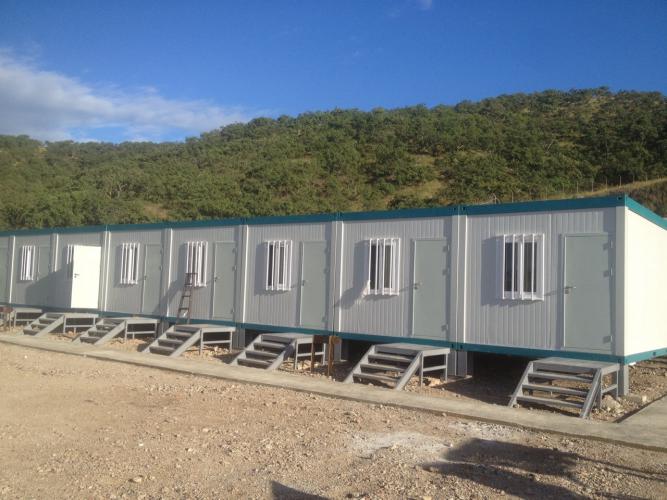
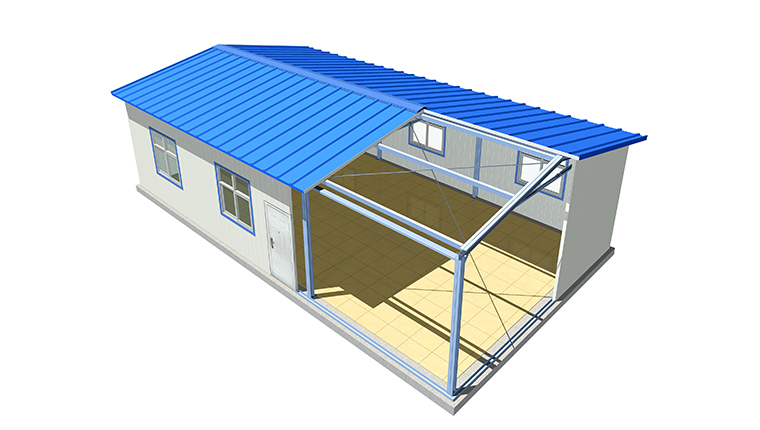
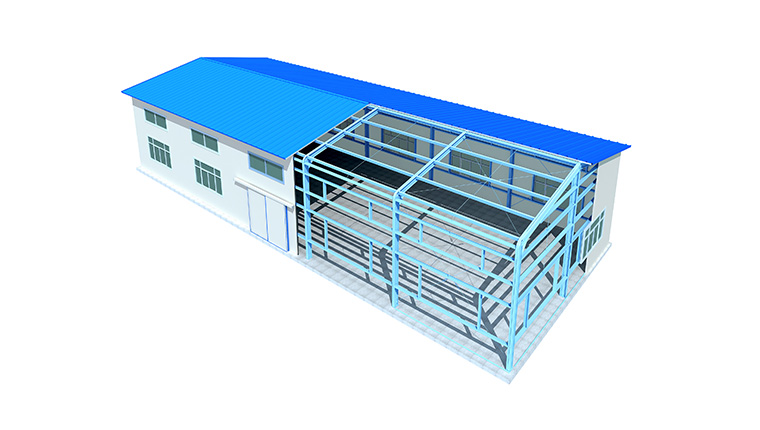
A prefab labor camp manufacturer is a specialized modular construction company that designs, produces, and installs complete worker camps using factory-built modules instead of traditional on‑site construction. These manufacturers supply standardized container houses and panelized buildings that can be transported in bulk and quickly assembled into dormitories, offices, canteens, clinics, and other facilities at remote project sites.
Unlike general building contractors, a dedicated prefab labor camp manufacturer understands the full lifecycle of engineering camps, including camp master planning, multi‑system integration (water, power, security, fire safety), logistics, and on‑site installation management. For EPC contractors and owners, this means one partner can deliver a complete turnkey camp solution under a single contract.
Why EPC Projects Need Reliable Labor Camp Manufacturers
Large EPC projects in energy, mining, and infrastructure usually take place in remote or harsh locations where no permanent housing exists. Project success often depends on how fast you can mobilize, how safely people can work, and whether workers are willing to stay on site for months or years. A reliable prefab labor camp manufacturer directly influences these factors in several ways.
First, modular labor camps drastically shorten the time required to provide habitable accommodation and working facilities, allowing contractors to bring in manpower and equipment earlier. Second, standardized designs and industrialized production ensure that all buildings meet consistent safety, insulation, and fire‑protection requirements, even when labor and materials on site are limited. Third, modern labor camps can significantly improve comfort, hygiene, and ESG performance, which supports worker retention and reduces social and environmental risks.
Key Capabilities of a Leading Prefab Labor Camp Manufacturer
End‑to‑End Camp Planning and Design
Top manufacturers do more than sell prefabricated units; they plan entire camps based on project goals, site conditions, and workforce structure. This includes topographic analysis, traffic and road layout, zoning of living and working areas, and outdoor landscaping to create a safe, human‑centered camp environment. Advanced providers integrate nine supporting systems—building, water supply and drainage, power, low‑voltage systems, fire protection, security, traffic and roads, environmental landscaping, and environmental protection—into one coherent design.
By working with one experienced team, EPC contractors reduce design coordination errors and can optimize land usage, pedestrian flows, emergency evacuation routes, and utility networks from the very beginning. This integrated approach also makes it easier to comply with local regulations and international standards because all systems are designed to work together.
Industrialized Modular Production
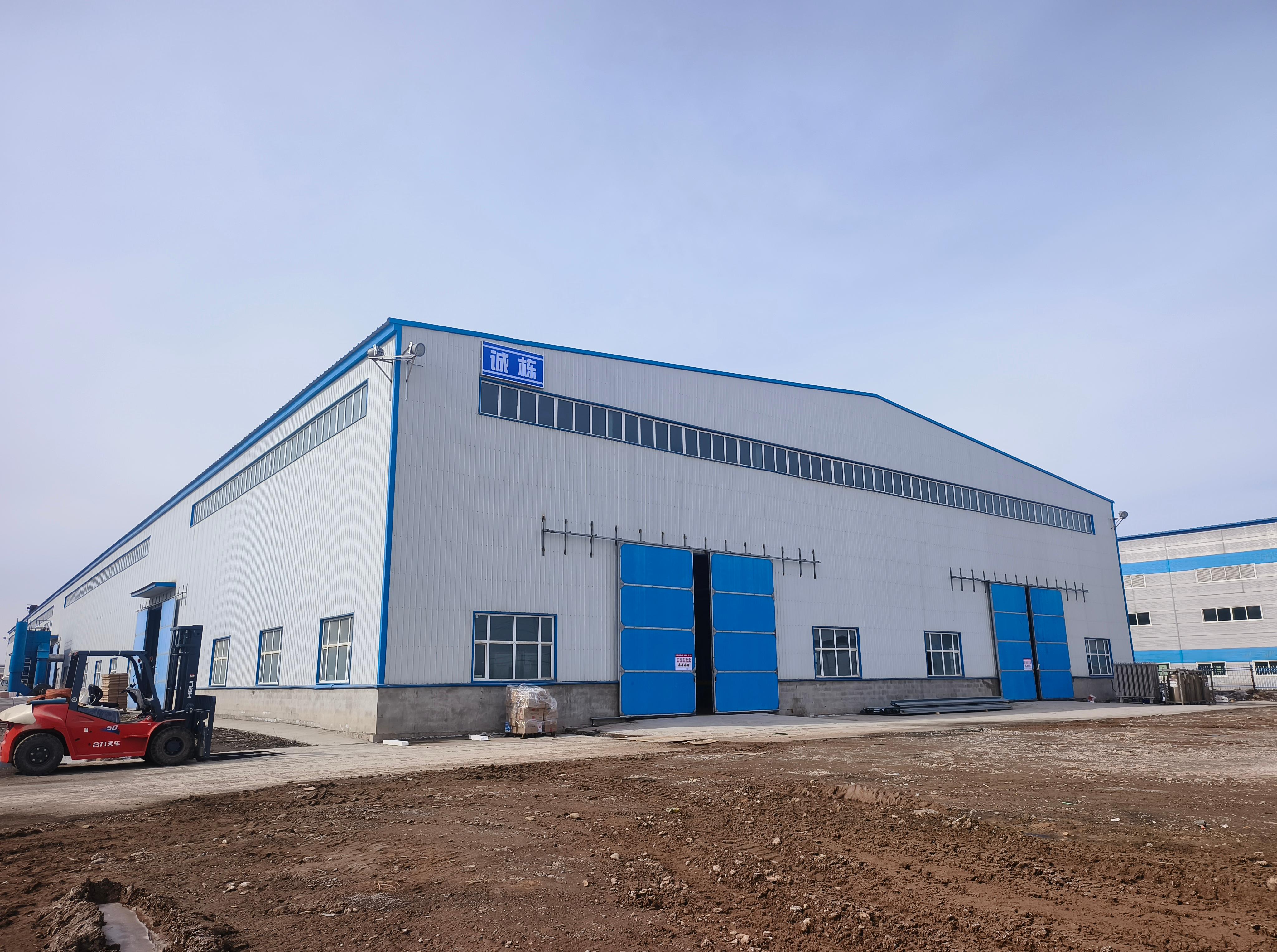
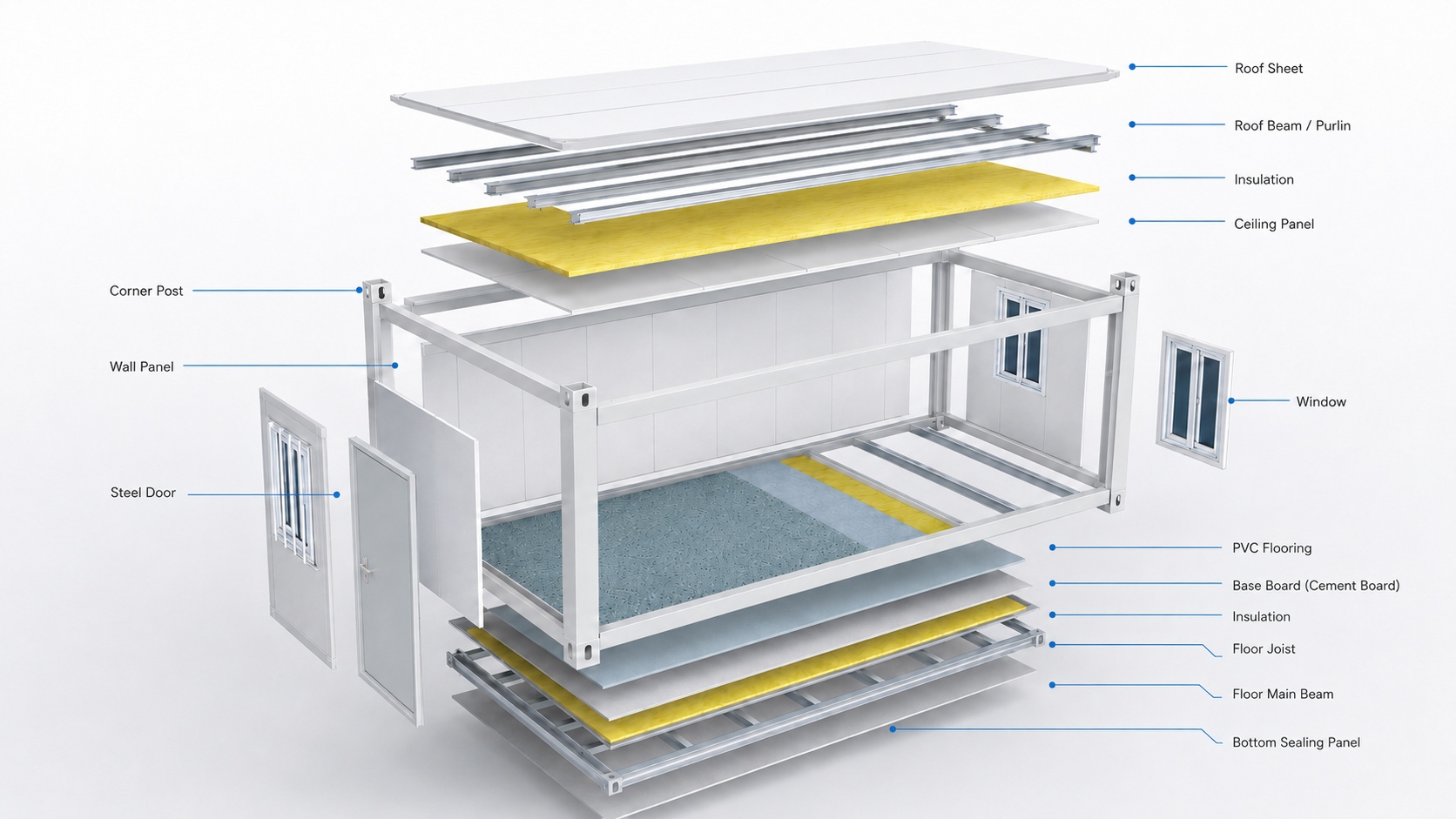
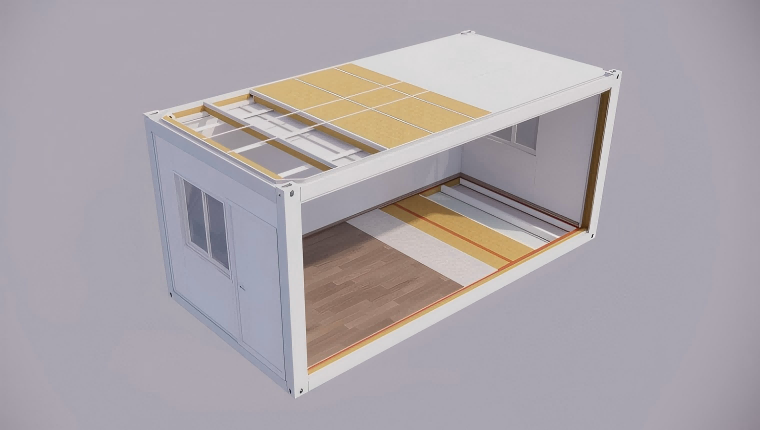
In the factory, a prefab labor camp manufacturer mass‑produces container houses and modular structures with standardized dimensions, materials, and connection details. Steel frames are hot‑dip‑galvanized for corrosion resistance, wall and roof panels use high‑performance insulation, and floors, doors, and windows are pre‑installed to reduce on‑site work. Consistent production processes and quality control systems—often certified to ISO9001, ISO14001, and OHSAS/ISO45001—ensure every module meets the same safety and performance benchmarks.
This industrialized method delivers several benefits: predictable lead times, easier spare‑parts management, and lower risk of defects or delays caused by local material shortages. Because modules are designed for multiple installation and dismantling cycles, they can be relocated after project completion or reused for new projects, improving total lifecycle value.
Fast Logistics and On‑Site Assembly
Experienced manufacturers understand that logistics can make or break a remote camp project. They optimize module dimensions for sea containers and trucks, cooperate with local logistics partners, and plan batch shipments so that on‑site installation can start immediately upon arrival. On site, a skilled installation team guides local workers, using standardized connection systems and clear erection sequences to build multi‑storey dormitories, offices, canteens, and support buildings in a matter of weeks.
Compared with traditional concrete structures, which may require months of wet trade work, rebar, and curing time, modular camps can reach operational readiness much faster, even under tight schedules or extreme weather. For EPC contractors facing liquidated damages or production start deadlines, this time advantage translates directly into financial value.
Design Features That Matter in Prefab Labor Camps
Comfort and Health for Workers
Modern prefab labor camp manufacturers design camps as livable communities, not just temporary shelters. Well‑planned dormitories offer adequate room size, natural light, ventilation, and thermal comfort, while communal facilities such as canteens, gyms, recreation rooms, prayer rooms, and outdoor sports fields support workers’ physical and mental well‑being. Intelligent water purification systems, ecological lighting, and integrated waste‑water treatment reduce health risks and enhance environmental performance.
These human‑centered features help contractors attract and retain skilled labor, reduce absenteeism, and maintain stable productivity over long project cycles. They also support compliance with corporate ESG commitments and international worker welfare guidelines, which are increasingly important for global investors and regulators.
Safety, Fire Protection, and Security
Safety is a non‑negotiable aspect of any labor camp. Reputable manufacturers design structures to meet specific wind, snow, and seismic loads, using engineered steel systems and tested wall and roof assemblies. Fire safety is addressed through fire‑rated panels, emergency exits, clear escape routes, and integrated alarm and sprinkler systems; wireless fire alarm solutions can simplify installation and reduce cabling costs while still meeting performance requirements.
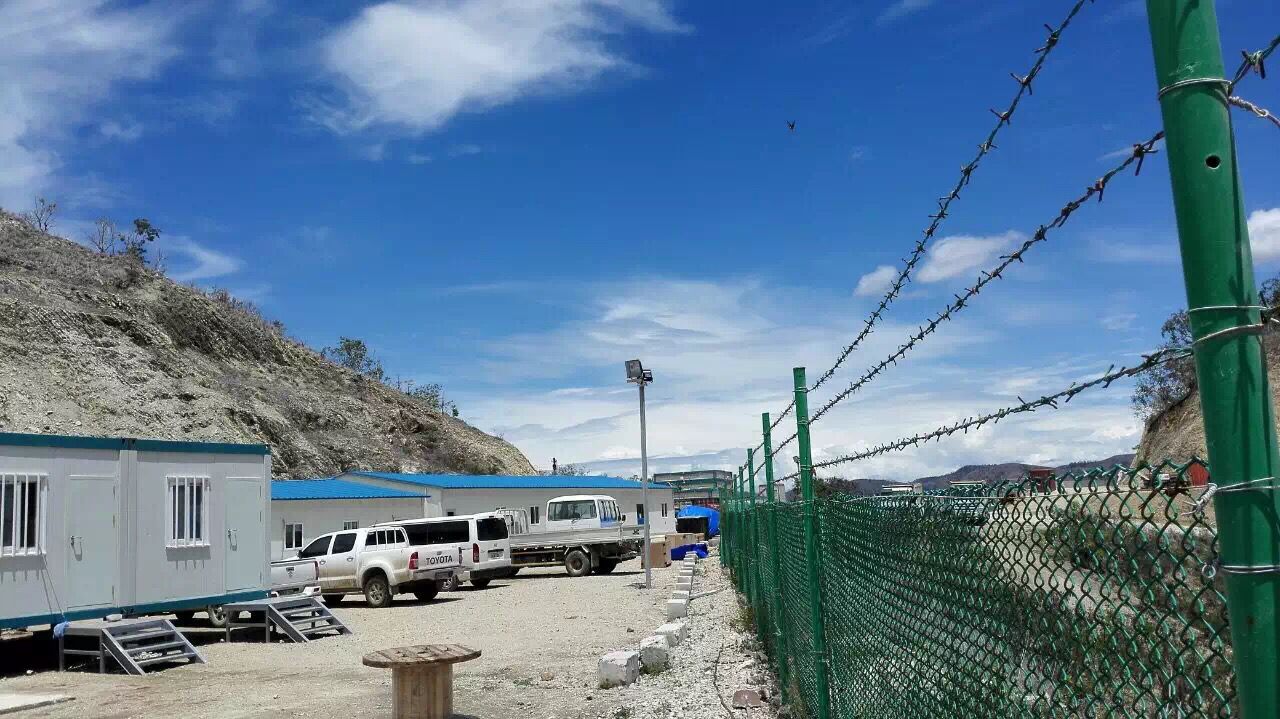
Security systems—including perimeter fencing, access control, CCTV monitoring, and emergency medical facilities—help protect both people and assets, especially in remote or politically sensitive environments. By treating safety as a system rather than a collection of devices, leading manufacturers help owners implement robust risk‑management strategies across the entire camp.
Flexibility for Different Climates and Terrains
Global projects face very different environmental conditions, from arctic cold at minus dozens of degrees to desert heat, high humidity, high altitude, and sandstorms. Specialized prefab labor camp manufacturers offer regionalized product lines such as cold‑resistant container houses, plateau camps, desert and Gobi camps, and high‑humidity tropical solutions, each optimized for local climate and energy‑efficiency needs.
For example, cold‑resistant camps use enhanced insulation, anti‑condensation details, and reinforced structures to ensure thermal comfort and structural safety at temperatures as low as minus 50 degrees. Desert camps may emphasize sun‑shading, low U‑value envelopes, and reliable cooling systems, while rainforest camps prioritize mold resistance and ventilation. This climate‑specific engineering allows the camp to operate safely and efficiently over many years.
Nigeria LNG Worker Camp: A Real‑World Case Study
A strong example of what a mature prefab labor camp manufacturer can deliver is the Nigeria LNG worker camp project, which used modular construction to support a major oil and gas development. In this project, the manufacturer provided a full suite of accommodation and support facilities tailored to a coastal African environment with demanding climate and infrastructure constraints.
The modular camp solution enabled rapid deployment of worker housing, offices, catering facilities, and other critical buildings, while maintaining structural durability and climate resilience. By integrating modular design with oil and gas industry requirements, the camp achieved a balance of speed, quality, and HSE performance that helped the EPC contractor maintain its construction schedule. This case demonstrates how an experienced prefab labor camp manufacturer can serve as a strategic partner for global oil and gas projects, not just a building supplier.
How to Evaluate a Prefab Labor Camp Manufacturer
Technical Strength and Certifications
When choosing a prefab labor camp manufacturer, start by reviewing technical qualifications and third‑party certifications. Look for evidence of long‑term specialization in modular camp construction, a strong track record of international projects, and quality, environmental, and occupational health and safety certifications such as ISO9001, ISO14001, and OHSAS/ISO45001. Additional credentials like CE certification for steel structures and sandwich panels indicate that key components meet EU standards for structural performance and fire safety.
Ask for technical documentation on structural design, insulation performance, and material specifications, including wind and snow load capacities, thermal transmittance values, and corrosion protection systems. A capable manufacturer will provide clear data and test reports rather than generic marketing claims.
Global Project Experience and References
Experience in your target region and industry is another critical factor. A manufacturer who has delivered camps across more than 100 countries and thousands of projects is more likely to understand local regulations, customs, logistics constraints, and labor practices. When they can show case studies in South America, Africa, the Middle East, Central Asia, and other key markets, it proves they can adapt to diverse climates and site conditions.
Ask for references from previous EPC clients and ENR‑listed companies to understand how the manufacturer performed in real projects—especially in terms of schedule adherence, quality control, and after‑sales service. Site photos, layout drawings, and performance feedback all help you judge whether the manufacturer can handle a project on the same scale as yours.
One‑Stop Service and After‑Sales Support
A strong prefab labor camp manufacturer should act as a one‑stop service provider, covering camp planning, product configuration, logistics, installation management, and optional operation support. Some companies implement a “5S” or “360‑degree” service philosophy, meaning they take responsibility from concept design and factory production to on‑site handover and lifecycle maintenance support.
After‑sales service is particularly important for remote sites: you need clear response mechanisms, spare‑parts management, and technical support channels in case of structural, electrical, or mechanical issues. Evaluate whether the manufacturer has regional offices or local partners who can provide timely assistance after the camp is occupied.
Why Partner With a Specialist Brand
Choosing a specialist prefab labor camp manufacturer rather than a general contractor brings tangible advantages in terms of risk control and total cost of ownership. A dedicated camp expert invests continuously in modular R&D, climate‑specific product lines, and process innovation, which translates into more robust, flexible, and sustainable solutions for your projects. Their standardized modules and mature supply chain allow them to support repeated deployments across multiple countries, helping global contractors replicate successful camp models from one project to the next.
For EPC bidders, working with a recognized brand can also strengthen tender documents by demonstrating proven capacity, international references, and compliance with stringent technical and ESG requirements. In competitive markets such as oil and gas, mining, and large‑scale infrastructure, this can be a decisive factor in winning projects and delivering them safely and efficiently.




 More
More










![Top Advantages of Modular Construction Explained [2025]](/uploads/upload/images/20250424/0fb390068474145a09a8c0504c73b1d2.png)
 May 09, 2025