What Is a Temporary Workforce Housing Manufacturer?
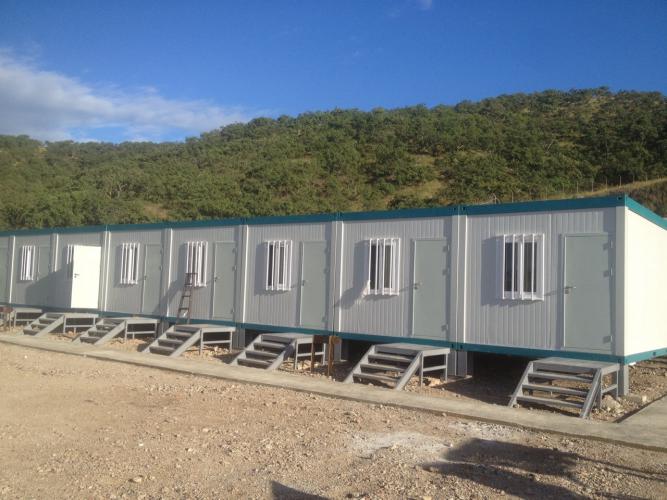
A temporary workforce housing manufacturer is a specialist company that designs, produces and installs prefabricated accommodation and support facilities for workers on time‑limited or remote projects. Instead of building with traditional brick and concrete on site, it uses factory‑made modular units—often container houses or panelized steel buildings—that are transported and assembled like building blocks.
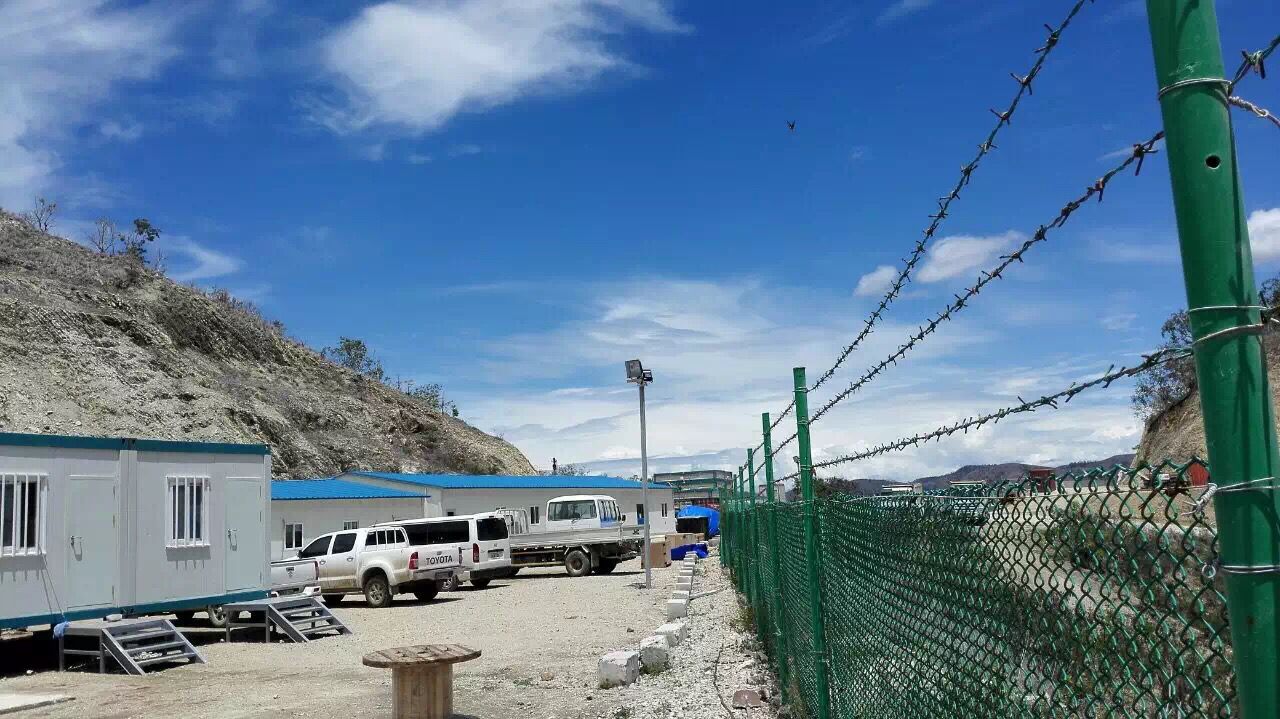
These manufacturers serve sectors such as infrastructure, hydropower, oil and gas, mining, rail, and large industrial plants where permanent housing is unavailable or uneconomical. Their role is to provide safe, comfortable, code‑compliant “village” style camps that can be deployed quickly, expanded or reduced as the project evolves, and then reused or relocated when the job ends.
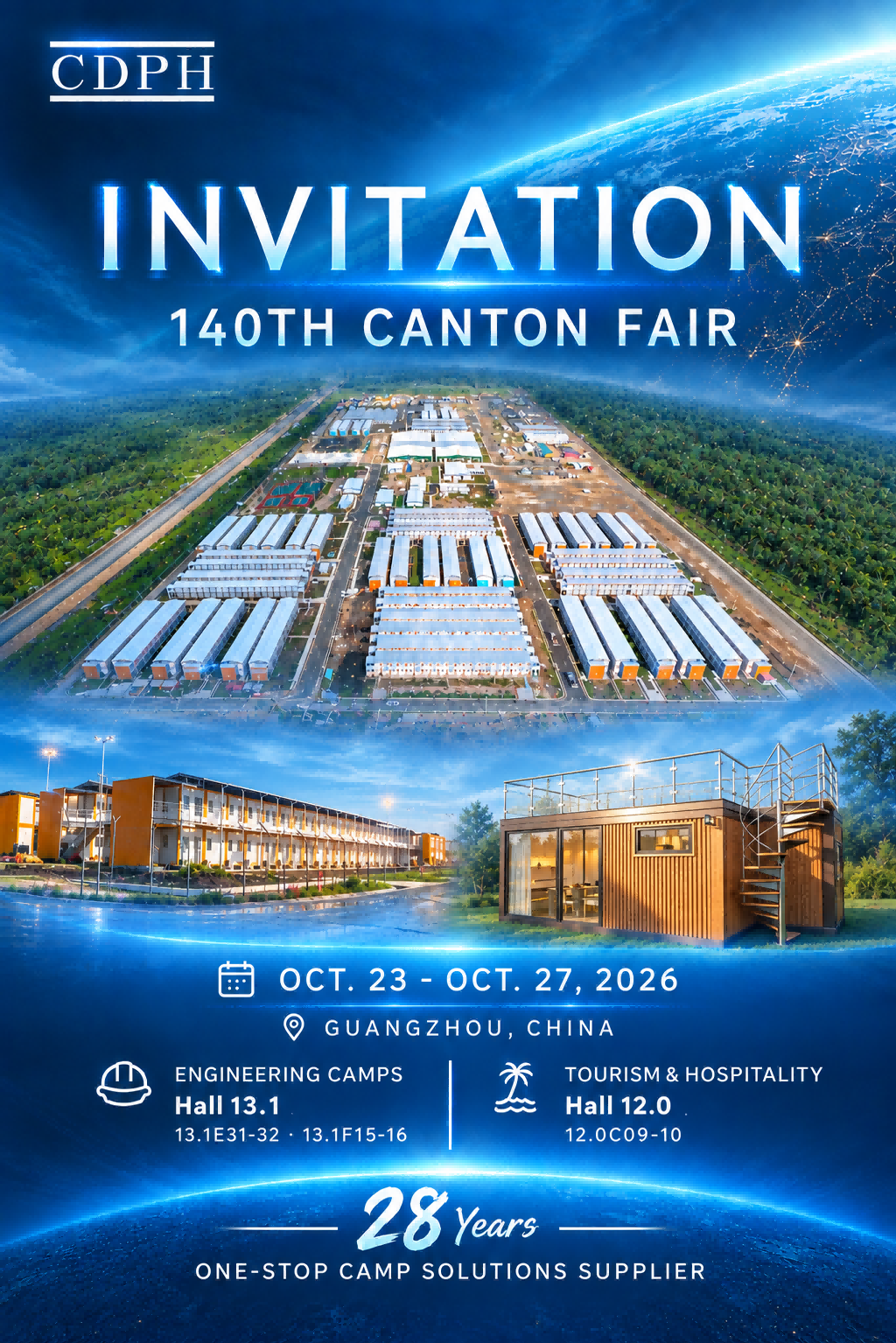
To give you a concrete example, Chengdong Modular House(CDPH) is a global engineering camp expert that offers modular houses, container houses, prefab houses and steel structures for construction camps and engineering projects worldwide. As a one‑stop temporary workforce housing manufacturer, CDPH delivers integrated solutions from early planning through to installation and operation support.
Why Temporary Workforce Housing Matters
Supporting Remote and Large‑Scale Projects
Large hydropower dams, cross‑border highways, refineries or mining operations are often far from cities, with poor local infrastructure and limited rental housing. Temporary workforce housing ensures that skilled workers, supervisors and local laborers all have safe, reliable accommodation close to the job site.
Well‑designed camps reduce daily commuting, improve punctuality, and make 24/7 or shift‑based operations feasible. They also help project owners attract and retain qualified staff who might otherwise refuse postings in harsh or isolated locations.
Health, Safety and Compliance
Regulators and clients expect worker accommodation to meet clear health, safety and welfare standards—covering fire safety, structural stability, sanitation, and basic comfort. A professional temporary workforce housing manufacturer understands these requirements and embeds them into its design, materials and construction methods.
By centralizing workers inside a planned camp, project owners can control access, implement fire and emergency procedures, and monitor hygiene, drastically reducing the risk of accidents, disease outbreaks or security incidents. This is essential when the camp becomes the workers’ “second home” for months or years.
How a Temporary Workforce Housing Manufacturer Works
From Design Brief to Camp Master Plan
The process typically starts with a project brief: sector, location, climate data, workforce size, contract duration and cost targets. Using this information, the manufacturer develops a camp master plan that defines the zoning of dormitories, canteens, offices, clinics, recreation, parking and technical areas.
For example, CDPH integrates camp planning with its “nine systems” methodology, covering building structures, water supply and drainage, power, low‑voltage communication, fire protection, security, traffic and roads, landscaping and environmental protection. This holistic approach ensures that every module, pipe and cable is coordinated instead of being added piecemeal.
Factory Production of Modular Units
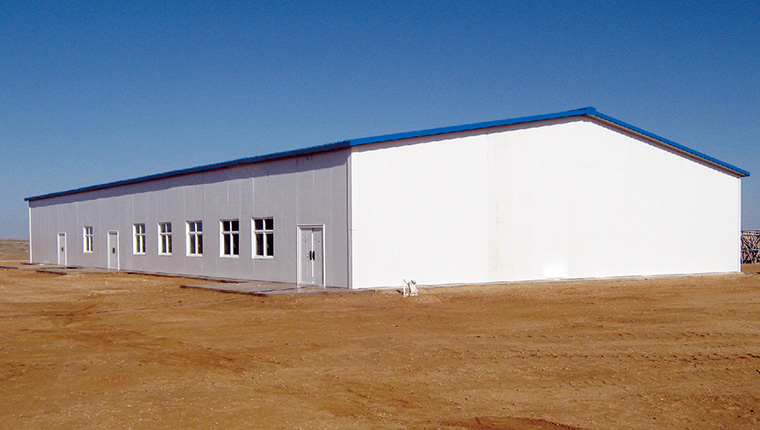
Once the layout is agreed, modules are produced in a factory environment using standardized steel frames, sandwich wall panels, floors, roofs, doors, windows and MEP components. Quality is controlled under certified management systems, and structural elements are engineered to meet wind, snow and seismic loads relevant to the destination country.
Factory‑produced container houses and modular buildings allow parallel fabrication while the site is being prepared, which compresses the overall project schedule. Units are pre‑wired and pre‑plumbed as far as possible, so on‑site work focuses on assembly and connection rather than cutting and welding.
Logistics, On‑Site Assembly and Commissioning
The manufacturer then manages or supports logistics—packing, shipping, customs clearance and inland transport—to bring all modules and systems to the site. On site, trained supervisors guide local crews to install foundations, assemble modules, connect utilities and commission the camp.
Companies like CDPH have extensive experience managing overseas logistics and local partners, particularly in regions such as South America, Africa and Asia, where complex customs procedures can otherwise delay camp handover. This end‑to‑end capability is a key differentiator between a true temporary workforce housing manufacturer and a simple materials vendor.
Technical Features of Modern Container‑Based Workforce Housing
Structural System and Materials
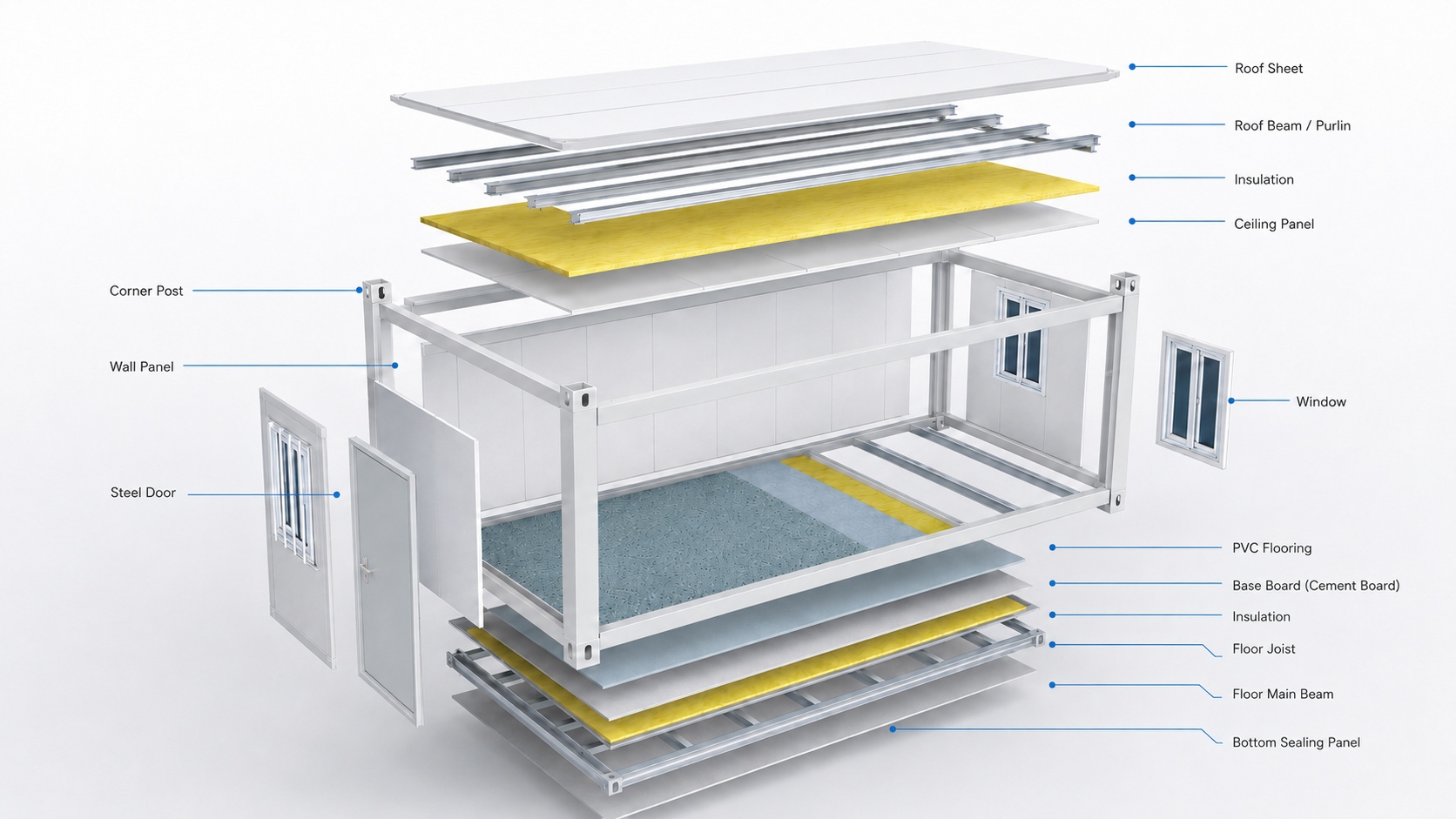
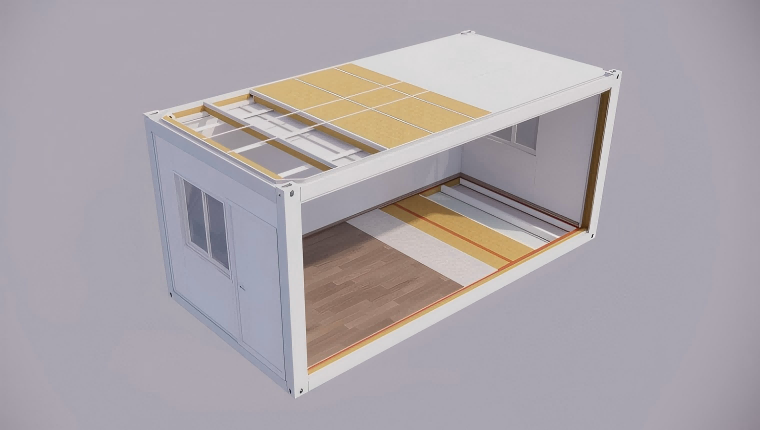
Contemporary flat‑pack container houses are built around hot‑dip galvanized steel columns and beams with high‑strength connections, designed for fast assembly and repeated relocation. Structural members often comply with standards like ISO or GB for steel quality and corrosion protection, and are sized to resist typical design loads for roof, floor and wind.
Wall and roof panels use insulated sandwich construction—typically with glass wool or polyurethane infill—to achieve thermal performance appropriate to the project’s climate band. In cold‑resistant systems for −30 to −50 degree environments, insulation thickness and density are increased and combined with low‑emissivity glazing to achieve low heat transfer coefficients. This allows containers to serve as dormitories, offices or clinics even in severe climates.
Interior Systems and Comfort
Inside, modules come with integrated flooring, ceiling, wiring and lighting, plus optional furniture and sanitary fittings depending on the building function. For dormitories, a typical configuration includes beds, wardrobes, HVAC, LED lighting and conveniently located sockets, while for offices the layout prioritizes desk space, data cabling and meeting areas.
Manufacturers like CDPH design ventilation and air‑conditioning systems to match occupancy and local climate, ensuring adequate fresh air and temperature control for worker health. Noise insulation and thoughtful zoning—keeping generators, workshops and busy roads away from sleeping blocks—further support rest and stress reduction.
Utility Integration and Safety
Temporary workforce housing is only as good as its water, power and sanitation systems. Integrated camp design includes water treatment and storage, hot water, drainage, sewage treatment, fire hydrants, alarms and emergency lighting as standard elements, not afterthoughts.
For fire safety, a manufacturer will coordinate structural fire ratings, fire alarm networks, extinguishers, hydrants, evacuation routes and assembly points in line with local codes and client standards. Electrical systems are designed with proper earthing, circuit protection and clear separation between high‑ and low‑voltage networks to reduce risks in dense camp environments.
For fast deployment, the camp core is built using flat pack container house modules with highly integrated roofs and floors, minimizing on‑site work.
Case Study – Hydropower Camps in South America
A strong way to assess a temporary workforce housing manufacturer is through real project cases. One representative example is Engineering for Modular Housing: Hydropower Camps in South America, a CDPH project in Santa Cruz, Argentina.
In this hydropower development, CDPH engineered modular housing for worker camps that had to operate in a remote, windy environment and support construction activity over many years. The solution combined modular dormitories, offices and public facilities into a cohesive camp, using robust steel structures and carefully detailed roofs and connections to withstand local wind loads.
The project also demonstrated CDPH’s ability to integrate multiple technical systems: building structures, power, water, sewage, roads, sport and recreation areas, and environmental protection measures. For owners and EPC contractors, this kind of one‑stop delivery reduces coordination risk and ensures that all pieces of the camp work together from day one.
To see how this works in practice, visit CDPH’s project page: Engineering for Modular Housing: Hydropower Camps in South America.
How to Choose the Right Temporary Workforce Housing Manufacturer
Key Evaluation Criteria
When selecting a partner, decision‑makers should evaluate both technical capability and project execution strength. Important criteria include:
Proven track record in similar sectors and climates (e.g., hydropower, mining, oil and gas, coastal or high‑altitude areas).
Engineering depth in modular structural systems, insulation, MEP integration and fire protection.
Ability to provide a full camp solution, not just buildings—covering utilities, roads, landscape and environmental systems.
International logistics experience and presence in the target region or neighboring countries.
Certified quality, environmental and occupational health and safety management systems.
Clear after‑sales service, spare parts and expansion or relocation support over the camp’s life.
Why CDPH Stands Out as a Temporary Workforce Housing Manufacturer
Beijing Chengdong International Modular Housing (CDPH) has focused on engineering camps and modular housing for more than two decades and has delivered over a thousand camp projects across more than one hundred countries and regions. Its customers include major Chinese contractors and international ENR‑listed companies, which rely on CDPH for large workforce housing complexes on dams, ports, power plants and industrial facilities.
CDPH positions itself not just as a product supplier, but as an expert constructor of camps for global projects, offering integrated solutions from master planning and “nine systems” design through to logistics, installation and operation guidance. For owners seeking a single responsible party to deliver temporary workforce housing on schedule and in compliance with international standards, this combination of technical capability and global project experience is especially valuable.
The Strategic Value of Temporary Workforce Housing
Temporary workforce housing, when delivered by a capable manufacturer, is more than just an expense line—it is a strategic project asset. It underpins safety, productivity and staff retention, reduces delays due to inadequate accommodation, and can be redeployed across multiple projects as modular assets.
By partnering with a one‑stop provider such as Chengdong Modular House (CDPH), project owners can simplify interfaces, shorten schedules and give their teams a safe, dignified living environment that reflects modern ESG and compliance expectations. In remote or challenging locations, a well‑designed camp often determines whether a project merely survives—or truly succeeds.




 More
More










![Top Advantages of Modular Construction Explained [2025]](/uploads/upload/images/20250424/0fb390068474145a09a8c0504c73b1d2.png)
 May 09, 2025