Why Container Homes Work for Emergency Housing
Emergency housing with container homes offers a unique balance of speed, durability and flexibility that traditional construction cannot match in a crisis. When floods, earthquakes, landslides or conflicts suddenly displace people, authorities and NGOs need shelter that can be deployed within days, not months, and container-based modular units are engineered for exactly that.
These units are factory-built using steel frames and insulated panels, delivered in flat-pack or assembled form, and designed for repeated lifting, relocation and reuse. Compared with tents or improvised shelters, container homes provide better structural strength, weather protection, privacy and comfort, which is essential when “temporary” camps often stay in use for years.
Climate and Environment Challenges for Emergency Camps
Different countries and regions pose very different challenges to emergency housing, from arctic cold to tropical humidity or high-altitude wind and snow. In cold regions and high latitudes, emergency camps must withstand heavy snow loads, strong winds and extreme temperature differences between day and night, while protecting occupants from heat loss, condensation and freezing utilities.
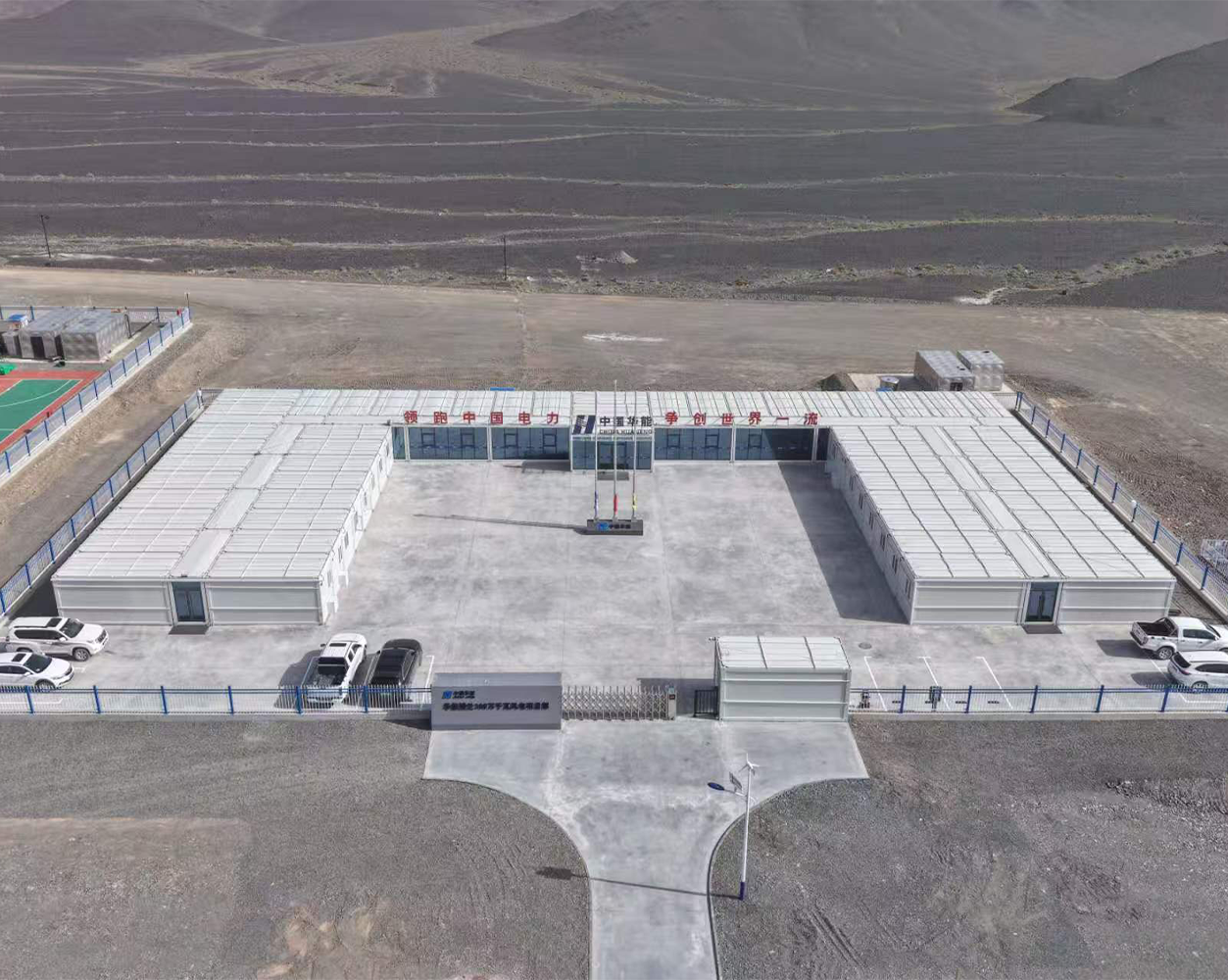
In tropical and rainforest climates, camps must cope with intense rainfall, high humidity, corrosion, mold and sometimes pests such as termites, while ensuring good ventilation and drainage around dense clusters of temporary housing. Desert and Gobi regions introduce another set of constraints: strong winds, sandstorms, high solar radiation and large diurnal temperature swings, which require special attention to insulation, shading, dust-proofing and foundation design on loose or sandy soils.
What Are Container Homes in an Emergency Context
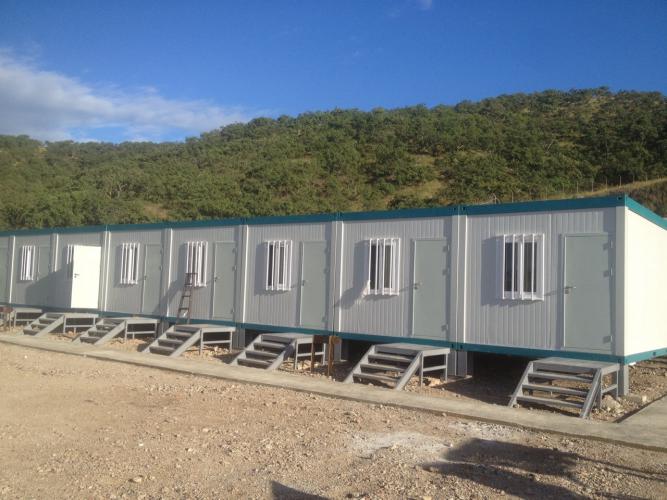
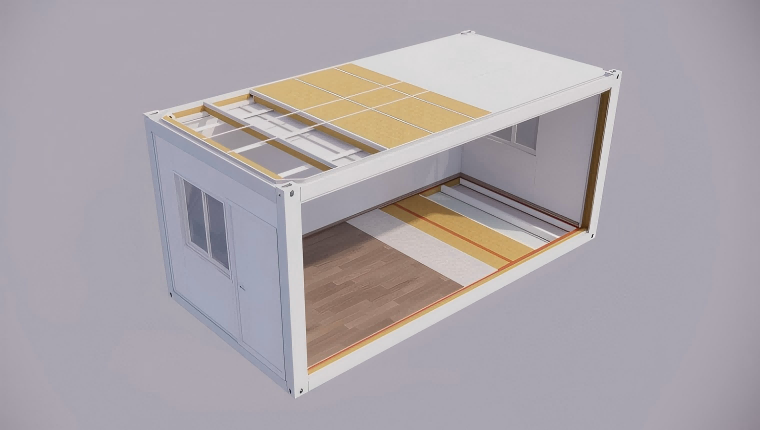
In the context of emergency housing, container homes are modular, factory-made box units based on a steel container frame, typically similar in size to 20 or 40‑foot shipping containers. Walls, floors, roofs, insulation and basic electrical and plumbing systems are pre-installed in the factory, so the unit arrives on site as a finished “room” that can be stacked and connected to form dormitories, clinics, offices or support facilities.
A standard container house from CDPH can be lifted as a whole unit, stacked up to three layers, and linked horizontally to create larger complexes such as 1,000‑person camps with accommodation, canteens and medical rooms. Because these units are designed for repeated deployment, they are ideal for emergency housing projects where structures may need to be relocated, expanded or repurposed as the situation evolves.
For more technical details on container houses, you can refer to CDPH’s container house product page at https://www.cdph.net/product-center/container-house.
Regional Scenario: Plateau Emergency Rescue in Gansu, China
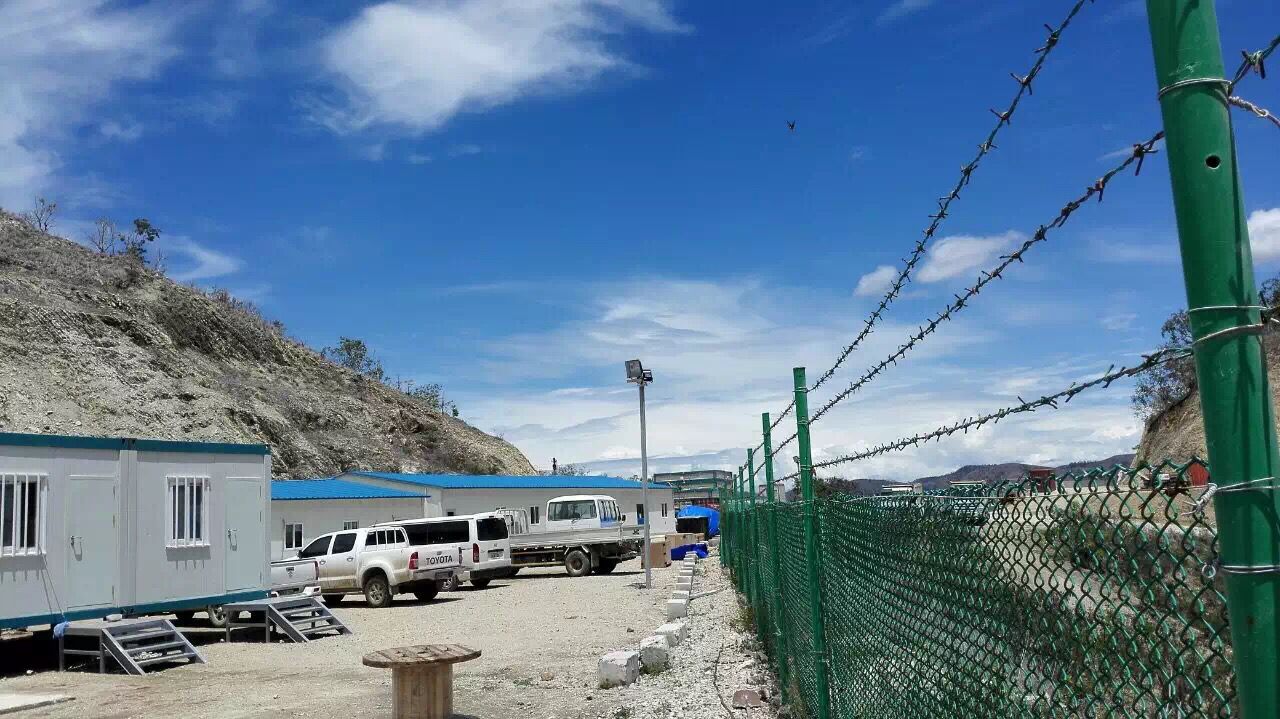
A clear example of emergency housing with container homes is the Gansu Jishi Mountain Emergency Rescue 360 Service Project, where CDPH provided a complete modular camp solution in a challenging plateau environment. The site is located in a mountainous region with significant altitude, low temperatures, large day–night temperature differences and difficult access, all of which complicate both rescue operations and temporary housing construction.
By deploying container-based emergency housing, the project team was able to deliver safe, insulated accommodation and support facilities for rescue personnel and related services within a tight schedule, while ensuring that the camp could be relocated or adjusted as the situation changed. You can explore this case in more detail at https://www.cdph.net/case-center/131, which showcases how modular emergency housing works in a real plateau emergency scenario.
Project Attributes: From Disaster Response to Remote Communities
Emergency housing with container homes is not limited to natural disasters; it also supports temporary resettlement for infrastructure projects, remote communities and humanitarian operations. Typical attributes of such projects include:
Rapid deployment and phased expansion, where the first batch of container homes provides immediate shelter, followed by additional units for offices, clinics and storage.
Strict safety and compliance requirements, often involving local fire codes, wind and snow load standards, and electrical regulations, especially when international EPC contractors are involved.
Multi-functional layouts, integrating accommodation, kitchens, sanitation, medical points and security checkpoints within limited land, while allowing for future reconfiguration.
In many countries, emergency housing projects are also closely linked to infrastructure and energy development, such as hydropower, oil and gas fields, or highways, where worker accommodation must quickly evolve into longer-term camps as projects progress. In these cases, choosing container homes as the core building block allows owners and EPC contractors to reuse the same assets for different phases or even different projects, reducing lifecycle cost.
CDPH’s Container House Products for Emergency Housing
CDPH (Chengdong Modular House) is a specialized engineering camp and modular housing provider offering container houses and prefab buildings for global projects, including emergency and disaster relief applications. The company’s container house systems are designed as movable, reusable building products that combine modular design and factory prefabrication, using container frames as basic units that can be used alone or combined to form larger spaces.
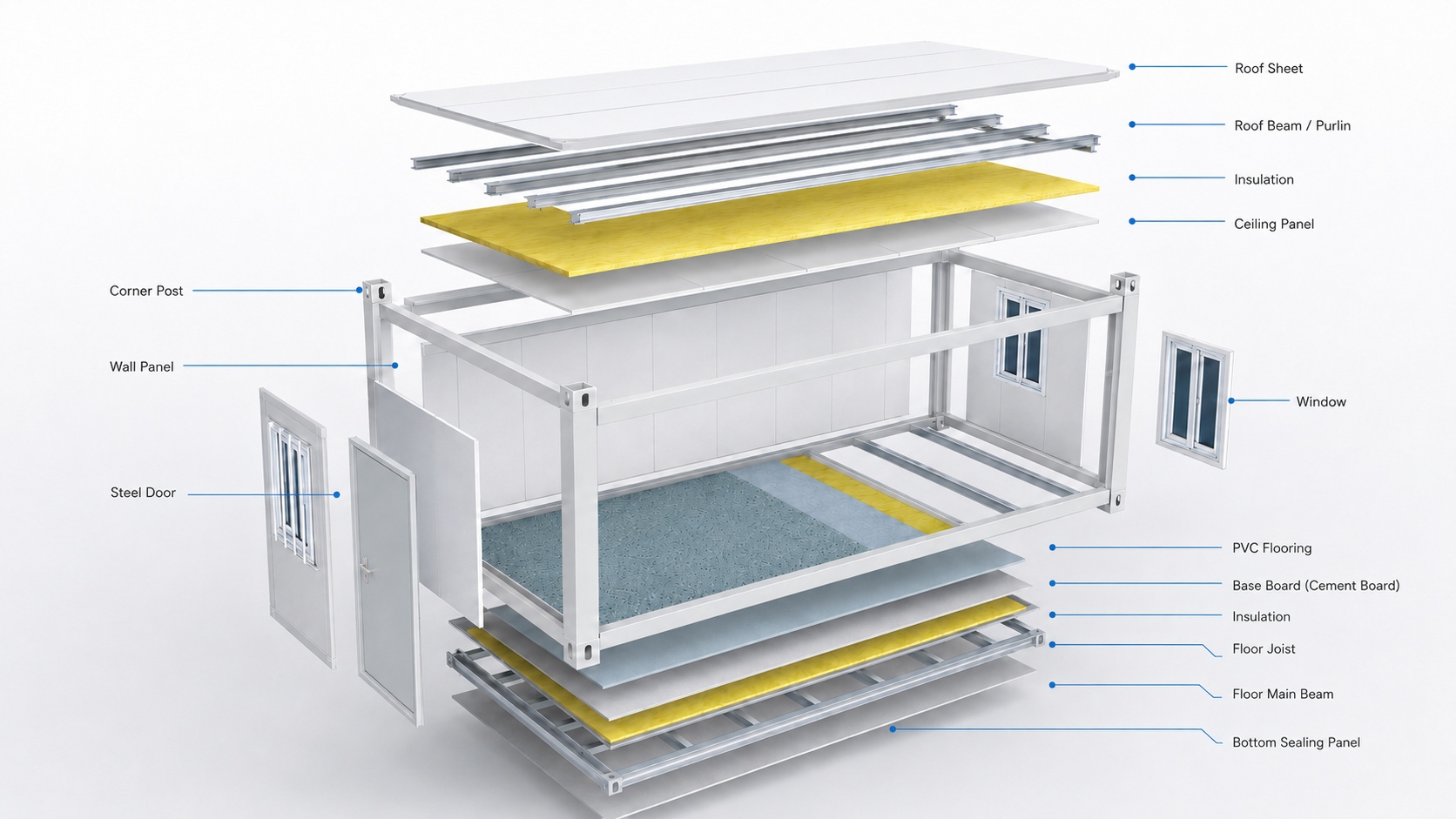
These products feature steel structures, insulated sandwich panels, and integrated doors, windows and electrical systems, with typical design life in the range of 15–20 years, making them suitable for both short-term emergency housing and medium-term resettlement. Compared with traditional construction, container houses can be installed in days, transported efficiently in flat-pack or fully assembled mode, and relocated multiple times, which is critical for dynamic emergency scenarios.
To understand CDPH’s main container house offerings for emergency and camp projects, visitors can review the container house product page at https://www.cdph.net/product-center/container-house, where different configurations and technical options are presented.
EPC Camp Solutions: One-Stop Emergency Housing Delivery
For many authorities and organizations, the biggest challenge is not just buying container homes but coordinating design, procurement, logistics and on-site installation under emergency conditions. CDPH addresses this by acting as an EPC (Engineering, Procurement and Construction) camp partner, offering one-stop solutions from concept design to final delivery.
A typical EPC camp process includes:
Needs assessment and site analysis, evaluating climate, altitude, soil conditions, access roads and available utilities.
Camp planning and layout design, including accommodation, support facilities and circulation routes, optimized for safety, evacuation and daily operations.
Technical design and standard matching, ensuring that structural, fire protection, electrical and plumbing designs meet national and local codes.
Industrial production in factories, where container modules are prefabricated with strict QA/QC controls to shorten on-site construction.
International logistics and customs coordination, including sea, road or rail transport to remote or landlocked destinations.
On-site installation and commissioning, with CDPH providing technical teams or supervision to ensure quality and schedule.
By centralizing these steps under one contract and one project team, CDPH reduces coordination effort for clients and improves predictability of cost and schedule—an important advantage when emergency housing projects are under intense time and public pressure.
Three Domestic Factories Behind CDPH’s Delivery Capacity
When discussing CDPH’s strength and delivery capability in emergency housing and EPC camps, one of the most important factors is its network of three domestic factories in China. These factories form the industrial backbone of CDPH’s container house and modular camp supply chain, enabling large-scale production, regional coverage and flexible scheduling.
The three main factories are:
CDPH Integrated Housing Hebei Co., Ltd., located in the Tianjin–Tangshan area, focusing on container houses and integrated housing products for engineering camps.
CDPH (Xinjiang) Modular Housing Manufacturing Co., Ltd., based in Urumqi, serving western China and Central Asia with modular housing tailored to continental and plateau climates.
CDPH (Sichuan) Prefabricated Construction Technology Co., Ltd., located in Suining, providing prefabricated construction technology and light steel products for hydropower and infrastructure projects in southwest China and neighboring regions.
Together, these factories offer automated production lines, standardized processes and dedicated QA/QC teams, which are crucial for delivering large batches of container homes in short timeframes for emergency housing projects worldwide. Their geographic distribution also allows CDPH to optimize transport routes and balance production loads, reducing lead times for clients in different regions, from Central Asia to Africa and Latin America.
Technical Adaptations for Different Climates
To make emergency housing with container homes truly climate-ready, CDPH incorporates specific technical measures for different environments. In cold and high-altitude regions, cold-resistant box houses use enhanced insulation, cold-bridge control, anti-condensation detailing and reinforced structures to handle strong winds and snow loads, while maintaining energy-efficient heating.
In hot and humid or tropical rainforest climates, container homes can be equipped with high-performance insulation, reflective roofing, corrosion-resistant coatings and ventilation strategies to reduce heat gain and prevent mold and corrosion. Desert and Gobi camps rely on sandstorm-proof details, robust anchoring, sunshades and well-designed drainage around elevated foundations, helping maintain structural stability and indoor comfort even under harsh wind and sand conditions.
These adaptations allow a single product platform—container homes—to be configured accurately for projects as diverse as plateau rescue camps in Gansu, coastal disaster relief camps in tropical regions, or emergency housing for remote energy projects in deserts.
Case Integration: Lessons from Gansu Jishi Emergency Project
Returning to the Gansu Jishi Mountain Emergency Rescue 360 Service Project, several key lessons illustrate how emergency housing with container homes can be implemented effectively. First, early integration of camp planning, product selection and logistics scheduling enabled the project team to align rescue operations with camp deployment, ensuring that necessary housing and support spaces were ready when rescue personnel arrived.
Second, using factory-prefabricated container units reduced on-site construction work in a complex mountainous environment, which not only saved time but also minimized safety risks related to traditional building methods in such terrain. Third, by designing the camp as a modular system, the project retained flexibility to expand, shrink or relocate parts of the camp as rescue phases evolved, illustrating the long-term value of container-based emergency housing beyond the initial crisis.
You can review this type of emergency project at https://www.cdph.net/case-center/131 and explore other global camp projects in CDPH’s case center at https://www.cdph.net/case-center.
How Container Homes Support Long-Term Resilience
In many countries, “temporary” emergency housing remains in place for years, so long-term resilience is a critical design consideration. Container homes from CDPH address this by combining robust steel structures, high-quality insulation and configurable interior layouts that can be upgraded or reconfigured as communities recover and needs change.
For example, emergency housing units initially used as dormitories can later be converted into classrooms, clinics or small offices by adjusting partitions and adding new equipment, without changing the core structure. Because units are reusable and relocatable, authorities can redeploy them to future emergencies or long-term projects, improving total cost-effectiveness and reducing waste compared with single-use temporary shelters.




 More
More











![Top Advantages of Modular Construction Explained [2025]](/uploads/upload/images/20250424/0fb390068474145a09a8c0504c73b1d2.png)
 May 09, 2025