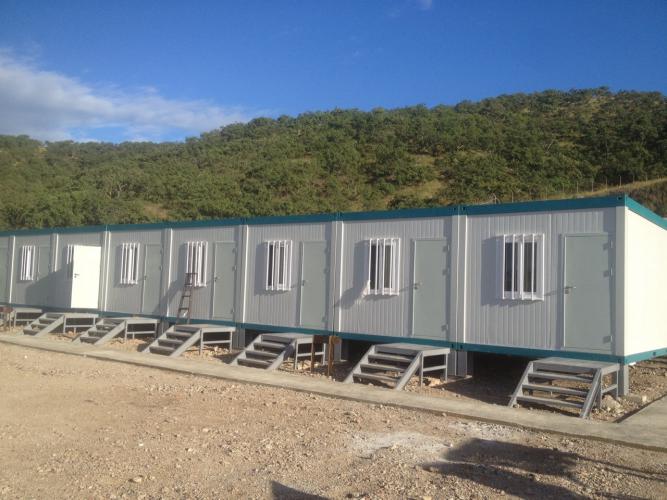
Why Contemporary Steel House Kits Matter for Modern Camps
Contemporary steel house kits are becoming a core solution for global engineering camps that must balance speed, durability and worker comfort in demanding climates. Unlike traditional brick-and-mortar buildings, these kits use prefabricated steel structures and standardized components that can be shipped worldwide and assembled rapidly on remote sites. For EPC contractors and project owners, this approach significantly reduces construction risk, shortens schedules and provides predictable quality across multi-country portfolios.
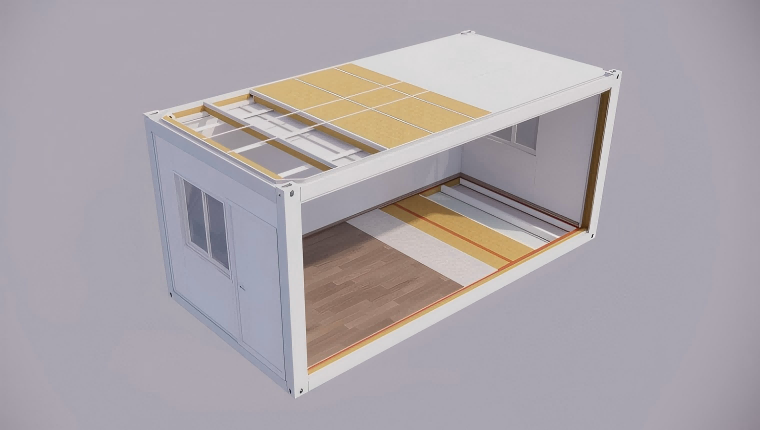
When combined with modular container houses and light steel villas, contemporary steel house kits can form a complete camp ecosystem: dormitories, office complexes, canteens, clinics and social spaces aligned with international standards. CDPH (Chengdong Modular House) leverages more than 4,000 delivered projects and operations in over 100 countries to adapt these steel solutions to mining, oil and gas, hydropower and infrastructure projects worldwide.
Climate and Environment Challenges in Key Regions
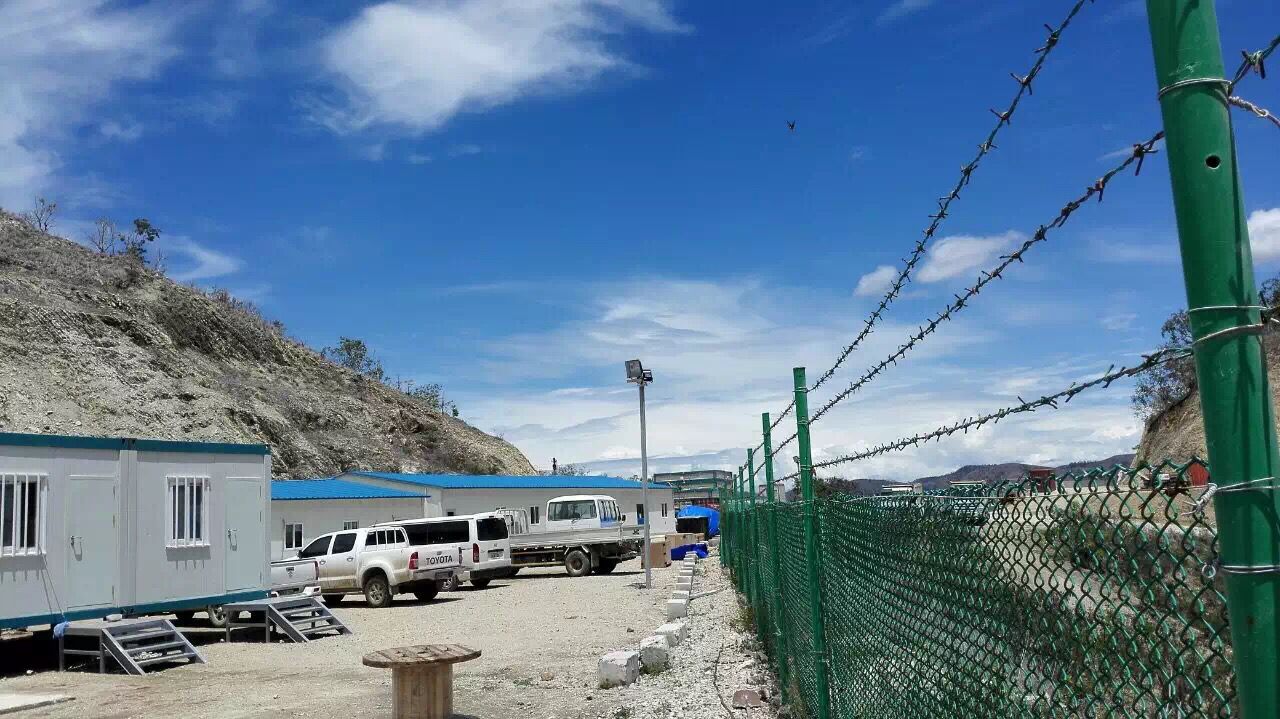
Engineering camps in South America, the Middle East, Central Asia and other regions face extreme climate challenges that directly affect housing design. In tropical rainforest and grassland zones of South America, high humidity, heavy rainfall and corrosion risk demand steel structures with enhanced anti-rust protection, insulation and drainage systems. On high plateaus such as the Andes, low temperatures, strong winds and seismic activity require reinforced frames, optimized thermal envelopes and verified structural calculations for local codes.
In Central Asia and Middle Eastern deserts, dry climates, large day–night temperature differences and sandstorms drive unique requirements for wall systems, roof insulation and dust-proof detailing. CDPH has developed environment-specific modular products such as the Plateau Container House, Gobi Container House and Desert Container House to meet regional standards while integrating with contemporary steel house kits. By coupling climate-ready design with EPC planning, CDPH ensures that each camp solution remains safe, comfortable and energy-efficient over its entire lifecycle.
What Contemporary Steel House Kits Include
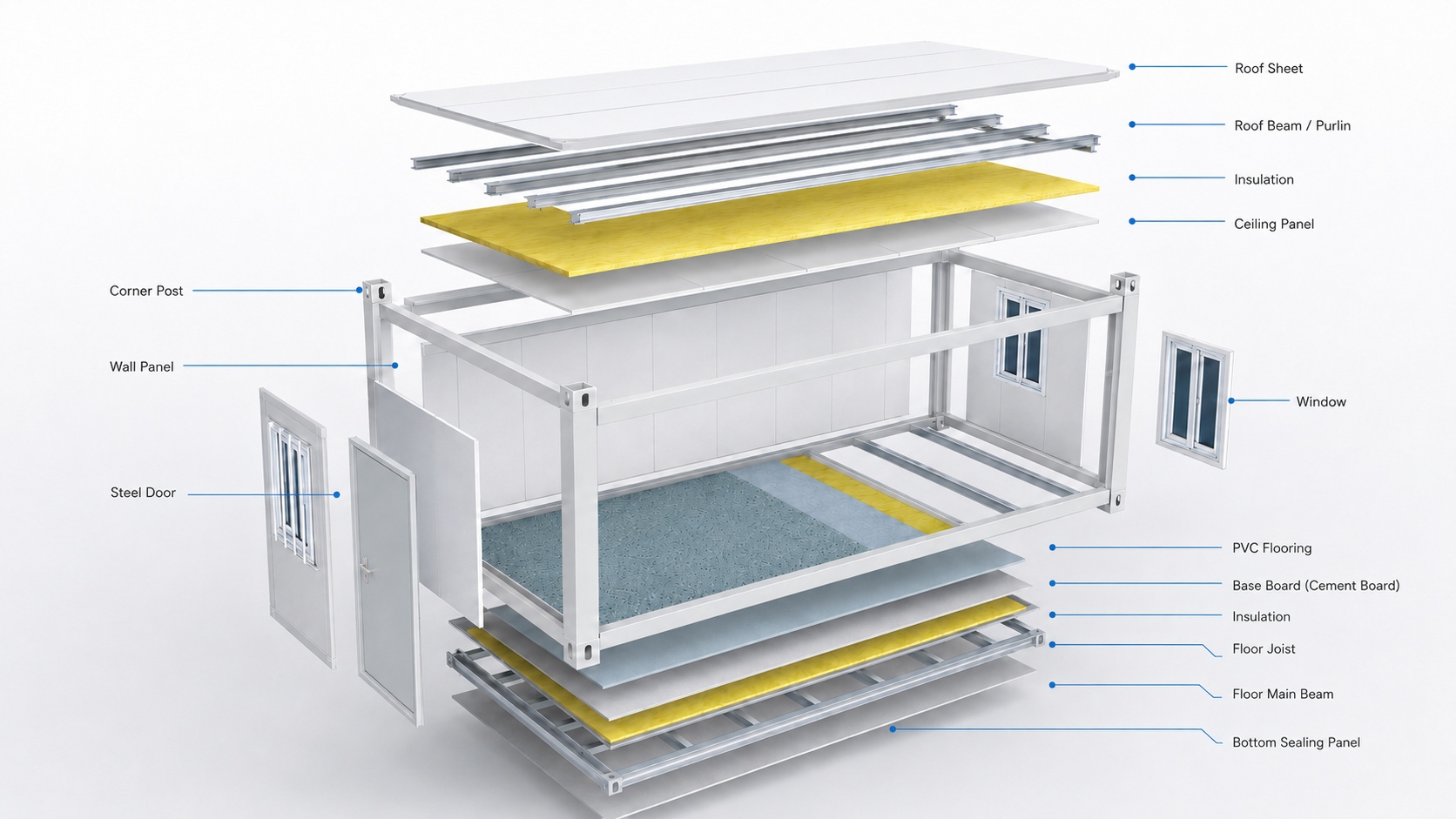
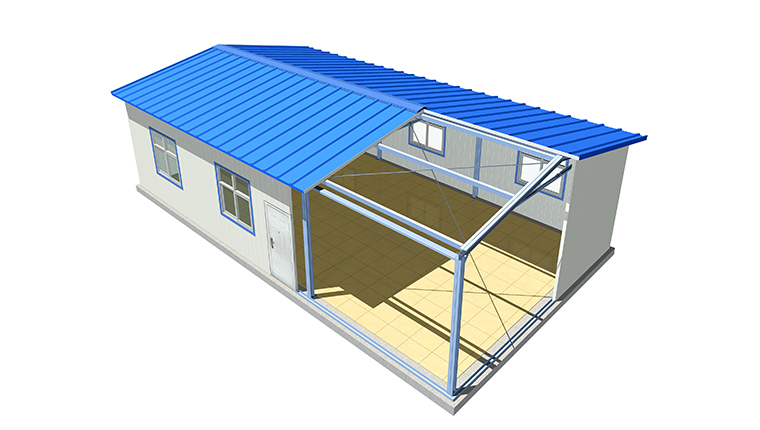
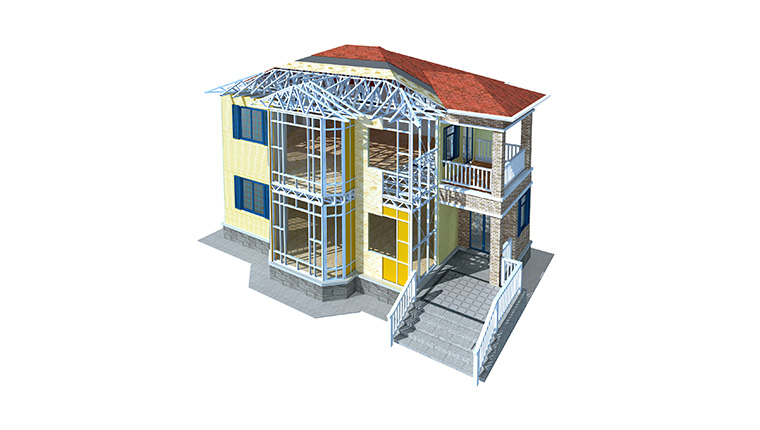
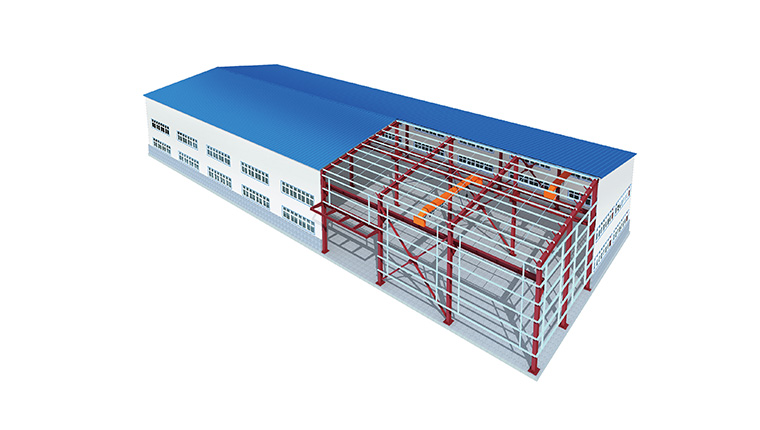
Contemporary steel house kits typically combine an engineered steel frame, enclosure systems, internal partitioning and fit-out options packaged for rapid international deployment. Depending on project needs, the frame may use H-type steel structures, light steel systems or hybrid solutions that support column-free spaces and multi-story layouts. CDPH’s light steel villas represent a modern form of steel house kits, providing semi-permanent housing with customizable layouts and facade styles for management and long-stay personnel.
Enclosure systems often use sandwich panels or composite wall systems with superior insulation, fire resistance and moisture protection, calibrated for cold, desert or tropical climates. Internal partitions and functional zones—bedrooms, offices, meeting rooms, sanitary modules—are designed as repeatable modules, making it easy to scale camps from dozens to thousands of workers. For EPC projects, CDPH integrates infrastructure interfaces such as HVAC, power, water and wastewater systems into the steel kits, allowing camp buildings to connect smoothly with broader site utilities.
Example: Light Steel Villa Kit for EPC Camps
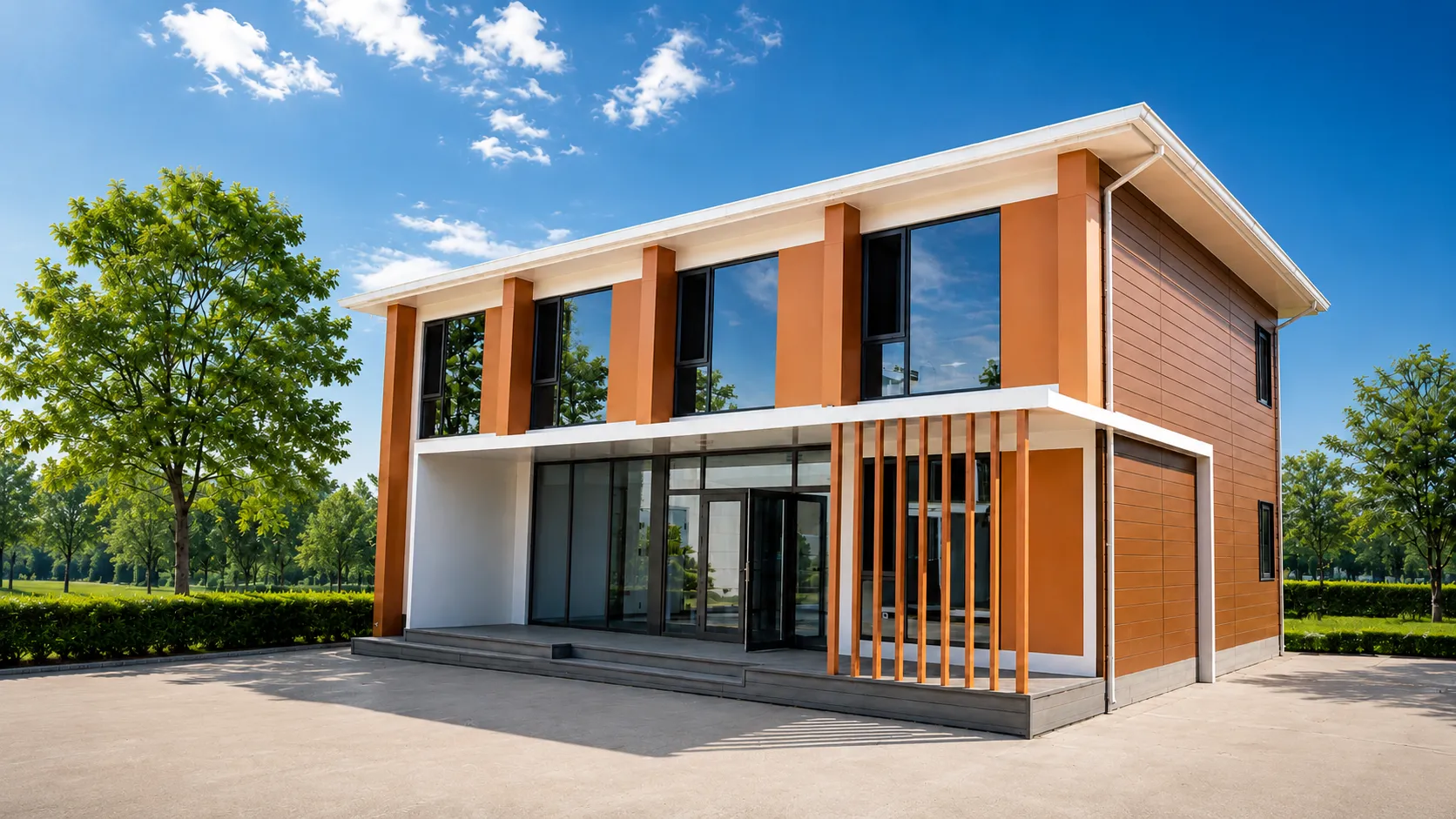
A typical contemporary steel house kit in the form of a light steel villa might include a prefabricated light steel frame, integrated floor and roof systems, insulated wall panels, and pre-designed interiors for bedrooms, living areas and bathrooms. Such villas can be tailored to specific climates and are frequently used as higher-comfort housing for engineers and supervisors within container-based worker camps.
Learn more about CDPH’s integrated modular camp solutions on the official site: https://www.cdph.net/.cdph
Application Scenarios: From Mining to LNG and Infrastructure
Contemporary steel house kits excel in engineering camps where reliable housing is critical to project productivity and safety. In mining camps, steel house kits serve as durable worker dormitories, workshops and warehouses capable of handling dust, vibration and long-term heavy use. Their modular nature allows EPC contractors to expand camps as ore production ramps up or shift modules when pits move or satellite sites open.
Oil and gas and LNG projects often sit in remote deserts or coastal environments, where steel house kits provide climate-controlled accommodation, office complexes and control centers built to international fire and structural standards. In hydropower and large infrastructure projects—bridges, ports, airports—steel structure kits support temporary but long-lasting construction villages, combining high-density dormitory blocks with larger span facilities like mess halls and equipment sheds. Across these scenarios, CDPH emphasizes worker safety, comfort and ESG performance, using steel kits to reduce construction waste and lifecycle carbon emissions compared with conventional buildings.
Explore more modular and steel structure solutions here: https://www.cdph.net/product-center.cdph
Case Study: China Chemical Indonesia Office Camp Project
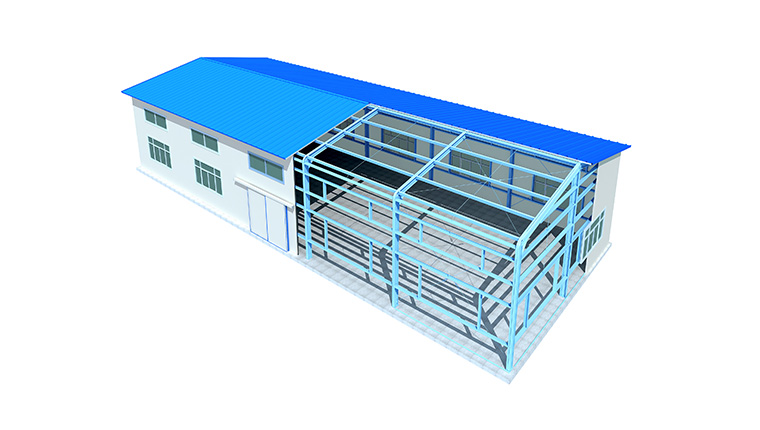
A practical illustration of contemporary steel house kits in action is the China Chemical Indonesia Office Camp Project. This project, located in Indonesia and covering between 4,000 and 10,000 square meters, uses H-shaped steel structures to create an L-shaped office building within a broader engineering camp. The interior design delivers column-free office space with high utilization, wide sight lines and clear separation between storage areas and administrative zones.
The camp layout also allocates internal facilities according to workforce composition, including male and female staff, demonstrating how contemporary steel house kits can be tailored to operational and HR requirements. By adopting a steel structure kit solution, the EPC contractor gained a high-efficiency office hub that integrates seamlessly with surrounding dormitories and service buildings, while meeting Indonesian environmental and structural regulations. This case underscores how CDPH’s engineered steel house kits support both functional flexibility and long-term project value in Southeast Asian climates.
See more project details here: https://www.cdph.net/case-center/127.cdph
EPC Turnkey Camp Solutions Behind the Kits
For many buyers, contemporary steel house kits are most powerful when delivered within a full EPC camp solution. In an EPC model, CDPH’s team manages engineering design, material and equipment procurement, and construction, providing one contract and one project interface from concept to completion. This approach simplifies management for owners and EPCs, who no longer need to coordinate separate suppliers for steel structures, container houses, infrastructure and fit-out services.
CDPH’s EPC process typically follows seven steps: needs assessment, camp master planning, technical refinement, factory prefabrication, cross-border logistics, on-site installation and final handover with lifecycle services. Throughout these stages, contemporary steel house kits are adapted to climate data, local standards and workforce requirements, ensuring that camp buildings match project realities rather than generic catalogs. By pairing steel kits with container dorms, light steel villas and support systems, CDPH delivers balanced, scalable camp ecosystems for energy, mining and infrastructure projects.
Manufacturing Strength: Three China Factories Supporting Global Delivery
One of the key reasons contemporary steel house kits from CDPH can support large EPC camps is the company’s manufacturing footprint across three factories in China. CDPH Integrated Housing Hebei Co., Ltd. operates a large intelligent production base in the Tangshan–Tianjin area, focusing on container houses, composite panels and core steel systems. In Xinjiang, CDPH(Xinjiang) Modular Housing Manufacturing Co., Ltd. serves western China and Central Asian projects, providing region-ready modules and facilitating cross-border logistics.
CDPH(Sichuan) Prefabricated Construction Technology Co., Ltd. supports southwestern and Southeast Asian projects with prefabricated components and rapid-response capacity. Together, these three factories enable annual production of tens of thousands of modular units, millions of square meters of panels and thousands of tons of light steel structures, giving CDPH the scale to handle multi-site EPC camp portfolios. Combined with domestic 360 service centers and overseas subsidiaries in regions such as Mozambique, Argentina and the Middle East, CDPH offers a full supply chain from design and manufacturing to on-site assembly.
Table: CDPH Steel and Modular Capabilities
| Capability | Key Data / Feature |
| Annual modular box capacity | Up to 85,000 modular container units per year. |
| Panel production | Over 5,500,000 m² composite panels annually. |
| Light steel welding capacity | Around 4,500 tons per year for steel structures. |
| Daily packing throughput | Up to 300 modular container houses per day. |
| Global project footprint | 110+ countries, 4,000+ projects delivered. |
How Contemporary Steel House Kits Solve Regional Camp Problems
Cold and Arctic Regions
In Russia and other cold regions, camps must resist temperatures down to -50°C, snow loads and freeze–thaw cycles that can damage structures and reduce interior comfort. CDPH’s cold-resistant steel and container solutions use enhanced insulation, anti-condensation detailing and localized structural design that meets Russian regulations while maintaining rapid installation. Contemporary steel house kits in these environments provide long-term dormitories, offices and mess halls that remain warm and safe, with optimized energy consumption.
High-Altitude Plateaus
On high plateaus in South America or Central Asia, wind, seismic activity and temperature swings challenge conventional camp buildings. CDPH’s plateau-oriented steel kits combine strong yet lightweight frames with advanced thermal envelopes and ventilation strategies to protect both structures and occupants. These systems integrate oxygen and air circulation considerations for worker health when necessary, matching EPC safety requirements.
Deserts and Gobi
Desert and Gobi sites in the Middle East and Central Asia expose camps to intense solar radiation, sandstorms and dry heat. Desert-focused steel house kits from CDPH use low U-value wall and roof systems, dust-controlled openings and reinforced connections to meet wind load and sand ingress requirements. For EPC camps serving oil, gas and renewable energy fields, such kits enable comfortable, durable housing without excessive cooling loads or maintenance costs.
Tropical Rainforest and High Humidity
In tropical regions, steel structures must combat corrosion, mold, termites and heavy rainfall while keeping interior spaces healthy and dry. CDPH designs contemporary steel house kits with moisture-resistant materials, ventilation systems and drainage concepts tailored to tropical sites in Africa, Southeast Asia and Latin America. This ensures that camps remain operational and comfortable throughout long project cycles, even under challenging weather patterns.
Choosing Contemporary Steel House Kits for Your Next Camp
For EPC contractors, ENR-listed engineering firms and project owners planning new camps, contemporary steel house kits offer a pragmatic path to consistent, climate-ready housing. Key selection criteria include structural system type (H-type steel vs light steel villas), environmental adaptation, modularity for future expansion and integration with container and prefab solutions. CDPH’s experience across energy, mining, infrastructure and education projects, combined with three China factories and international branches, provides a reliable platform for global delivery.
By engaging CDPH early in project planning, buyers can co-develop camp layouts, housing typologies and steel kit configurations that align with tender requirements, ESG goals and long-term operational plans. With contemporary steel house kits as a backbone, engineering camps can move from temporary shelters to robust, efficient and comfortable communities that support the people who build and operate critical global infrastructure.




 More
More






![Top Advantages of Modular Construction Explained [2025]](/uploads/upload/images/20250424/0fb390068474145a09a8c0504c73b1d2.png)
 May 09, 2025