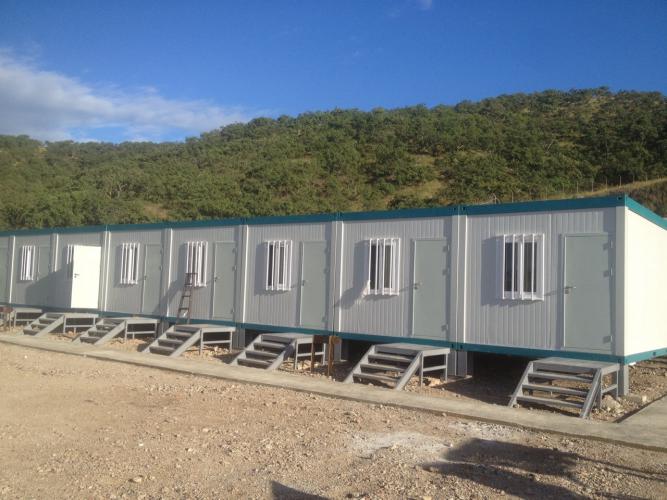
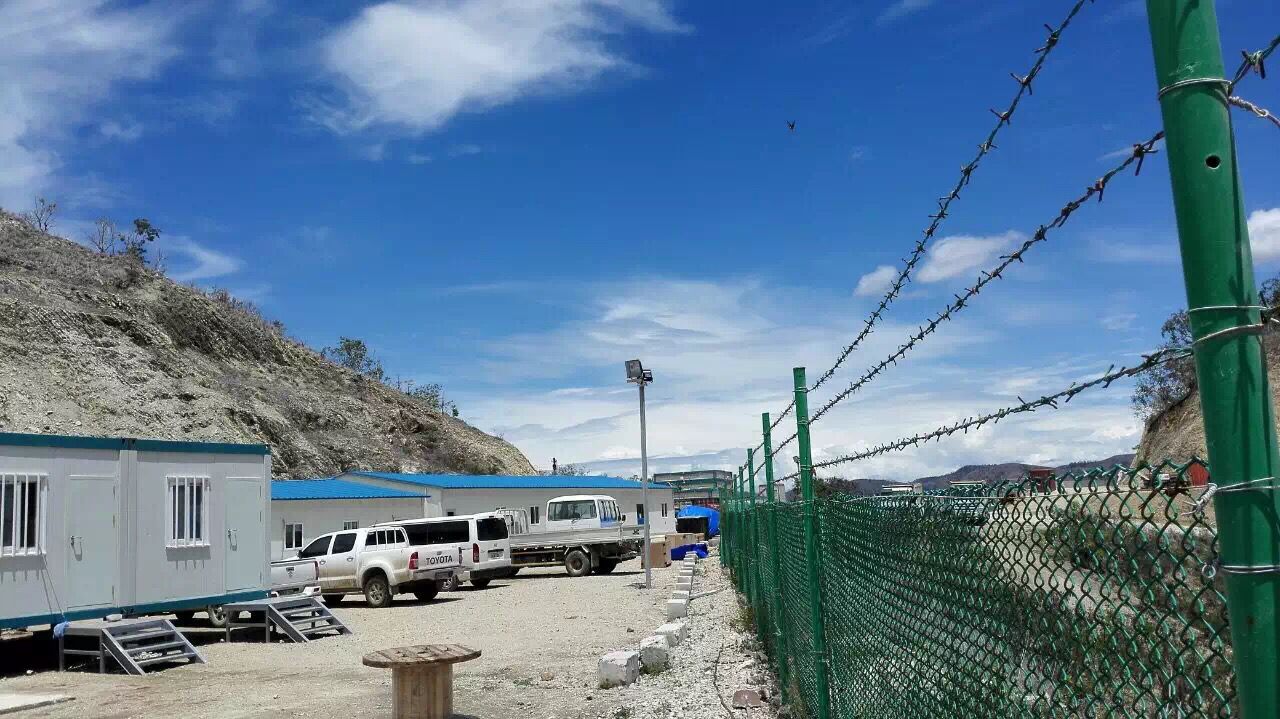
On remote hydropower and infrastructure projects, the way you plan your labour camp accommodation and site offices can either drain your workforce or unlock higher productivity. When hundreds or thousands of people live and work far from cities, every unnecessary step between dormitories, offices, canteens and workshops adds up in fatigue, lost time and safety risk.
This is exactly where experienced modular office builders such as Beijing Chengdong International Modular Housing Corporation (Chengdong Housing) stand out, combining modular buildings with full labour camp accommodation planning and delivery across more than 100 countries. If you are evaluating partners, it is worth understanding how a company positioned as an expert in global engineering camps approaches integrated layouts via its modular camp and building solutions.
Beyond Boxes: What True Labour Camp Accommodation Providers Deliver
A basic supplier can ship you a few office containers; true modular office builders design and deliver a complete working and living environment for labour camp accommodation. In Chengdong’s Camp Manual and SEO strategy documents, their scope clearly covers:
Modular office buildings for management, supervision and technical teams inside the camp.
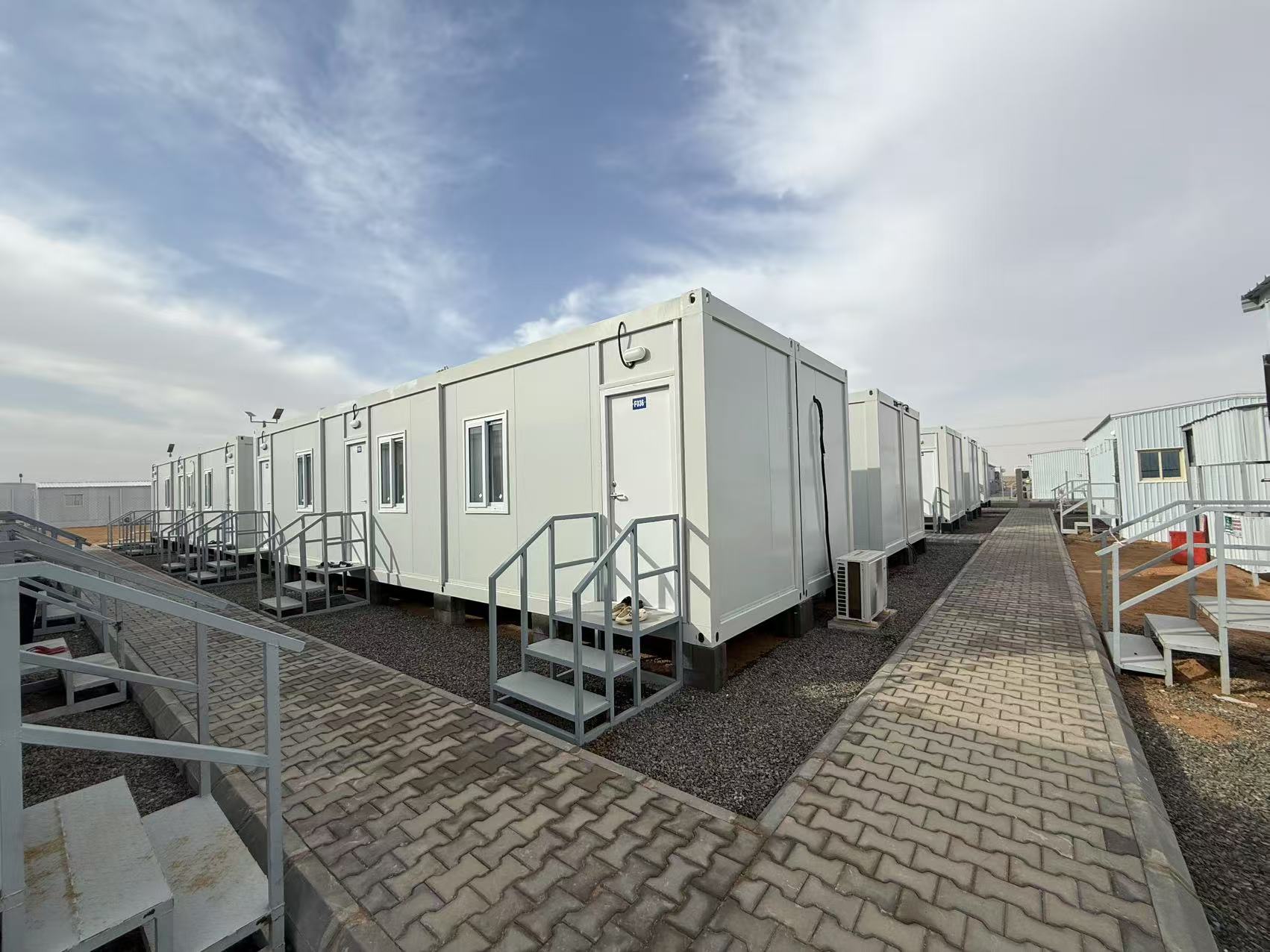
Modular labour camp accommodation including double rooms, single rooms, suites and hostel units for different ranks of staff.
Operational and production buildings, medical centres, public bathrooms, religious buildings, entertainment rooms and canteens.
Full supporting infrastructure for water supply and drainage, power, roads, security, fire protection and environmental protection.
All of these pieces are based on industrialised modular building systems that can be installed quickly and dismantled without construction waste, which is a core promise in Chengdong’s positioning as an engineering camp expert. When you evaluate labour camp accommodation solutions, it makes sense to review how their container house and modular building systems are designed to integrate into full camps rather than operate as isolated products.
Camp Planning: The Starting Point for Better Labour Camp Accommodation
Chengdong’s planning methodology shows why modular office builders need to start from the master plan, not individual buildings, when designing labour camp accommodation. In a typical large-scale engineering camp case, they define:
Accommodation mix: 232 double rooms, 145 single rooms, 70 suites and 52 hostel units distributed across an accommodation zone.
Public facilities: a canteen for 500 people and a gym for 100 people to support daily life and fitness needs.
Site indicators: a total camp area around 42,800 m², a plot ratio of 0.38 and a greening rate of 17%.
To support this, the client is asked to provide topographic maps, road-use requirements, camp functions and personnel composition, as well as environmental information. Modular office builders then use this data to place administration buildings and engineering offices in locations that minimise walking distance from main labour camp accommodation blocks and key public facilities.
Because the labour camp accommodation is usually far from urban centres and local water and infrastructure resources can be limited, planners also consider how to position generator rooms, water treatment facilities and other infrastructure in ways that keep daily circulation routes short and safe. In practice, this master-planning approach makes modular offices part of a coherent flow rather than isolated structures.
The Nine Systems Framework: Integrating Offices with Labour Camp Accommodation
Chengdong’s “Nine Systems” framework is central to their integrated solution and illustrates how modular office builders should think about layout when they design labour camp accommodation. These nine systems are:
Building system: modular offices, labour camp accommodation, medical buildings, bathrooms, religious buildings, entertainment rooms, canteens, warehouses and more.
Water supply, drainage and heating system: water supply equipment, purification units, septic tanks, hot water and heating equipment.
Power system: transformers, generators, distribution cabinets and interior/exterior lighting.
Weak-current system: telecommunication, cable TV and IT networks.
Firefighting system: alarms, hydrants, sprinklers, evacuation signs and emergency lighting.
Security system: fences, watchtowers, CCTV, gates, intrusion alarms and emergency rescue equipment.
Traffic and road infrastructure: vehicle roads, pedestrian paths, parking areas and associated road facilities.
Environmental facilities: landscaping, corporate image elements, sports fields and outdoor fitness gear.
Environmental protection system: domestic waste treatment and sewage treatment facilities.
For modular office builders, this translates into locating office complexes along safe, well-lit roads, close to data and power infrastructure, with clear fire routes and security coverage, all designed in relation to the main labour camp accommodation areas. It means considering how staff move from dorms to offices, then on to canteens and workfronts, with the aim of minimising cross-traffic between vehicles and pedestrians and shortening distances for daily routes.
When you look at Chengdong’s modular building product systems, this integration of structure, MEP systems and camp infrastructure is a key differentiator compared with simple single-product suppliers that only provide basic labour camp accommodation units.
Technical Strength of Modular Labour Camp Accommodation and Camp Buildings
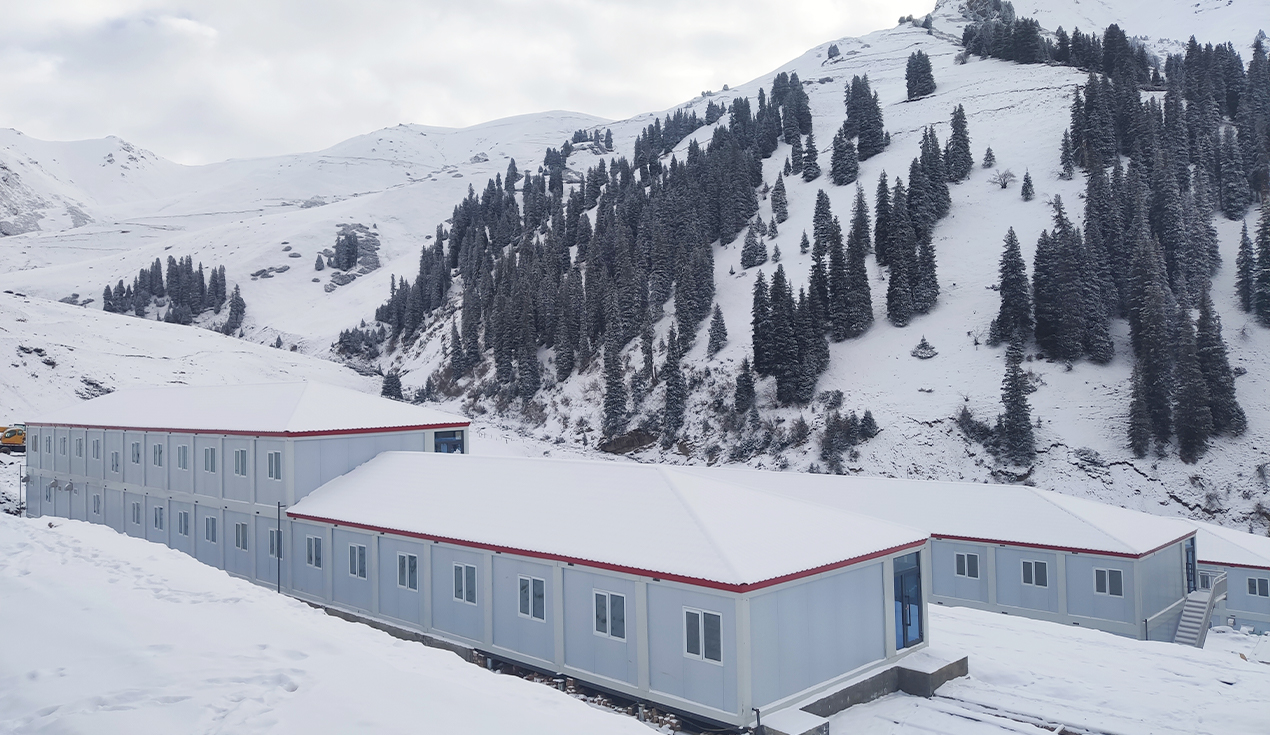
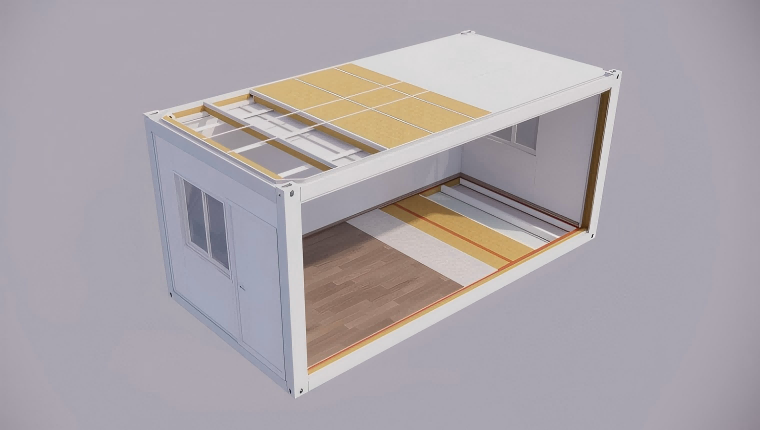
Chengdong’s modular buildings, used both as offices and as labour camp accommodation, are factory-produced for rapid installation and repeatable assembly and disassembly. Floors, roofs and walls are highly integrated, which shortens on-site work and reduces environmental impact at project locations.
According to their technical manuals, typical container-type modular units used for labour camp accommodation feature:
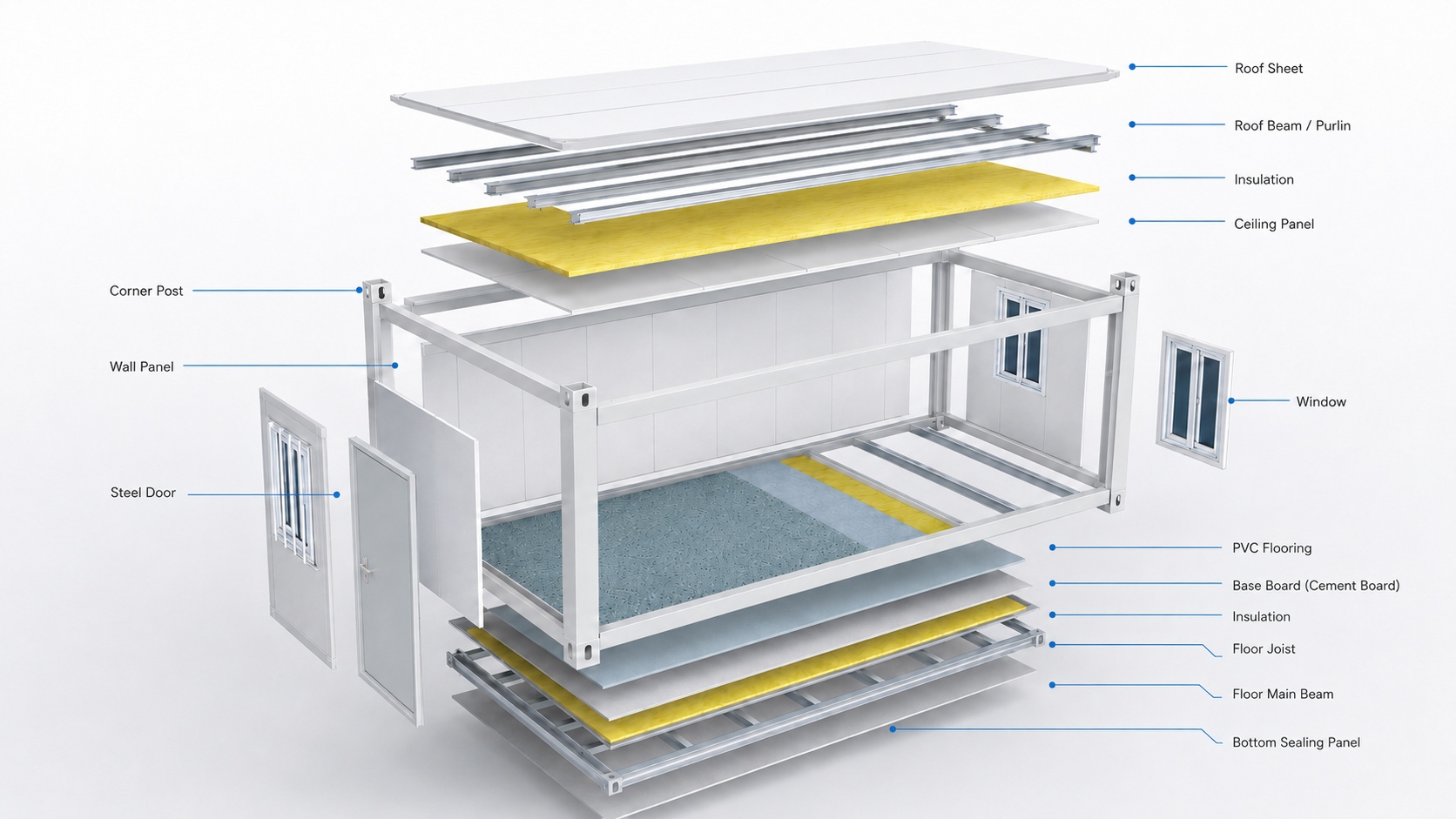
Structural system: hot-dip galvanised steel columns and beams with anti-corrosion coatings around 60 μm thick to enhance durability.
Thermal envelope: fiberglass wool insulation with approximately 100 mm thickness in floors and roofs and sandwich wall panels around 75 mm thick, providing a heat transfer coefficient for walls in the 0.47 W/m·K range.
Structural performance: floor loads around 2.0 kN/m², roof loads around 1.0 kN/m² and wind loads around 0.6 kN/m², meeting typical camp safety requirements.
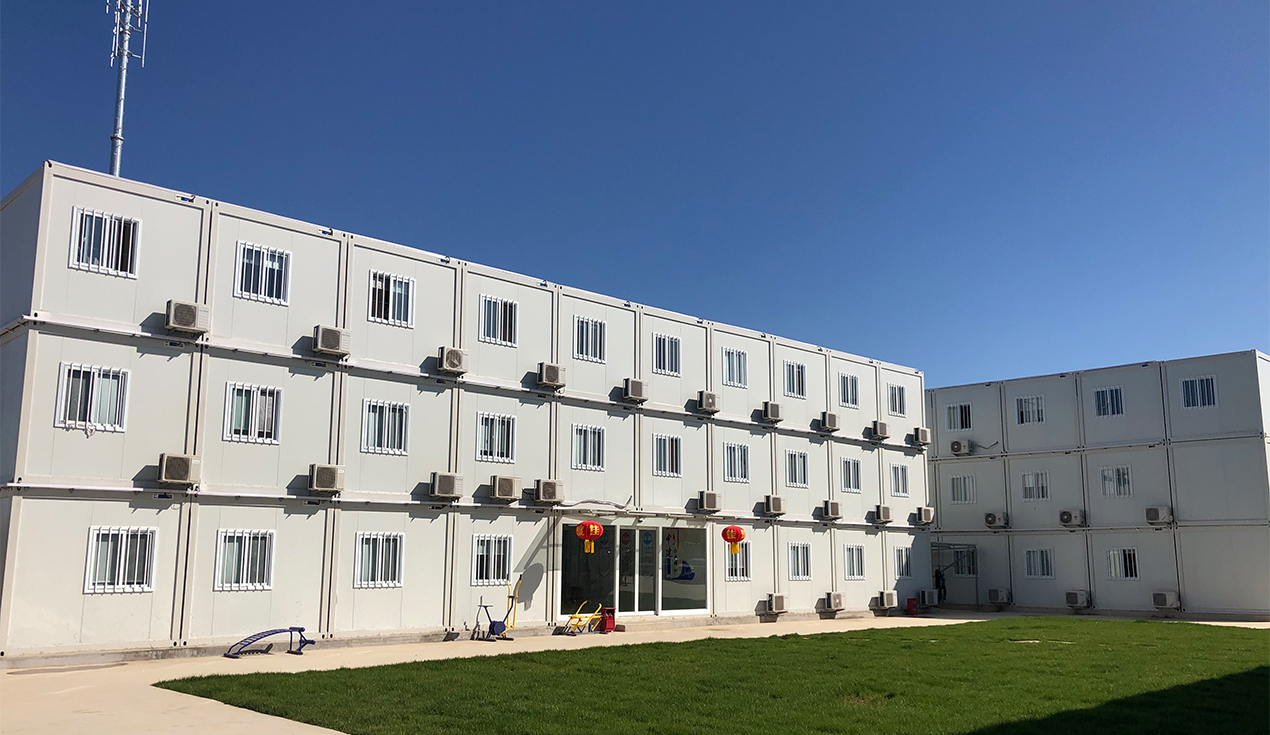
These performance parameters allow modular office builders to configure comfortable, safe and energy‑efficient labour camp accommodation blocks and office buildings that can be arranged in two‑ or three‑storey layouts along main spines or courtyards. By combining this type of modular office building with other products in the nine systems, Chengdong can build compact, walkable camps where internal travel is kept under control.
Hydropower Camp Case: Labour Camp Accommodation in the C.C. L.B. Project
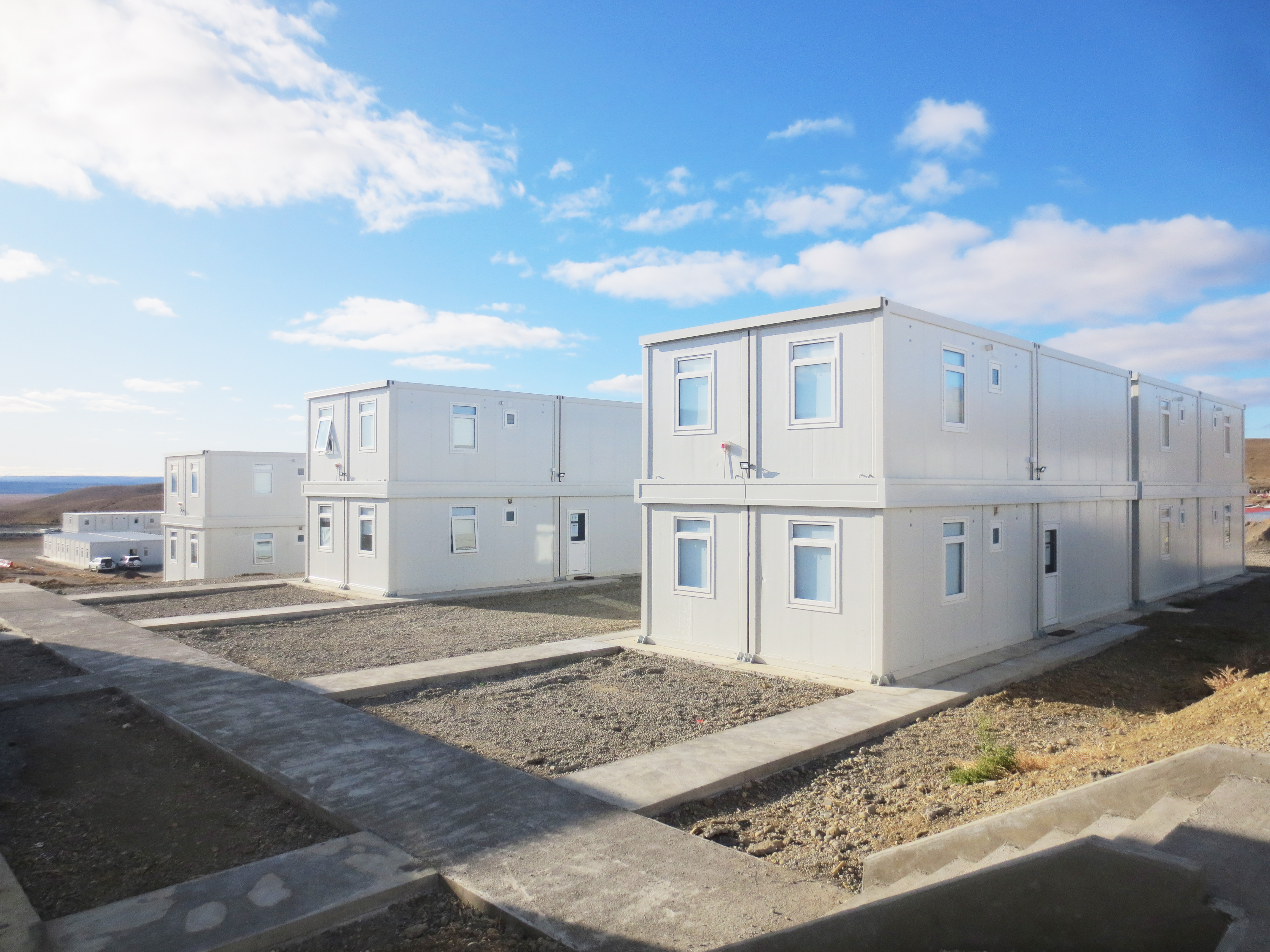
A representative example of how modular office builders can support complex infrastructure work and labour camp accommodation is Chengdong’s camp for the hydropower project “Aprovechamientos Hidroeléctricos Represas C.C. L.B.” in Argentina. This project required a comprehensive engineering camp in a remote area, combining worker accommodations, offices and supporting facilities for long‑term construction.
Within this project, Chengdong supplied a full solution covering planning, modular building selection, nine systems design, logistics and on‑site construction management for both offices and labour camp accommodation. Modular office buildings for the client’s management and engineering teams were arranged in close proximity to core accommodation zones and main transport routes, while public spaces such as canteens and recreation facilities were planned to be within comfortable walking distance for most staff.
Because the hydropower site was far from urban infrastructure, the camp also integrated on‑site water purification equipment, sewage treatment systems and intelligent security and fire protection systems to support safe labour camp accommodation over many years. The result was a self‑contained modular camp where workers could move safely and efficiently between living quarters, offices and work areas throughout the project lifecycle. You can explore similar hydropower camp solutions in Chengdong’s official case gallery for modular housing hydropower camps in South America.
Logistics and Construction Management: Making Labour Camp Accommodation Plans Buildable
Even the best labour camp accommodation layout fails if it cannot be delivered and installed on time. Chengdong highlights extensive logistics and construction management capabilities as part of its offering as a camp solution provider.
They design packaging schemes based on the specific combinations of nine‑system products for each project, which reduces shipping volume and simplifies on‑site handling when building labour camp accommodation and offices. Long‑term cooperation with shipping companies and inland transport partners supports reliable delivery to remote ports and inland sites, while Class A customs status in China gives their shipments priority in declaration, inspection and clearance.
On site, their teams are familiar with different countries’ building standards and can guide and coordinate local labour effectively. For owners and EPC contractors, this means modular offices, control rooms and labour camp accommodation blocks can be erected in line with project schedules instead of being treated as last‑minute temporary work, which usually leads to disorganised layouts and long walking distances.
Why Integrated Labour Camp Accommodation Matters for Worker Wellbeing
As Chengdong’s mission statement puts it, the goal is to “create a comfortable home for all workers on global projects.” For camps serving hydropower and other infrastructure sites, this involves far more than providing a bed and a meeting room. It means designing labour camp accommodation as a complete environment that supports movement, rest, safety and social life.
By working with modular office builders that treat offices as part of a broader labour camp accommodation system, you benefit from:
Fewer and shorter daily trips between dorms, offices and support facilities thanks to careful zoning and road planning.
Safer circulation routes, with pedestrian paths, lighting, security and fire systems planned in parallel with the building layout.
More comfortable modular buildings that meet structural and thermal performance standards, enabling productive workdays even in harsh climates.
If these aspects align with your own projects, it is worth looking in more detail at Chengdong’s labour camp accommodation and modular building solutions and how their systems could be adapted to your site conditions.
Conclusion: Turn Labour Camp Accommodation into a Strategic Asset
For large hydropower and infrastructure projects, labour camp accommodation is not a side issue; it is a strategic asset that influences safety, productivity and staff retention every single day. Modular office builders with integrated planning and delivery capabilities can transform the camp from a scattered group of temporary structures into a compact, efficient and humane environment. By using data‑driven planning, nine‑system integration and industrialised modular buildings, companies like Chengdong reduce internal traffic time and worker fatigue while ensuring that labour camp accommodation, offices and support facilities perform reliably over the project lifecycle.
If you are planning a new project and want your labour camp accommodation layout to work as hard as your core assets, now is the time to engage an experienced partner. Share your site data, personnel plan and functional requirements, and explore how Chengdong’s integrated labour camp accommodation, modular office builders and engineering camp solutions can be tailored to your needs, so your next camp truly feels like a well‑planned home base instead of a temporary compromise.




 More
More










![Top Advantages of Modular Construction Explained [2025]](/uploads/upload/images/20250424/0fb390068474145a09a8c0504c73b1d2.png)
 May 09, 2025