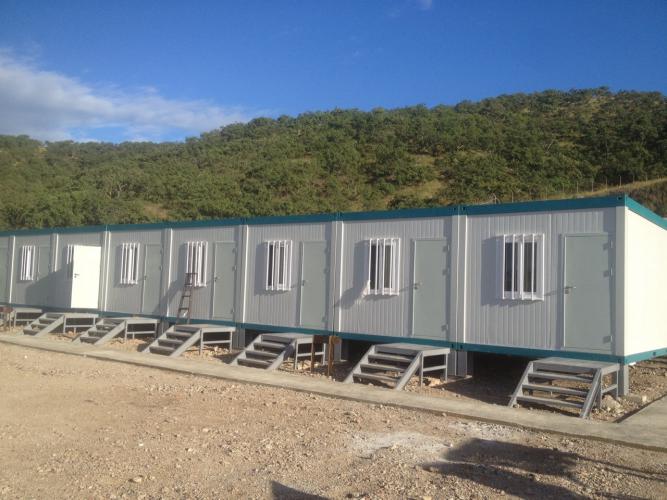
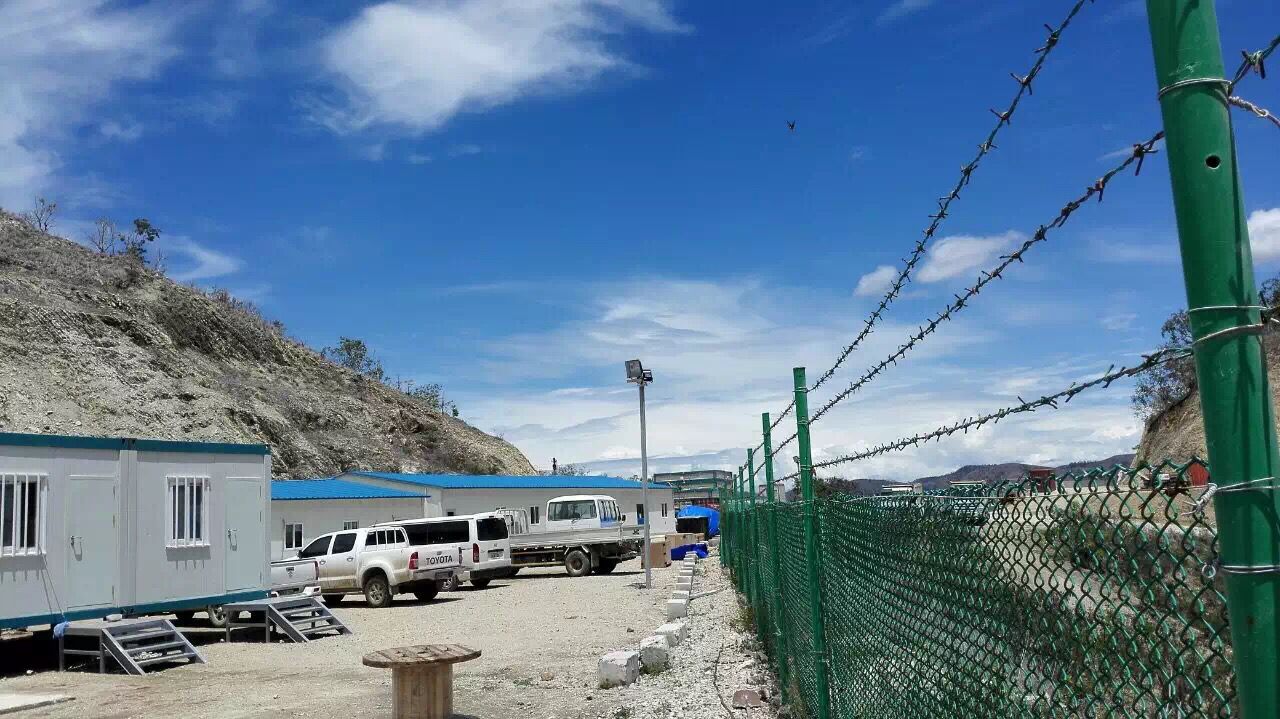
Industrial projects rarely select office space as an isolated procurement item. A site office must support supervision, planning, meetings, safety coordination, document control, and daily communication while fitting the project’s construction schedule, site restrictions, and future workforce changes. For this reason, evaluating modular office manufacturers is fundamentally an assessment of delivery certainty across design, manufacturing, transport, and site implementation.
This is particularly relevant for infrastructure, mining, energy, and remote industrial work. In these settings, a delay in office readiness can affect project mobilization, coordination routines, and the broader camp setup. A suitable supplier should therefore be assessed not only by a standard unit drawing or initial quotation, but by its ability to align the modular system with real operating conditions.
Why Manufacturer Evaluation Matters
The market offers many forms of prefabricated office space, from compact flat-pack units to detachable, foldable, and expandable modules. These formats may appear similar at first glance, yet their transport method, site assembly requirements, layout flexibility, and climate suitability can differ materially. Selecting a system before defining the project conditions often creates rework later in the process.
For example, an office needed beside a city construction site may prioritize compact delivery and rapid assembly. A project office within a remote mining or energy camp may instead require integrated planning for roads, utilities, meeting rooms, sanitation facilities, staff circulation, and long-term maintenance. This is why buyers should evaluate prefabricated house solutions as a project system rather than as a standalone cabin.
The practical question is not simply, “Which office unit costs less?” It is, “Which supplier can deliver an office environment that remains functional through the project’s operational phase?” That distinction helps procurement teams compare manufacturers on a more useful basis.
Start With the Project Definition
Before comparing suppliers, the project team should establish a structured design brief. This brief should identify the number of users, working functions, operating period, preferred layout, expected expansion, site access, climate exposure, and local approval requirements. Without this information, quotations may be based on inconsistent assumptions and become difficult to compare fairly.
Office functions deserve particular attention. A small supervision office may only require workstations and document storage, while a larger project administration area can combine meeting rooms, engineering offices, security points, first-aid areas, training rooms, and welfare facilities. The functional mix affects the number of modules, internal partitions, electrical loads, entrances, circulation routes, and interfaces with other camp buildings.
Site conditions also need to be considered at an early stage. Remote projects may face limited road access, restricted lifting capacity, changing ground conditions, limited installation crews, or long distances between port and final site. Manufacturers should be able to review these conditions before a system is selected, rather than treating logistics as a separate exercise after production is complete.
Compare the Modular System, Not Just the Appearance
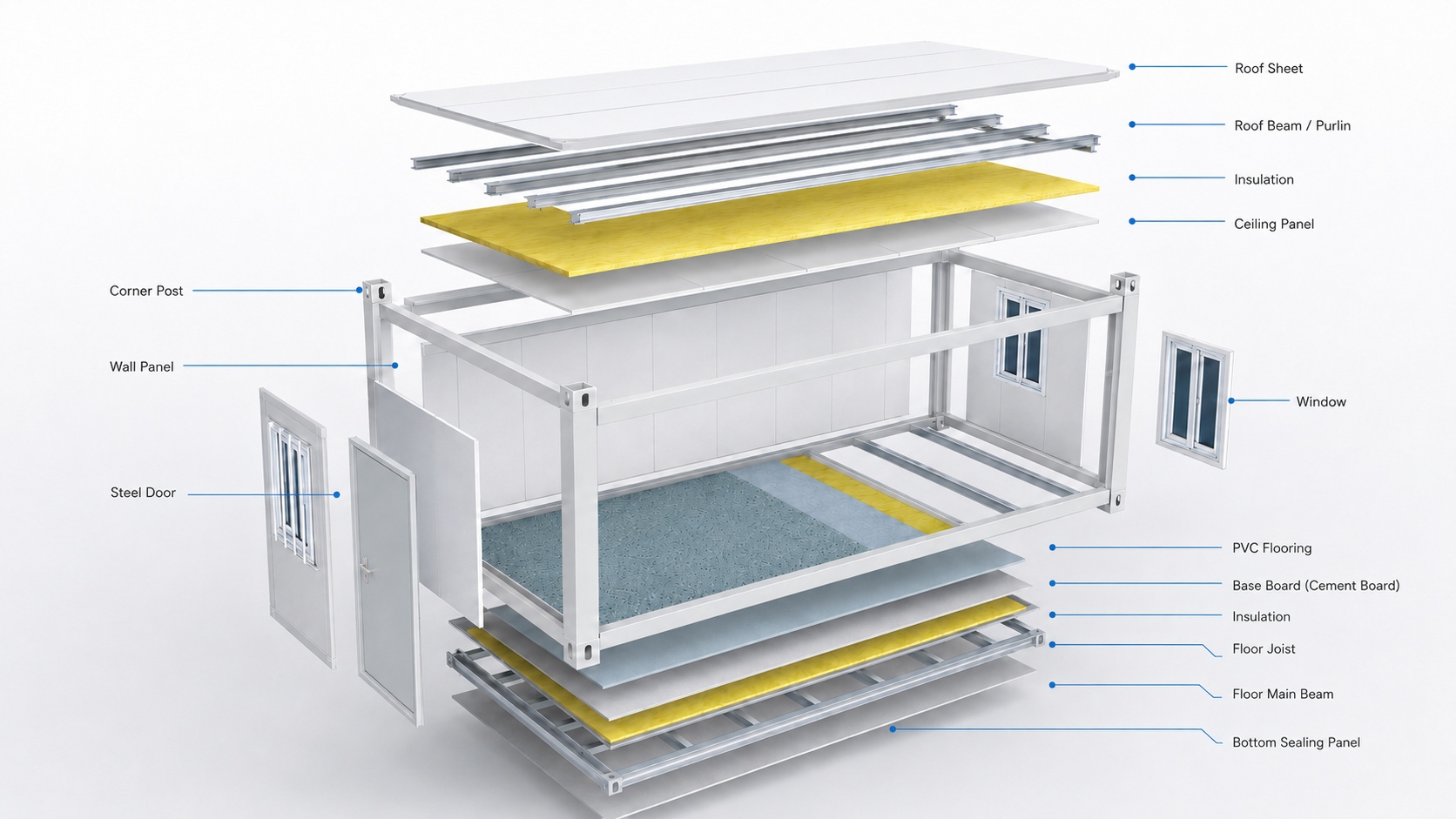
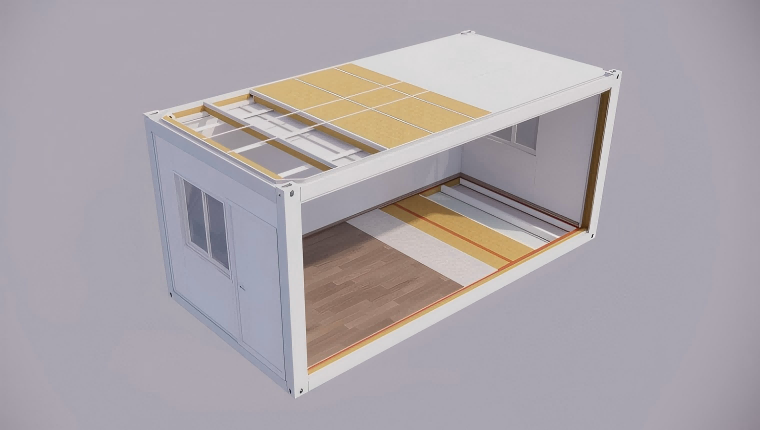
A sound evaluation of modular office manufacturers begins with the underlying building system. Flat-pack container houses can be effective where transport efficiency and repeatable installation are priorities. Their integrated roof and floor components can reduce secondary finishing work, while fixed module dimensions support more predictable transport and assembly planning.
Detachable units may offer greater dimensional flexibility when the office requires larger rooms or non-standard planning. Their disassembled delivery format can improve container loading efficiency, but buyers should confirm how the additional site assembly work fits their labour, equipment, and schedule conditions. Foldable systems can support rapid deployment, although the lifting method, ground preparation, and operational layout still need careful planning.
Expandable units may be considered where a relatively large interior area is needed quickly within a compact transport envelope. However, the selection should not be based only on speed of opening or apparent floor area. The project team should check the service connections, weatherproofing details, access routes, foundation arrangement, and long-term suitability of the layout for office use.
The central principle is simple: the delivery format should fit the route from factory to final site, as well as the way people will use the workspace after installation. A modular office is successful when its transport, assembly, and operational requirements work together.
Climate and Envelope Performance
For remote industrial projects, climate exposure is often one of the most important selection factors. Cold, wind, rain, humidity, and high temperature can affect staff comfort, energy demand, maintenance needs, and the durability of finishes and connections. Buyers should ask manufacturers how the wall, roof, floor, windows, doors, and joints are adapted for the relevant environmental conditions.
Cold-region projects require particular care. Chengdong’s cold-resistant container-house technical approach is designed for low-temperature applications, with insulation configurations adjusted by temperature band. The system considers insulated wall and roof assemblies, enhanced glazing options, insulation within structural cavities, and thermal-break treatment at selected roof, floor, door, and window interfaces.
These details illustrate an important procurement lesson: insulation thickness alone is not enough to assess performance. The continuity of insulation, joint sealing, thermal bridges, drainage, door and window interfaces, and installation quality all influence whether an office remains stable and comfortable in use. The appropriate specification should be confirmed against the project’s climate data, operating hours, heating or cooling strategy, and applicable local requirements.
Manufacturers should also be asked whether the system can be adjusted for differing weather conditions without undermining the basic modular logic. A supplier with design coordination capability can help translate environmental requirements into a practical configuration, rather than relying on a generic standard unit.
Examine Manufacturing and Quality Evidence
Factory capability is more than a stated annual production figure. It includes the relationship between production planning, material supply, process control, inspection, packaging, and delivery sequencing. Buyers should request evidence that the manufacturer can produce the required configuration consistently within the project timeline.
Chengdong operates a self-owned manufacturing facility with automated production lines and stated annual capacity for container houses and sandwich panels. Its production process is supported by QA and QC teams and a 6S management system covering production and prefabrication activities. For a procurement team, these are useful starting indicators, but they should be followed by project-specific questions about current production slots, drawing approval milestones, critical components, inspection records, and shipment readiness.
Quality control should be reviewed throughout the production chain. Relevant checks may include incoming material verification, structural component fabrication, coating treatment, wall and roof panel consistency, door and window installation, electrical and plumbing provisions, module fit-up, and final packing. The goal is not to create an excessive paperwork burden; it is to make sure that documented quality checks correspond to the project’s actual risks.
Certifications and management systems can also provide context, but they are not a substitute for confirming local requirements. Buyers should verify which documents apply to the specific product, destination, and intended use rather than assuming that a general certificate automatically covers every project condition.
Evaluate Design Coordination and ECP Capability
An office within an engineering, construction, and procurement environment is normally part of a larger operating ecosystem. It may need to connect with accommodation, dining, sanitary facilities, security, medical support, storage, parking, utilities, and circulation routes. A manufacturer that understands this relationship can contribute more effectively to early planning.
In an ECP-oriented delivery model, coordination should begin with the camp or site plan. Project teams should define where people enter the office area, how visitors are screened, where technical meetings occur, how documents are controlled, and how the office connects to power, water, drainage, communications, and fire-safety arrangements. These interfaces are easier to resolve in coordinated drawings than after units have reached the site.
Chengdong’s service scope includes camp planning, customized design, procurement, production, logistics transportation, and installation guidance. This integrated sequence is relevant when assessing suppliers for complex projects because it connects office design decisions with the realities of material sourcing, packing, shipping, and assembly. It also helps clarify whether a supplier’s role ends at factory dispatch or continues through technical support for site implementation.
Clear scope definition remains essential. Buyers should identify who is responsible for design approval, foundations, local permits, utility connections, offloading equipment, installation labour, commissioning, and post-installation adjustments. Ambiguity at these interfaces can create delays even when the modules themselves are well manufactured.
Test Logistics and Installation Readiness
Logistics can determine whether an otherwise suitable modular office solution works in practice. A unit that is easy to build in a factory may not be easy to deliver through a constrained port, mountain road, border crossing, or industrial site. Packaging strategy should therefore be discussed together with the building design.
Flat-packed systems may reduce shipping volume and allow components to be organized for containerized transport, while bulk shipment can suit other delivery conditions. The appropriate approach depends on cargo volume, freight availability, customs requirements, inland transport restrictions, and the equipment available at the final destination.
Installation planning should cover more than a sequence diagram. The project team needs to confirm foundation readiness, lifting equipment, crew skills, weather windows, module staging areas, tools, fasteners, sealing materials, and safety controls. Site installation guidance is especially valuable where local teams are assembling a system for the first time or where office modules form part of a larger camp rollout.
A good supplier will explain the installation logic early enough for the contractor to prepare the site. That includes practical matters such as access to each module, placement order, connection points, roof and joint treatment, and inspection points before the building is occupied.
Apply the Framework by Scenario
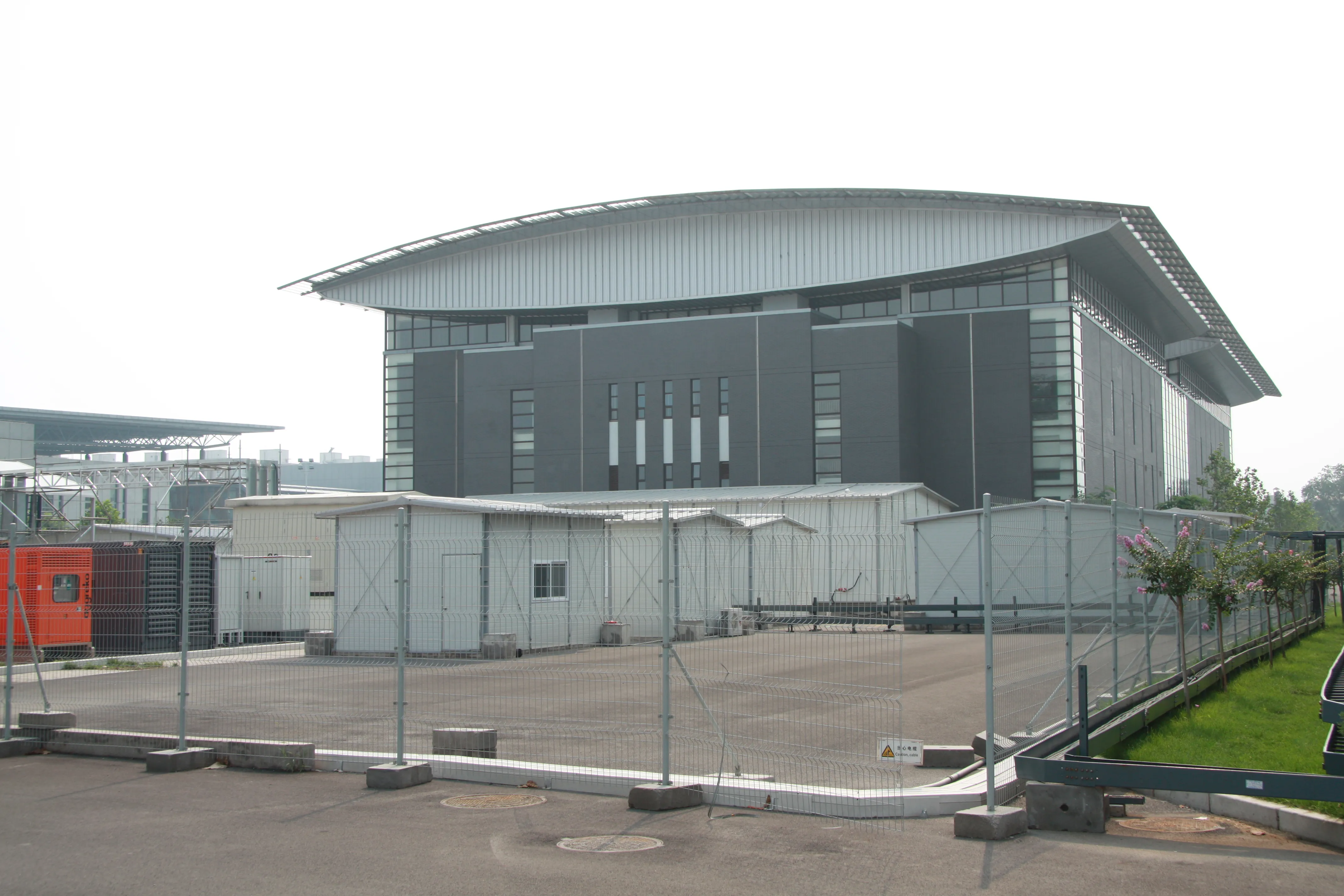
Construction and infrastructure sites often need offices quickly, but they also need the layout to evolve with the construction program. Early-stage works may require a small management office, while peak activity can require additional engineering, meeting, and administration space. Here, buyers should prioritize phased expansion, simple service connections, and an assembly method compatible with the site’s programme.
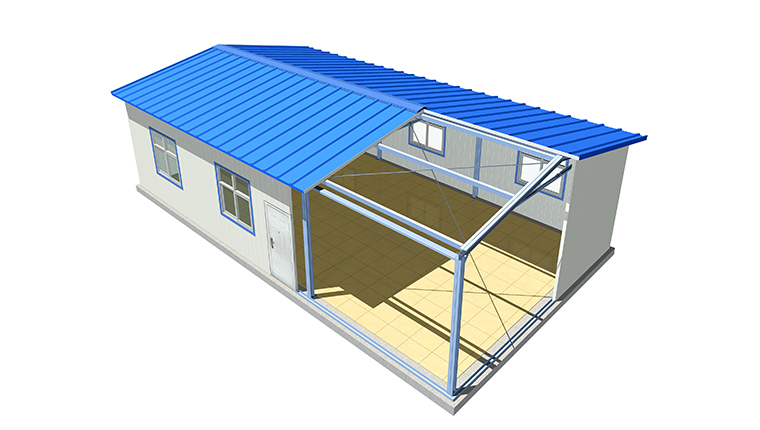
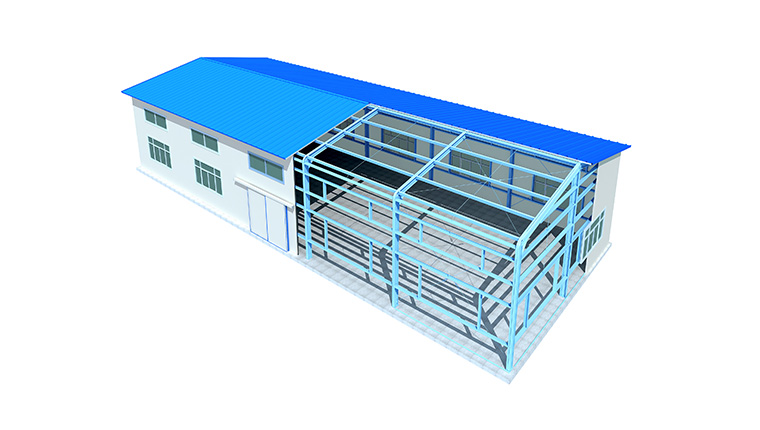
Mining, energy, and remote industrial camps usually place greater emphasis on integrated infrastructure. Office modules must operate alongside accommodation, welfare facilities, utilities, logistics yards, and security arrangements. In this context, the supplier’s understanding of container house systems for project camps can be as important as the physical office module, because the building must fit into a functioning site environment.
Cold-climate and high-exposure projects require another layer of review. The project team should confirm envelope design, thermal performance targets, joint treatment, glazing, door specifications, drainage, ventilation, and heating strategy before approving a drawing. The technical approach should be documented in a manner that can be checked during manufacturing and installation.
Overseas experience can provide useful context when it is relevant to the project type. Chengdong has experience supporting international project deliveries, including camp-related applications in hydropower, mining, and engineering environments. These examples do not eliminate the need for project-specific review, but they show why a manufacturer’s logistics and camp-delivery experience should be included in supplier evaluation.
Build a Balanced Decision Matrix
A robust procurement process should convert the above factors into a weighted decision matrix. Price should remain part of the evaluation, but it should be assessed alongside technical suitability and delivery risk. This approach reduces the likelihood that an initially low-cost option creates higher costs through redesign, shipping inefficiency, installation delays, or poor operating performance.
| Evaluation Area | Key Question for Buyers |
| Functional design | Does the layout support the project team’s actual work patterns and occupancy? |
| System suitability | Is the selected modular format appropriate for transport, installation, expansion, and use? |
| Climate adaptation | Are the envelope and connection details aligned with the local environment? |
| Factory quality | Is there credible evidence of production planning, inspection, and traceability? |
| Logistics | Does the packaging and route plan match the destination’s practical constraints? |
| Installation support | Are site responsibilities, tools, lifting, sequencing, and technical guidance clear? |
| ECP coordination | Can the office be coordinated with camp infrastructure and other project facilities? |
A structured comparison also encourages earlier discussion between engineering, procurement, logistics, construction, and operations teams. Each team sees a different risk, and modular office procurement becomes more reliable when those views are incorporated before manufacturing begins.
Conclusion
Choosing among modular office manufacturers should be treated as a project-delivery decision rather than a simple product purchase. The most relevant supplier is one whose modular system, customized design process, factory controls, logistics plan, and installation support can be aligned with the project’s operational and environmental conditions.
For industrial and remote projects, this perspective is particularly important. Chengdong combines modular manufacturing, customized design coordination, supply-chain support, logistics planning, and installation guidance—capabilities buyers should evaluate when planning integrated modular camp solutions. The objective is not to select the most standardized unit on paper, but to establish a workspace that can be delivered, assembled, and operated with fewer avoidable interfaces and uncertainties.
Frequently Asked Questions
How early should a modular office manufacturer be involved in project planning?
Ideally, involve the manufacturer once the preliminary site plan, office functions, expected occupancy, and delivery route are understood. Early participation helps align the building system with foundations, utilities, transport restrictions, and installation sequencing before drawings are finalized.
What should buyers verify before approving a modular office design?
Buyers should verify functional layout, site dimensions, module connections, weather protection, insulation approach, electrical and plumbing interfaces, loading constraints, and installation requirements. They should also confirm that the design reflects applicable local codes and the project’s own technical specifications.
Can modular offices be expanded as a project workforce grows?
Many modular systems can support phased expansion, provided that the initial layout, foundations, service routes, access paths, and structural connections are planned accordingly. The expansion strategy should be defined at the design stage rather than treated as an unrelated future purchase.
How does an ECP approach change modular office procurement?
An ECP approach evaluates the office as part of the wider camp and project infrastructure. It encourages early coordination between office space, accommodation, utilities, procurement, logistics, construction planning, and site operations, reducing the risk of isolated design decisions.
What demonstrates that a manufacturer can manage remote or overseas delivery?
Useful evidence includes a clear service scope, project-specific packing and shipment plans, documented quality procedures, installation guidance, supply-chain coordination, and experience with relevant international or remote project conditions. Buyers should review this evidence against their own route, climate, regulations, and operating requirements rather than relying on general claims alone.




 More
More












![Top Advantages of Modular Construction Explained [2025]](/uploads/upload/images/20250424/0fb390068474145a09a8c0504c73b1d2.png)
 May 09, 2025