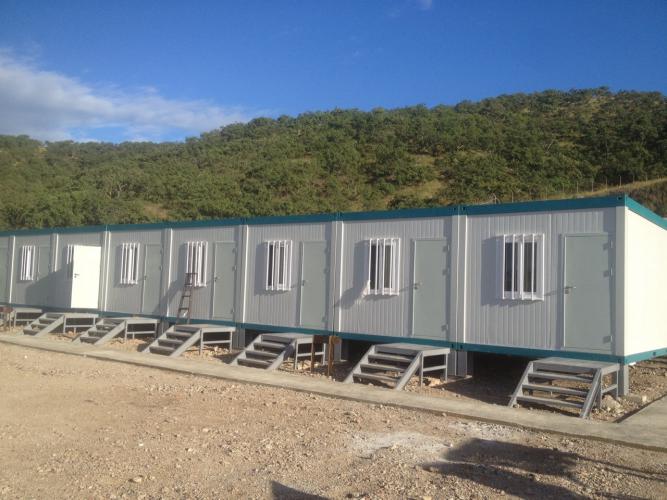
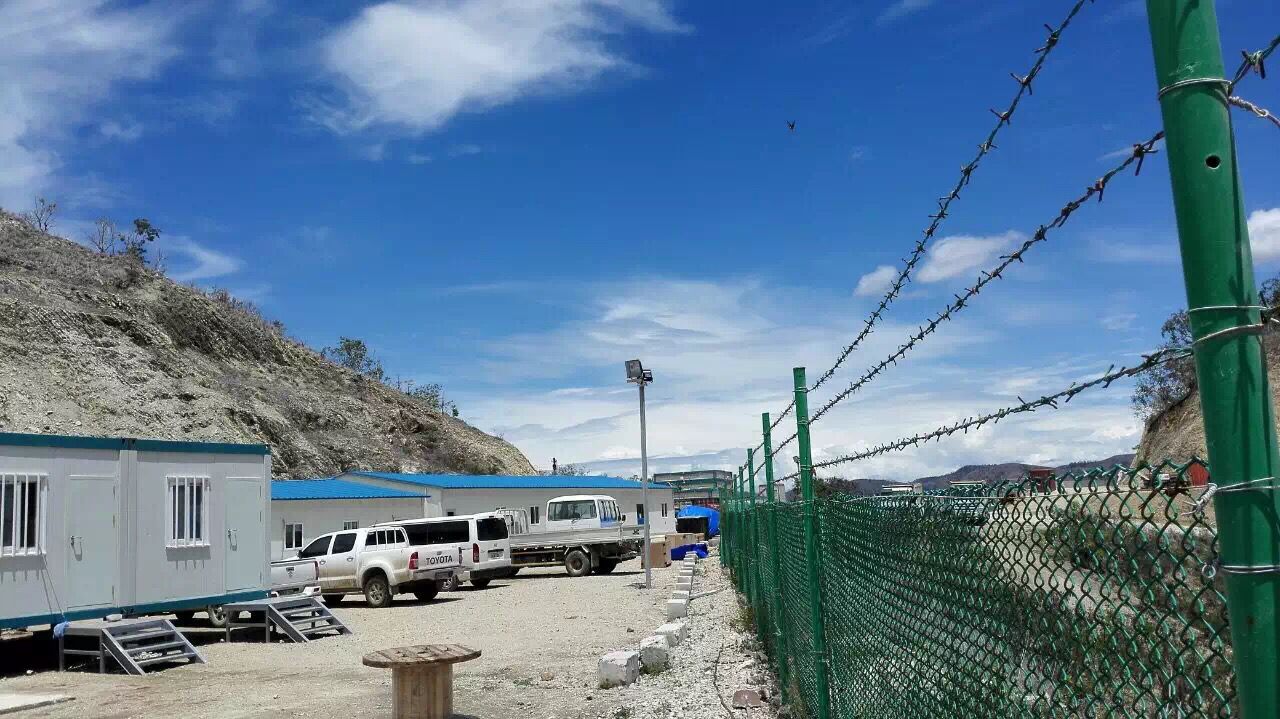
Remote construction, mining, oil and gas, and infrastructure projects all face the same challenge: how to build safe, comfortable and scalable accommodation for large numbers of workers far from cities. Camp accommodation container house solutions are rapidly becoming the preferred answer to this challenge.
By using modular steel box units and integrated camp systems, project owners can create a fully functional “mini-city” in a short time, supporting both living and working needs while controlling safety, environmental impact and lifecycle costs.
What Is a Camp Accommodation Container House?
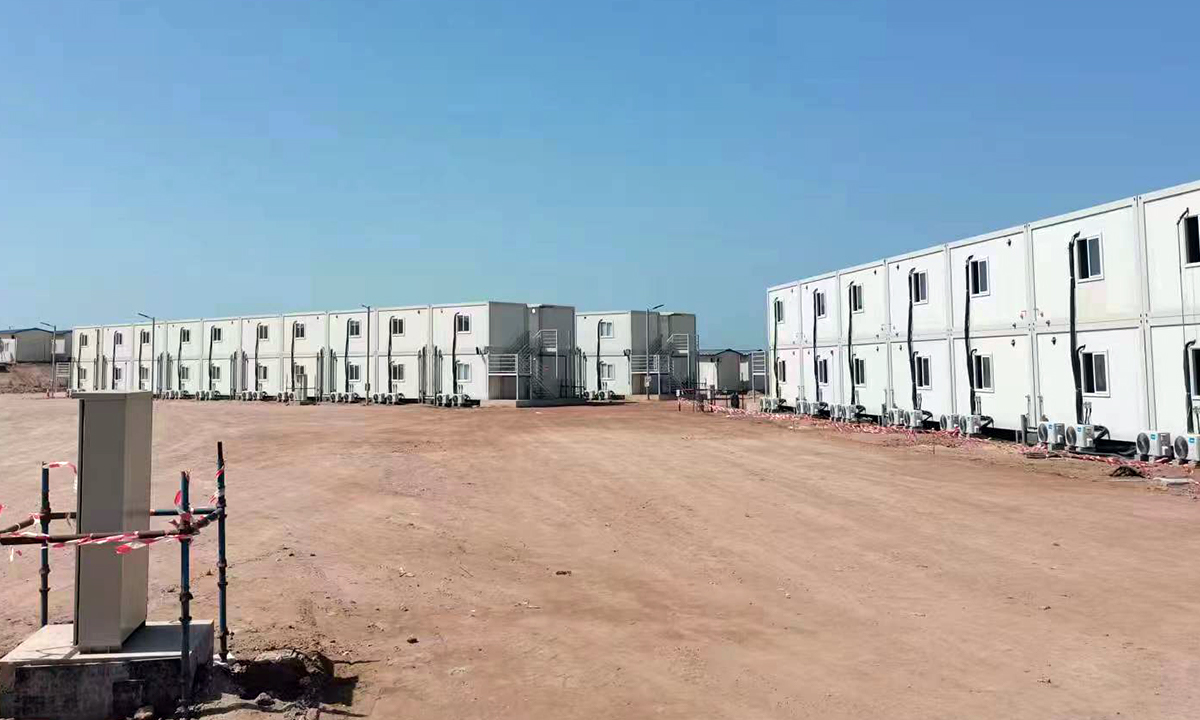
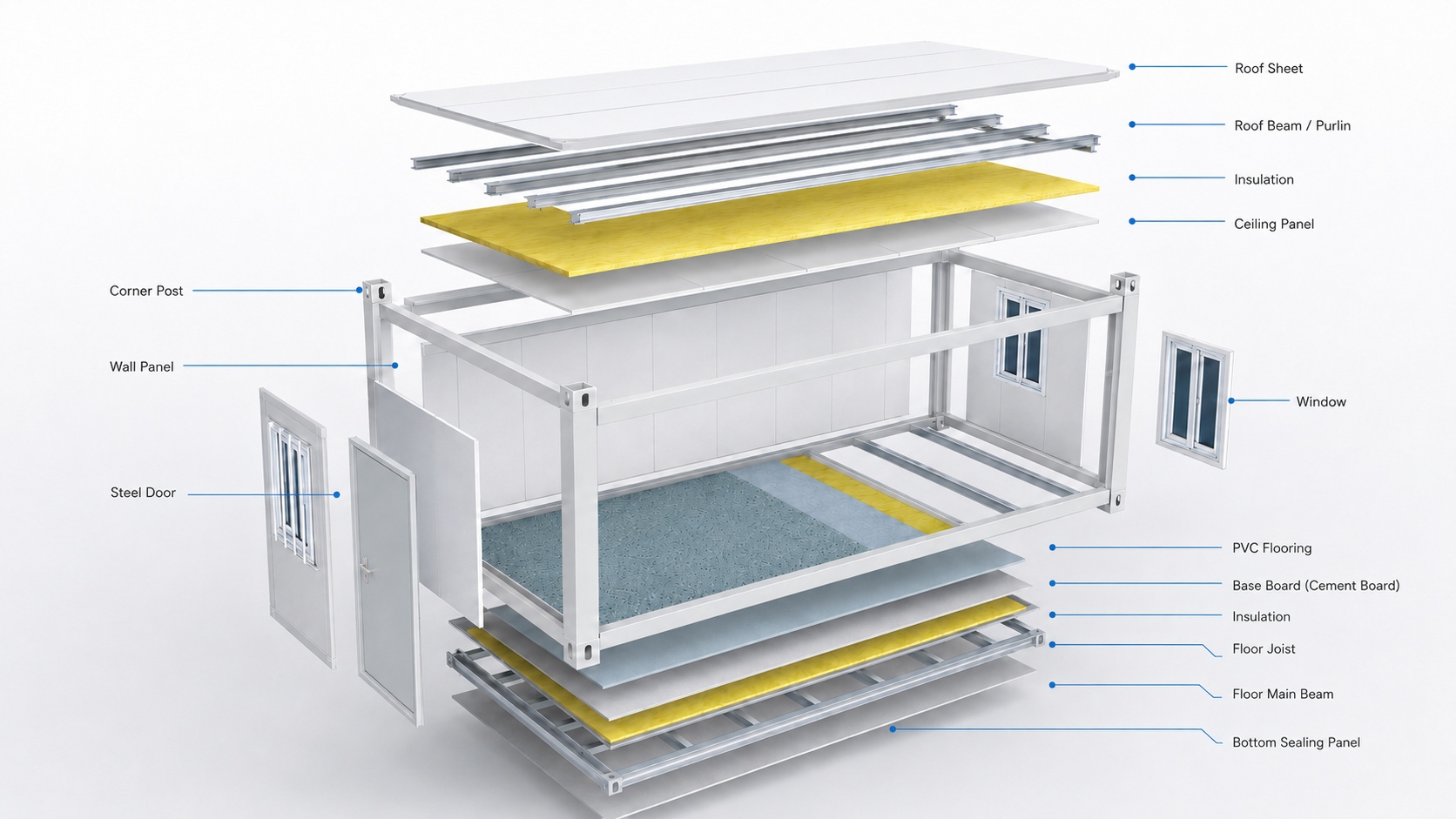
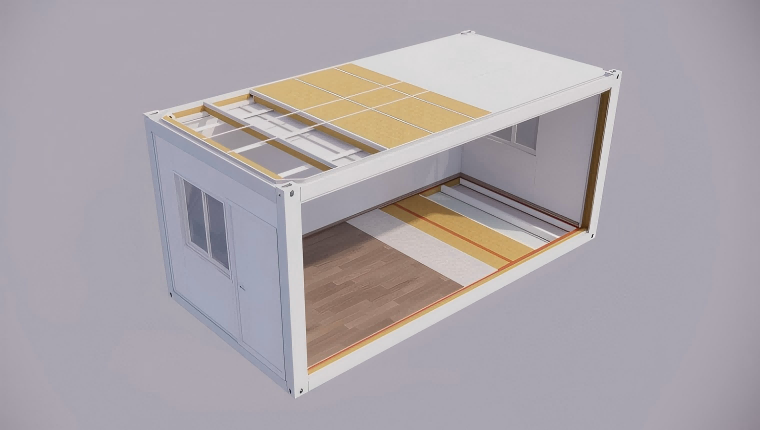
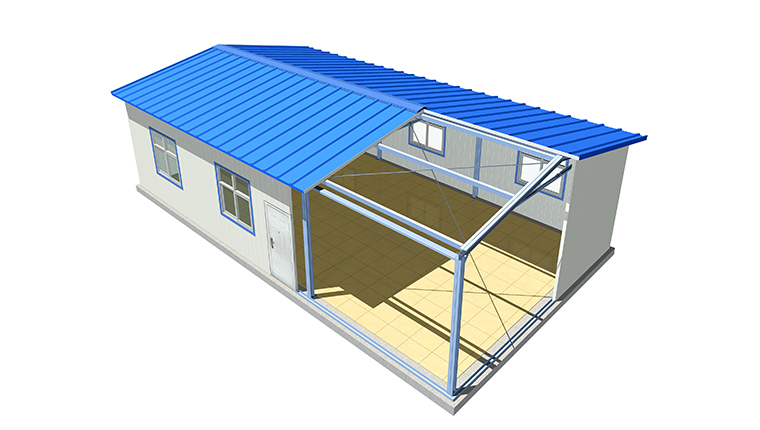
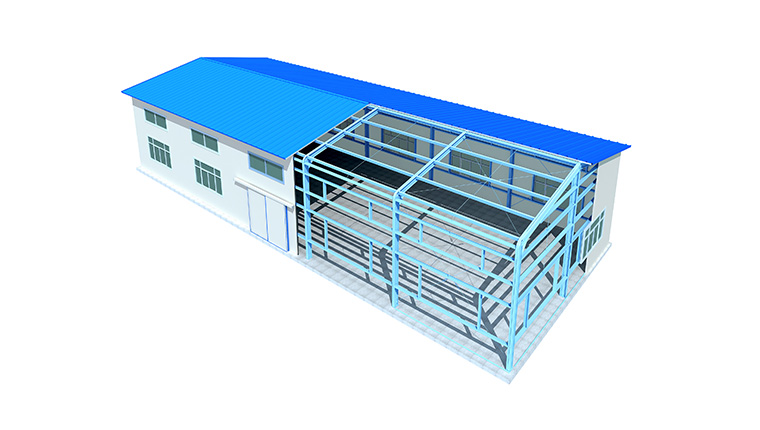
Camp accommodation container houses are modular buildings based on standardized steel-framed box units that are manufactured in a factory and assembled on site to form complete camp facilities. Each module integrates floor, roof, walls, insulation, doors, windows and basic interior finishes, and can be flexibly combined to form dormitories, offices, canteens, clinics, sanitary units and storage buildings.
A typical container house camp usually includes:
Accommodation zone: Single rooms, double rooms, multi-bed dormitories and supporting toilets and showers.
Office and operation zone: Project offices, meeting rooms, control rooms, duty rooms and equipment rooms.
Public service zone: Kitchens, dining halls, laundries, recreation rooms, religious buildings, small shops and warehouses.
Because most engineering camps are far from urban centers, these facilities must effectively operate as a small, self-contained community.
Why Choose Container Houses for Camp Accommodation?
Faster project start-up
In many large projects, the camp must be completed before main construction starts, otherwise personnel and equipment cannot be deployed efficiently. With container houses, standardized modules are produced in factories while site foundations and infrastructure are built in parallel, greatly shortening the overall schedule.
Compared with traditional masonry or cast-in-place concrete buildings, container house camps require less foundation work, less wet trade and simpler on-site coordination, which is ideal for locations with limited access, tight windows or challenging climates.
Flexible expansion and relocation
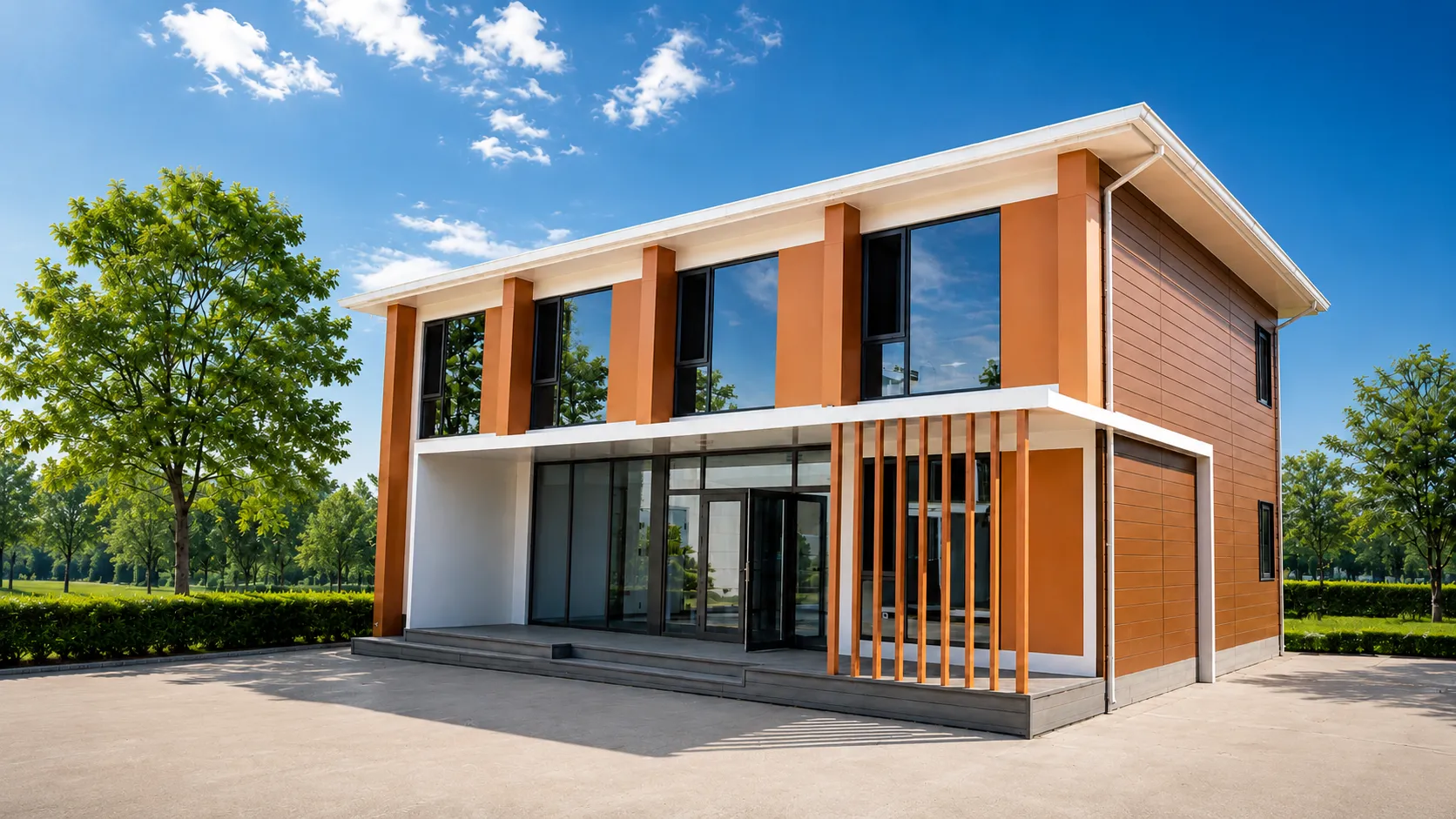
Workforce size and functional needs change significantly across different project phases. Modular container units can be connected side by side, end to end or stacked into multi-storey complexes, making it easy to expand the camp, adjust layouts or convert buildings from one function to another.
When the project ends or moves to a new site, modules can be dismantled, transported and reused, turning the camp into a re-deployable asset instead of a one-off cost.
Comfort in extreme climates
Global camps often operate in high-altitude plateaus, very cold regions, deserts, Gobi and coastal zones. To ensure safety and comfort under these conditions, CDPH has developed specialized systems such as cold-resistant box houses, plateau container houses, Gobi container houses and desert container houses tailored to local climate bands.
By adjusting insulation thickness, thermal transmittance of walls and roofs, window configurations, structural detailing and protective coatings, these systems can match temperature ranges from around minus 50 degrees to extremely hot and sunny conditions. This improves indoor comfort, reduces energy consumption for heating or cooling and enhances durability.
Cost and lifecycle value
Industrialized production, standardized design and optimized logistics allow camp accommodation container house solutions to offer competitive unit costs and shorter payback periods compared with conventional buildings.
Just as important, modules can be reused across projects, relocated and reconfigured over many years, which significantly improves total cost of ownership. When combined with energy-efficient systems, ecological lighting and integrated water treatment, container house camps become long-term assets rather than temporary expenses.
Main Types of Container Houses for Camps
To meet the needs of engineering and resource projects around the world, Chengdong / CDPH provides several major series of container house products and supporting systems.
Standard container house
Standard container houses use hot-dip galvanized steel structures, sandwich panel walls, insulated roofs and integrated floors to create durable, reusable modules for dormitories, offices and public buildings.
Key features include:
Steel frames designed for specified wind, snow and seismic loads to ensure structural safety.
Wall and roof assemblies with defined U-values and insulation performance to deliver comfortable indoor environments.
Cold-resistant box house
For extremely cold regions, CDPH’s cold-resistant box house system is engineered for temperature bands such as minus 10 to minus 50 degrees. By varying the thickness and density of insulation materials and selecting appropriate doors, windows and envelope configurations, the system delivers the required thermal performance while minimizing heat loss and condensation risk.
These solutions are especially suitable for northern power plants, pipeline projects, mining and infrastructure in harsh winter climates.
Plateau, Gobi and desert container houses
High-altitude camps face large temperature differences, strong winds and low oxygen levels, while Gobi and desert camps struggle with sandstorms, intense radiation and extreme heat. Chengdong’s plateau, Gobi and desert container house systems apply structural reinforcement, improved wind resistance, sunshading, dust protection and tuned insulation strategies for each environment.
This climate-specific engineering ensures that container house camps remain stable and energy-efficient during long-term operation in demanding locations.
Supporting modules and nine systems
A successful camp is more than a cluster of buildings. Chengdong summarizes camp construction into nine systems: building system, water supply and drainage and heating system, power system, weak current system, fire protection system, security system, traffic and road system, camp environmental facilities system and environmental protection system.
In practice, this means that, in addition to container dormitories and offices, a complete camp can also include:
Factory-molded integrated bathrooms that combine floor, walls, ceiling and sanitary fixtures in a single module, allowing installation within a few hours and multiple reuse cycles.
Water purification equipment, integrated wastewater treatment units, transformers, diesel generators or photovoltaic power, distribution boards, intelligent security systems, LED ecological lighting and landscaping.
How to Plan a Container House Camp
Master plan and zoning
Camp planning begins with understanding the geographic location, terrain, climate conditions and traffic access of the project site. Designers then divide the site into accommodation, office/operation, public service and logistics zones to balance efficiency, safety distances and convenience.
Key aspects include:
Rational layout of vehicle roads, pedestrian paths and fire lanes to support both daily use and emergency evacuation.
Appropriate building density and height, reserving enough green areas, sports grounds and activity spaces to improve the living experience for workers.
With decades of global camp experience, Chengdong can provide integrated planning and design solutions tailored to different countries and site conditions.
Modular design and model selection
In the design stage, planners use standard 20 ft, 27 ft, 38 ft and 45 ft container modules to build different room types, such as office modules, dormitory modules and public building modules with corridors or front porches.
Chengdong’s product manuals provide external and internal dimensions, functional layouts and recommended applications for each module type, which helps owners quickly choose models and configure the required capacity.
Integrated nine-system configuration
Once the building layout is set, the nine supporting systems are configured according to camp scale and local conditions. For example:
Water supply: Sizing of water tanks, pumps and purification equipment based on daily consumption.
Energy: Selection of transformers, backup generators or photovoltaic sources, and design of distribution networks and indoor/outdoor lighting.
Fire and security: Fire alarm devices, extinguishing equipment, emergency lighting, CCTV cameras, fences and gates.
This integrated configuration ensures that the camp accommodation container house solution works as a coordinated system rather than isolated temporary structures.
From Factory to Site: One-Stop Delivery
A key advantage of choosing a professional camp provider such as Chengdong Housing is full lifecycle support from design to operation.
Industrial production and quality control
Container houses and modules are produced in Chengdong’s own factories on automated production lines with standardized processes for steel fabrication, surface treatment, panel production and component integration. The company is certified under ISO 9001 and other management systems, and holds CE certifications such as EN1090 for steel structures and EN14509 for sandwich panels.
Strict material selection, structural tests and performance verification ensure each module meets required standards for strength, durability and thermal performance, which is crucial for remote, long-term camps.
Global logistics and on-site installation
Chengdong’s projects cover South America, Africa, the Middle East and Eurasia, so logistics planning is a core capability. The logistics team designs optimized packing schemes, cooperates with strong local partners and manages sea and land transport so that modules and nine-system equipment arrive safely and on schedule.
On site, experienced technical teams guide and manage local workers to complete foundations, structural installation, MEP connections and finishing works in line with the design and quality requirements. This reduces coordination pressure for the owner and helps ensure on-time, on-budget camp delivery.
Operation, maintenance and 5S camp management
After handover, Chengdong can support 5S and 360° camp management, including organization, cleanliness, standardization, intelligent security, wastewater treatment and ecological lighting, so that the camp remains safe, orderly and environmentally friendly throughout the project.
This long-term approach means that a camp accommodation container house solution supports not only construction progress but also worker welfare and corporate social responsibility goals.
How to Choose a Camp Accommodation Container House Partner
For project owners, choosing the right partner is as important as choosing the product. When evaluating suppliers, consider:
Demonstrated experience delivering large camps in similar climates and project types.
Capability to provide integrated solutions, from planning and container house production to nine-system configuration and camp operation support.
Certified quality systems, compliance with structural and fire standards, and proven logistics and on-site management across multiple countries.
To learn more about Chengdong Housing’s engineering camp and container house solutions, you can visit the official website at https://www.cdph.net/.
By combining high-quality container house products, climate-specific engineering and fully integrated camp systems, camp accommodation container house solutions are becoming an efficient, reliable and sustainable choice for global engineering projects.




 More
More










![Top Advantages of Modular Construction Explained [2025]](/uploads/upload/images/20250424/0fb390068474145a09a8c0504c73b1d2.png)
 May 09, 2025