
Tel / Whatsapp:+86 18001125785

Email:chengdong@cdph.com.cn

INQUIRY→
China National Petroleum Corporation Natural Gas Pipeline Bureau Uganda Crude Oil Pipeline Project

China National Petroleum Corporation Natural Gas Pipeline Bureau Uganda Crude Oil Pipeline Project

Home/

Case Center/

EACOP Camp Accommodation Container House: Large‑Scale Modular Camps for the Uganda–Tanzania Pipeline/

EACOP Camp Accommodation Container House: Large‑Scale Modular Camps for the Uganda–Tanzania Pipeline

EACOP Camp Accommodation Container House: Large‑Scale Modular Camps for the Uganda–Tanzania Pipeline

Project Overview

Area:

Africa / Uganda

Room Type:

Modular House Prefab House

Field:

Mining, Oil & Gas

Area:

1000-4000㎡

Scenes:

Accommodation Office Restaurant

Time:

2023year

Project Features:

1. Large‑scale camp with complete facilities

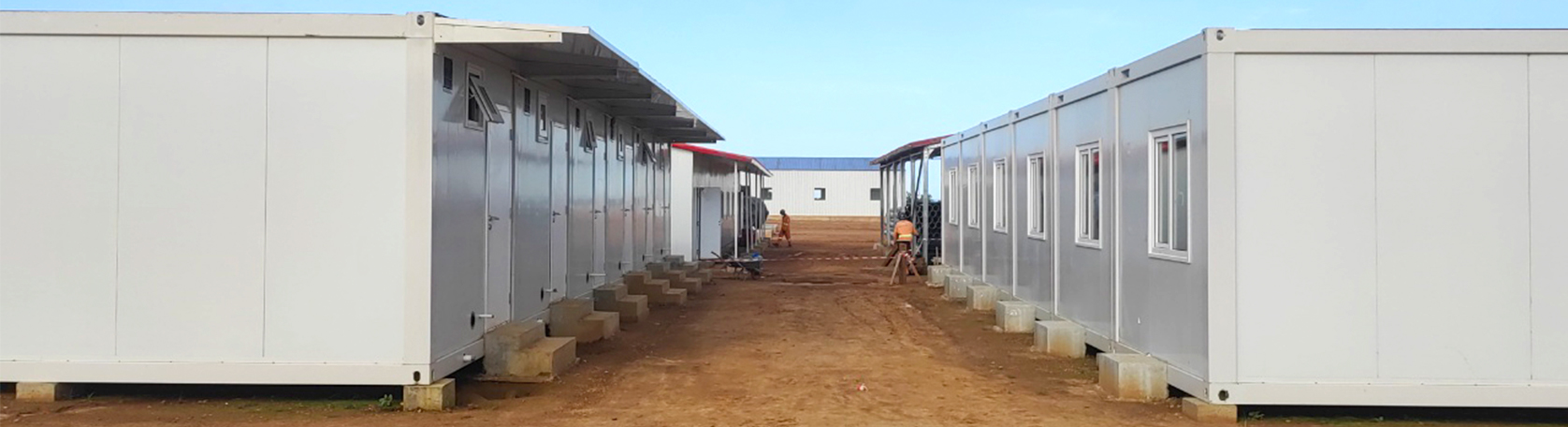
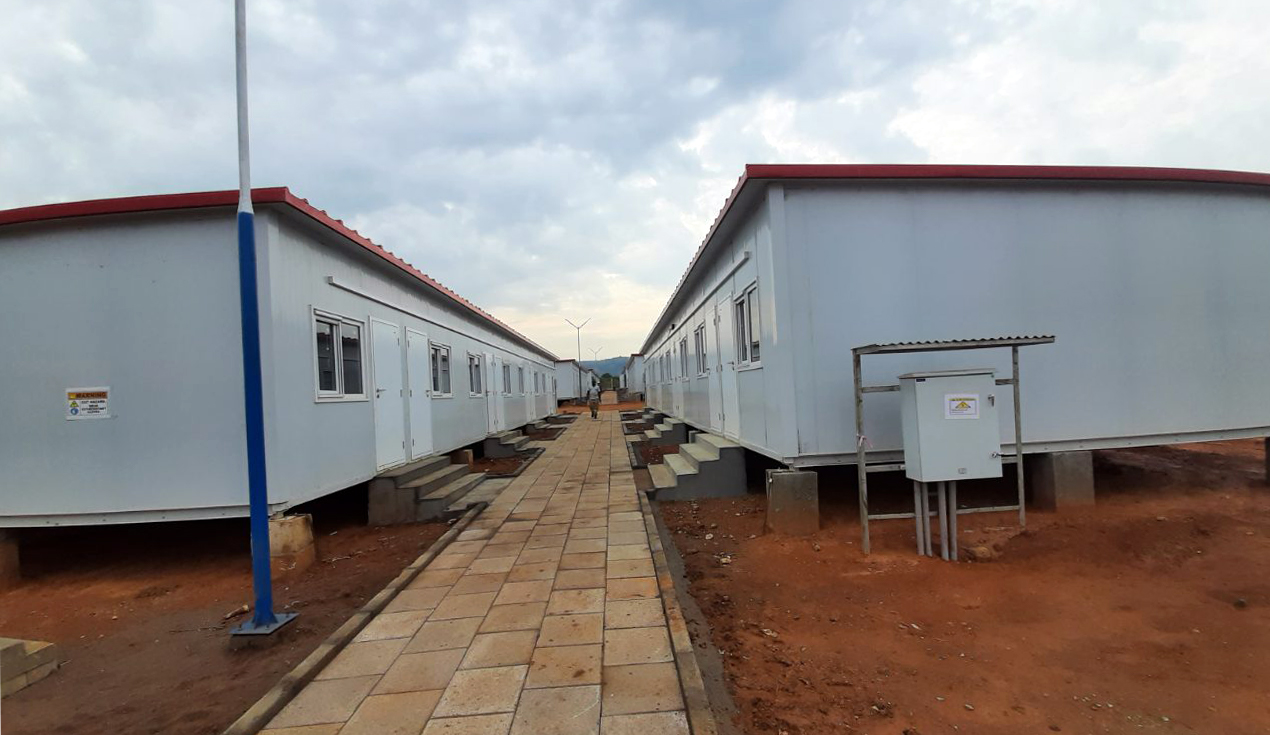
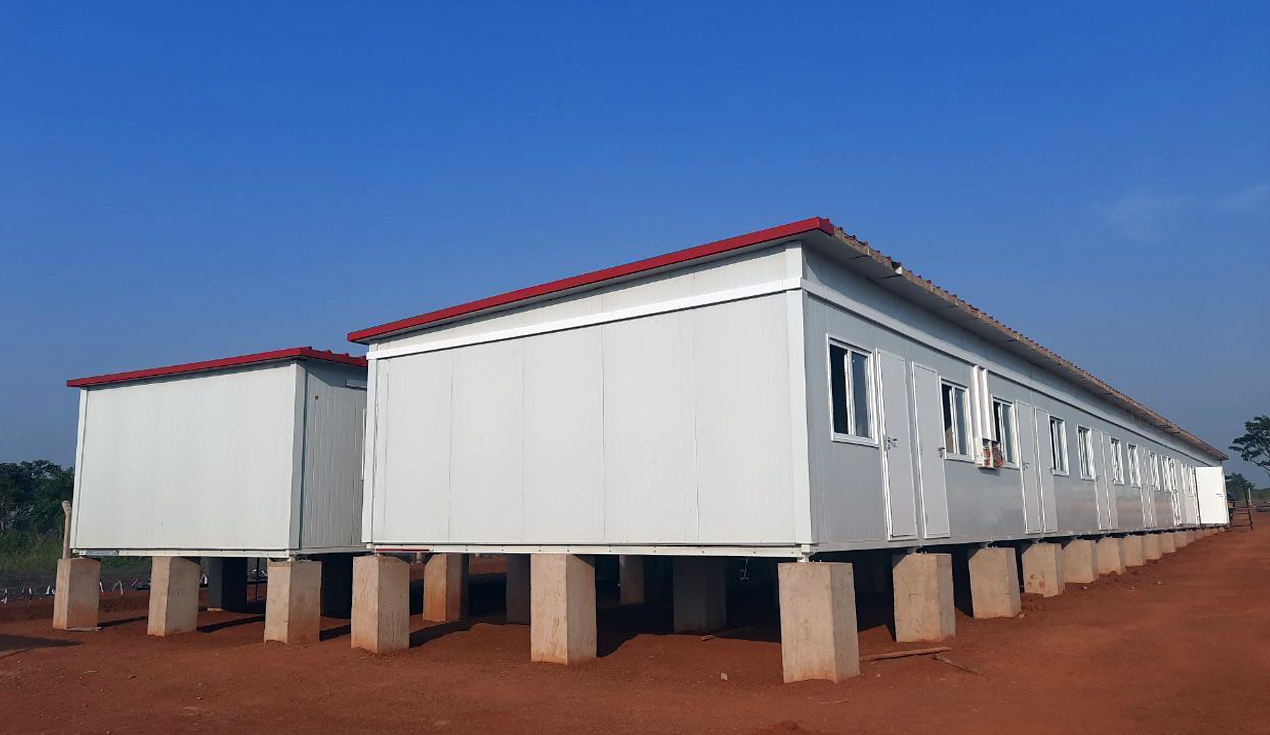
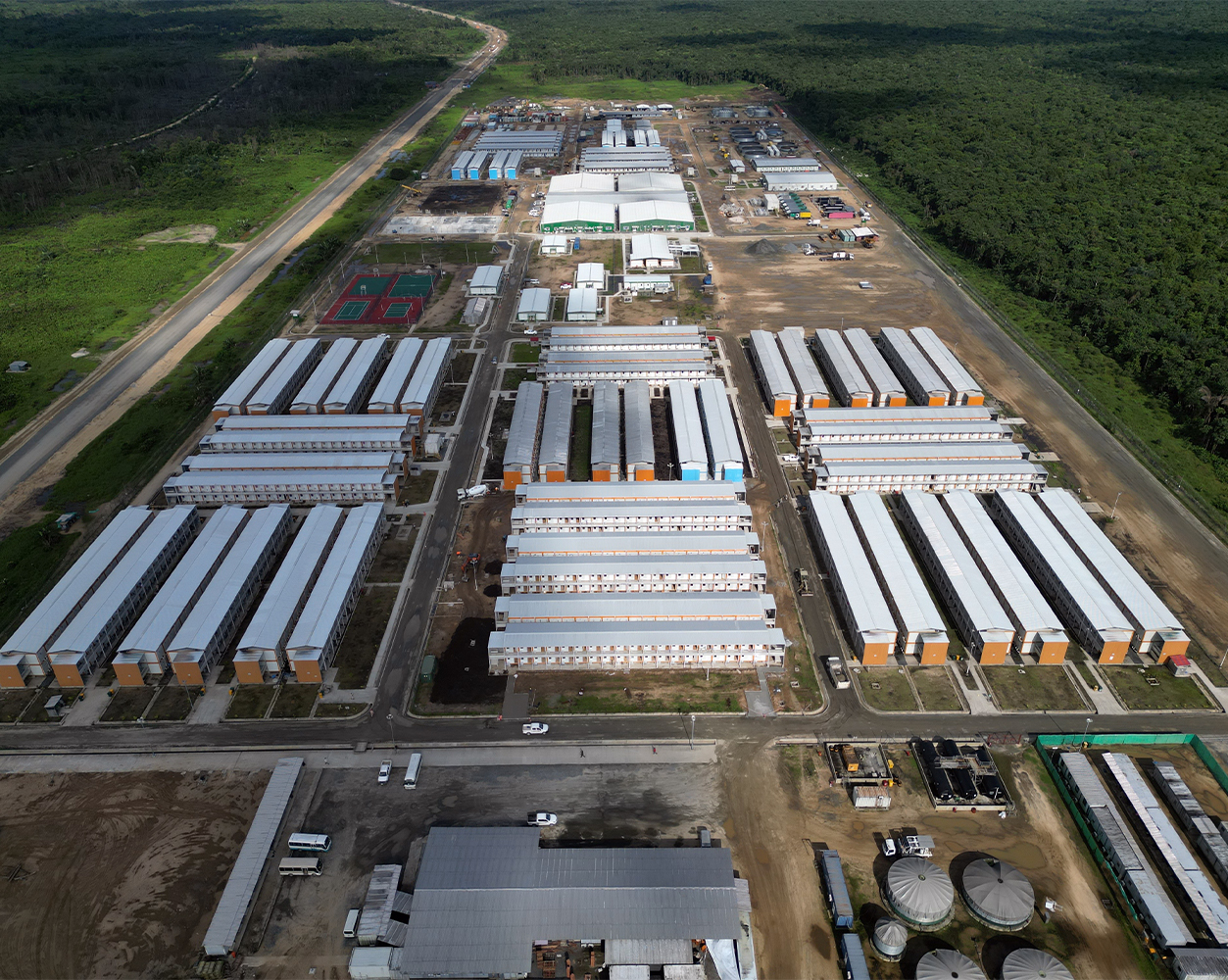
The project delivers a large‑volume camp accommodation solution with a total construction area of about 31,500 m², including 324 fully equipped container houses for living, working and supporting functions.

2. Multiple camps, long cycle and complex logistics

A total of 6 camps are deployed along the pipeline route, with all modules and materials shipped in 14 batches, making PVOC inspection, customs clearance and multi‑stage stocking and transportation extremely challenging to organize.

3. Long pipeline route and complex climate conditions

The pipeline runs through diverse climate zones and partially across plateau areas, so the camp accommodation container houses adopt insulated glass units with dedicated ventilation and pressure‑balance treatment to perform reliably under varying temperature and altitude conditions.

Project Description

Project Background: Cross‑Border Pipeline and Worker Camps


The EACOP pipeline connects the Tilenga Central Processing Facility (CPF) in Uganda with the export terminal at Tanga Port in Tanzania, creating a strategic crude oil export route for the region. The total length is about 1,539 km, including a 1,443 km main pipeline and 96 km of connecting lines, with approximately 392 km in Uganda and 1,147 km in Tanzania.


To build and operate this linear infrastructure efficiently, the project relies on several main camps and pipe yards to accommodate large construction teams along the Uganda–Tanzania corridor. A modular camp accommodation container house system was selected to deliver standardized, high‑quality living and working environments across the entire pipeline route.


Key Challenges: Large Scale, Multiple Camps, Complex Climate


Large footprint and fully equipped camp functions


The EACOP camp development covers a total building area of around 31,500 m² and includes 324 container house units configured for accommodation, offices and various support facilities. The camp must integrate dormitories, office buildings, canteens, kitchens, clinics, storage, recreation areas, laundry, sanitary blocks and full MEP and fire‑fighting systems, forming a complete camp accommodation environment for pipeline workers.


Because the route passes through remote areas with limited local construction capacity, the camp accommodation container houses are factory‑prefabricated, pre‑installed with electrical, plumbing, insulation and finishes, and then shipped as ready‑to‑assemble modules.


Multiple camps, long duration and phased logistics


Instead of relying on a single central base, the pipeline strategy depends on several main camps and pipe yards to support different construction spreads and access roads. In this case, the modular housing solution is deployed across six camps, with all modules and materials shipped in 14 separate batches aligned with the EACOP construction schedule.


Coordinating PVOC inspections, export customs, long‑distance sea freight to East Africa and inland transportation to remote sites in Uganda and Tanzania is highly challenging. The camp accommodation container house solution therefore needs standardized designs and clear Bills of Materials (BOMs) that can be split by camp, by batch and by function to ensure just‑in‑time delivery and rapid on‑site installation.


Long route, complex climate and plateau conditions


The pipeline corridor crosses multiple climate zones, from hot and humid lowlands to higher‑altitude areas with stronger solar radiation and larger day‑night temperature differences. This imposes strict requirements on the envelope design of each camp accommodation container house, including insulation, moisture protection and window performance.


In plateau or transitional sections, conventional insulating glass units can suffer from pressure imbalance and condensation problems. For these camps, hollow glass with pressure‑equalizing and venting treatment is used to reduce risks of glass bulging, fogging and seal failure while maintaining thermal comfort and clear views.


Camp Accommodation Container House Design


Integrated modular camp planning


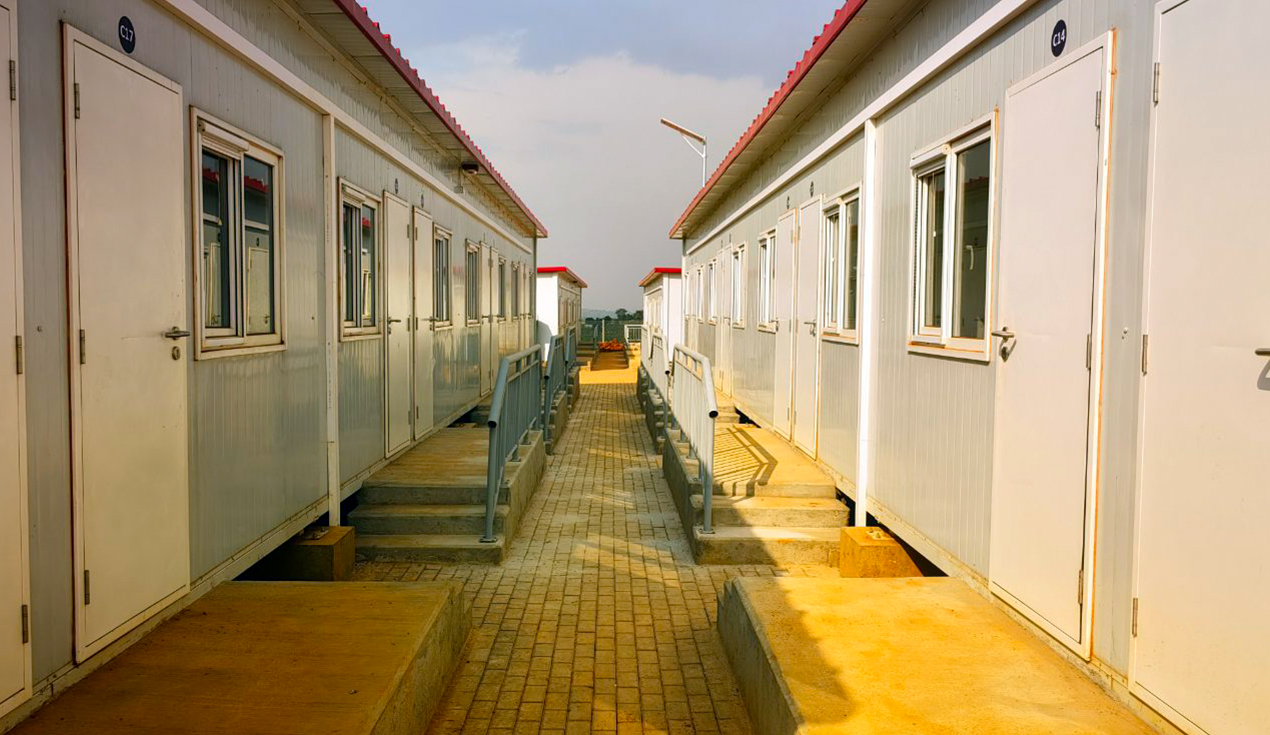
The EACOP camp accommodation container house solution follows an integrated modular planning approach, combining standardized modules into complete camp layouts.


Typical functional areas include:

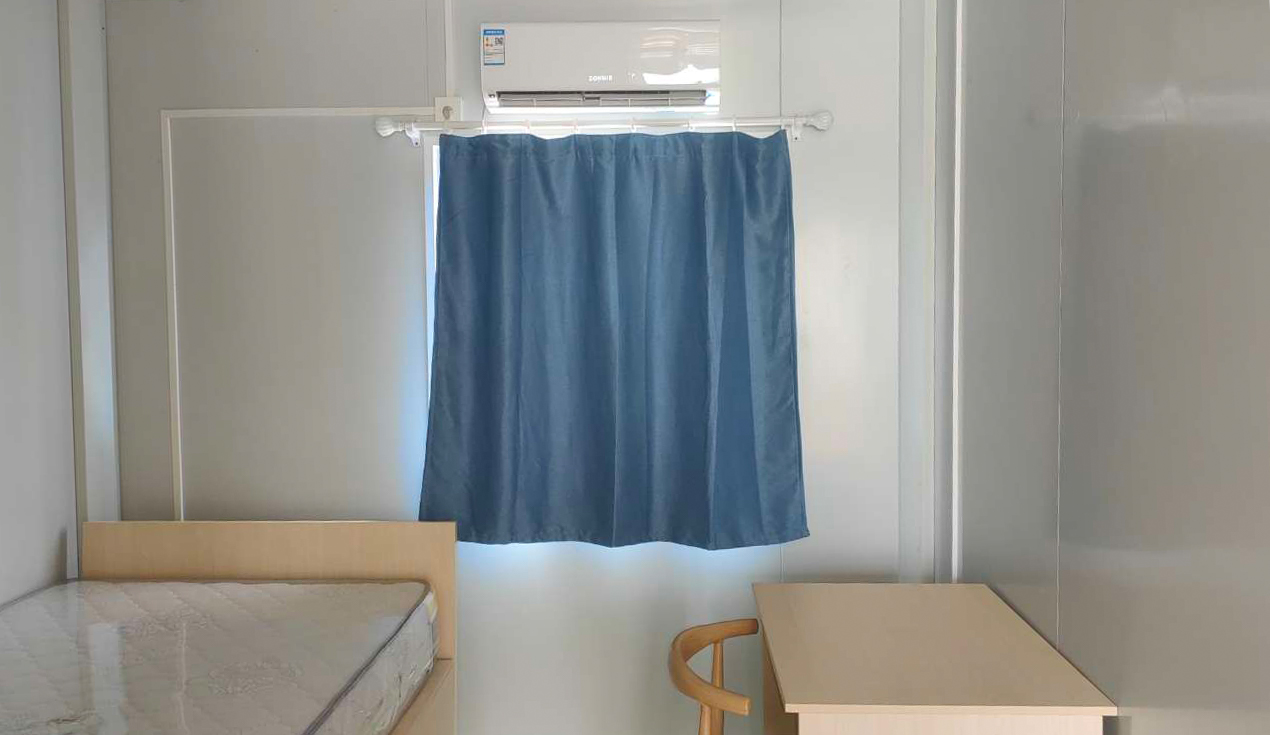
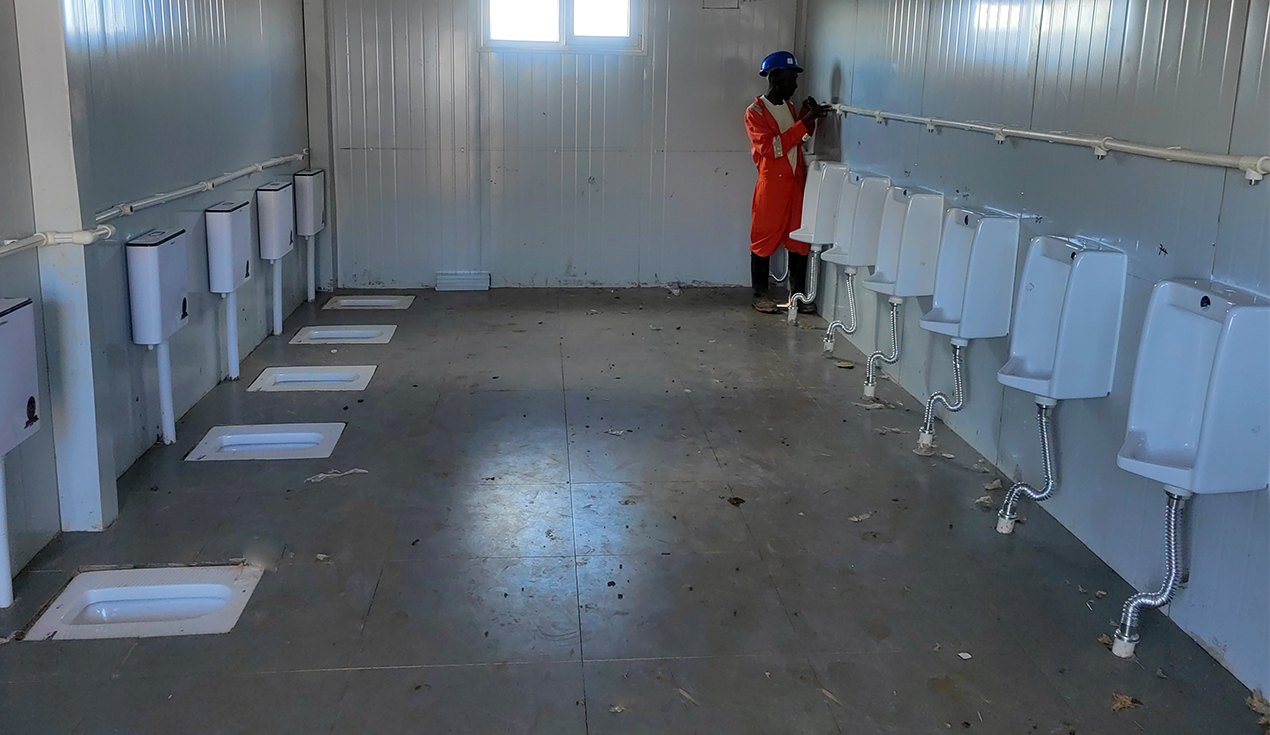
  • Worker accommodation: Single and double‑occupancy container rooms with beds, storage, desks, HVAC and private or shared bathrooms, providing comfortable oil and gas worker camp accommodation along the pipeline.

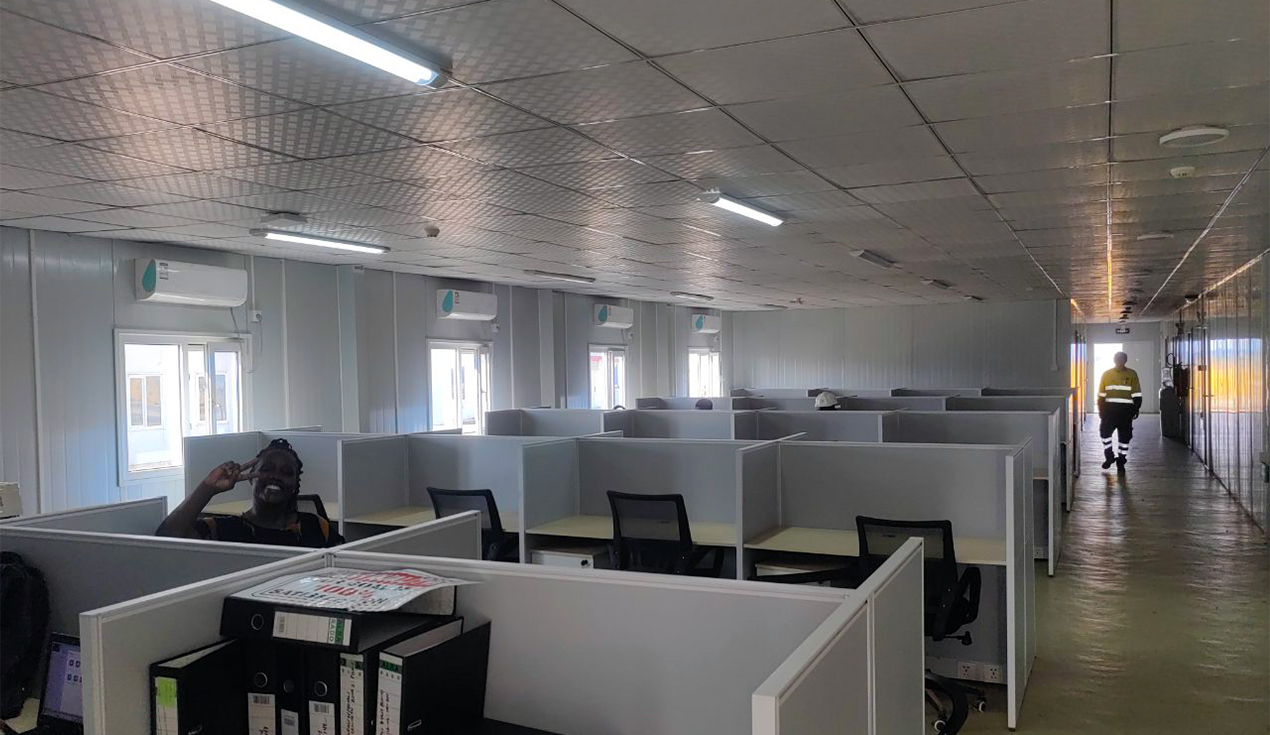
  • Offices and control areas: Combined container blocks forming open‑plan offices, meeting rooms, control rooms and supervision spaces for EPC and operations teams.

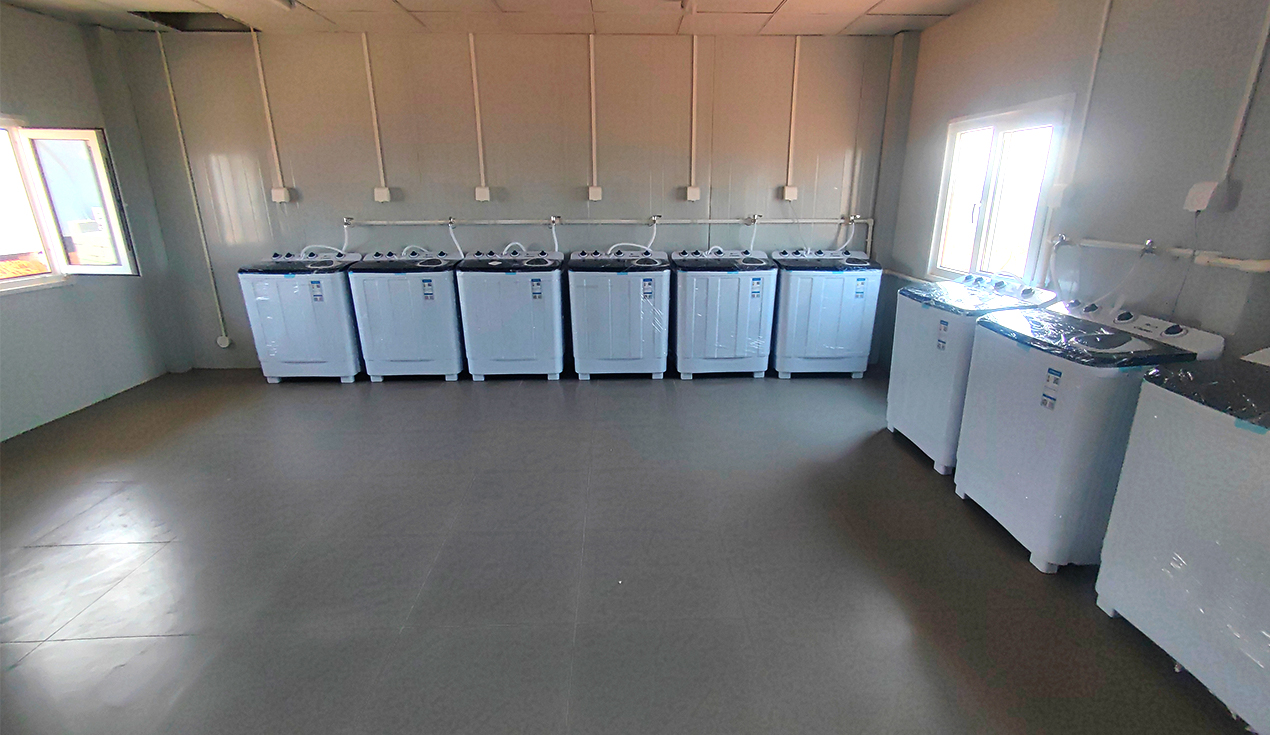
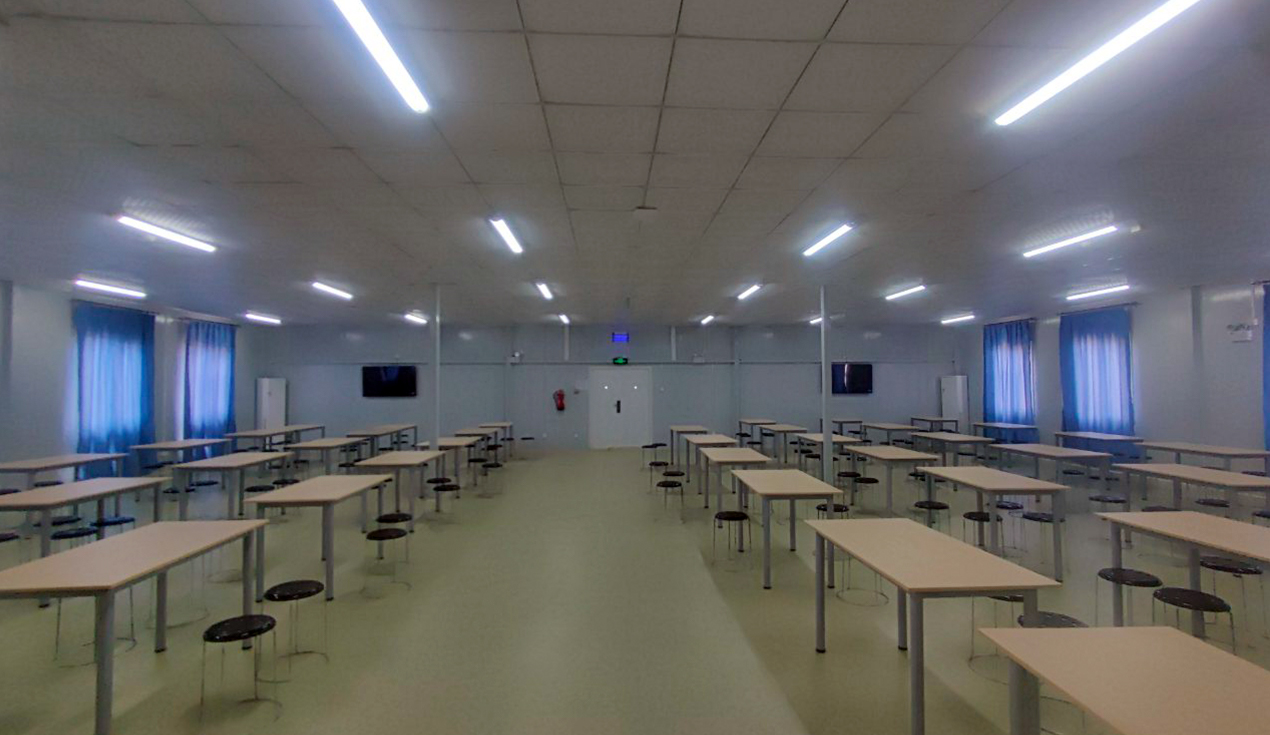
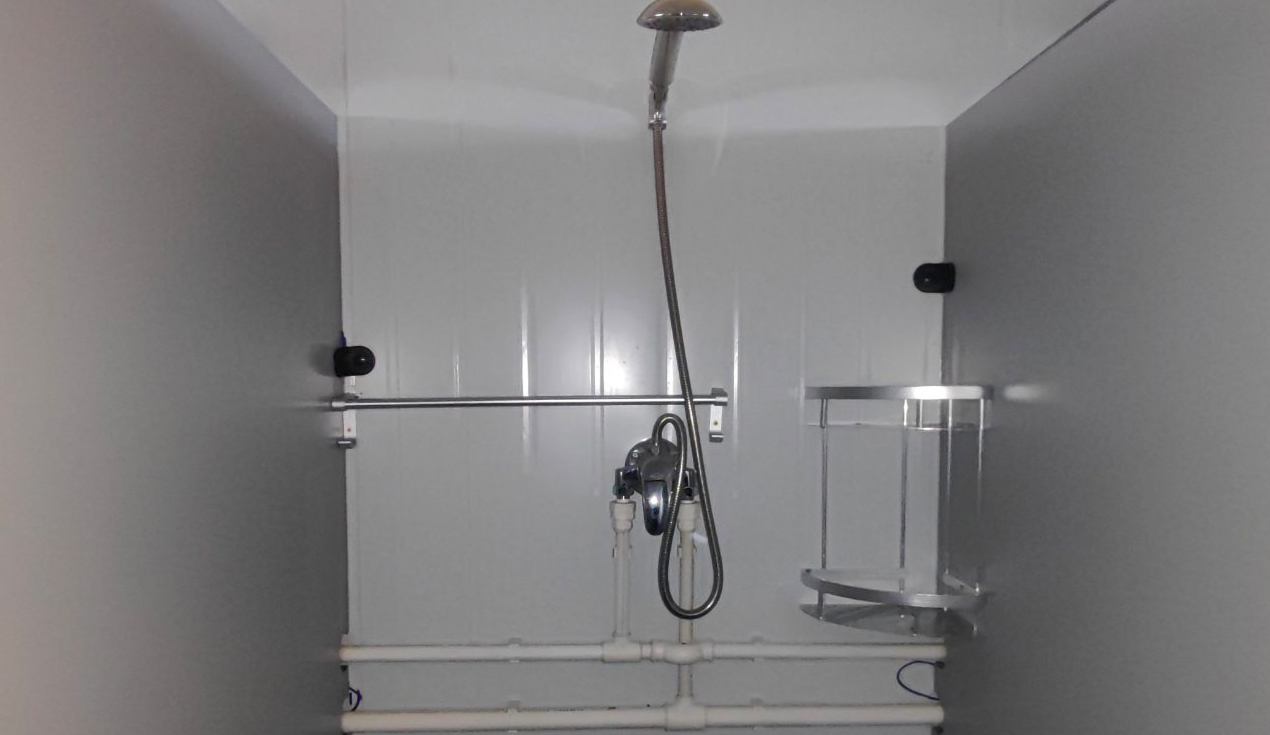
  • Living support facilities: Modular kitchens and canteens, laundry and shower buildings, clinics, prayer rooms, small shops and recreation spaces, all based on container or prefab modules.

Because modules share standardized structural dimensions, camp layouts can be scaled up or down, rearranged or even relocated as construction advances along the Uganda–Tanzania pipeline. Many camp accommodation container houses can later be reused on other oil and gas or mining projects, reducing lifecycle costs.


High‑performance modular system for East African conditions


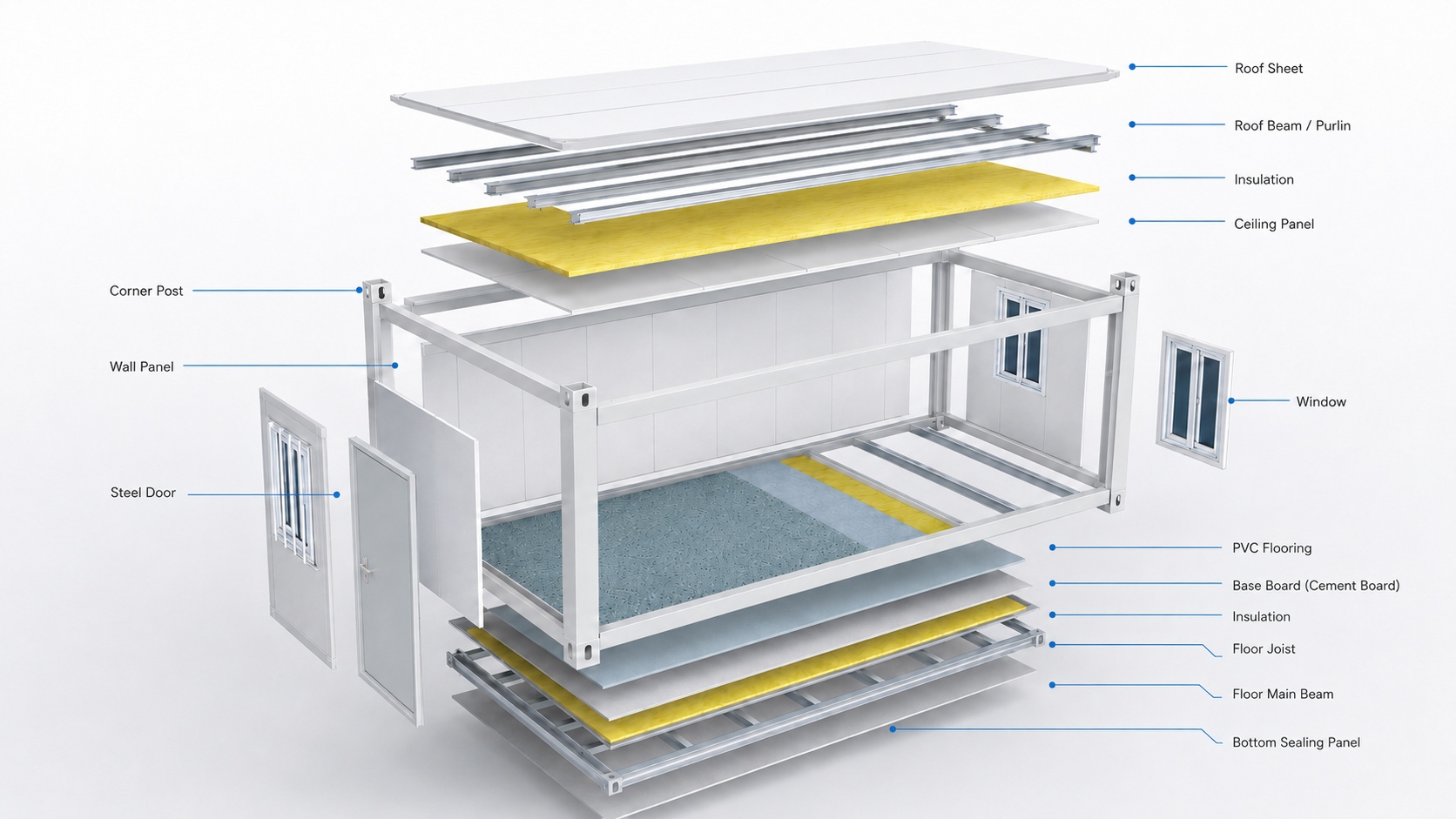
The solution uses a steel‑frame container house system designed for long‑term use in demanding environments.

Key technical features include:

  • Structural safety: Hot‑dip galvanized steel frames designed for wind, seismic and handling loads, suitable for stacked and combined camp buildings.

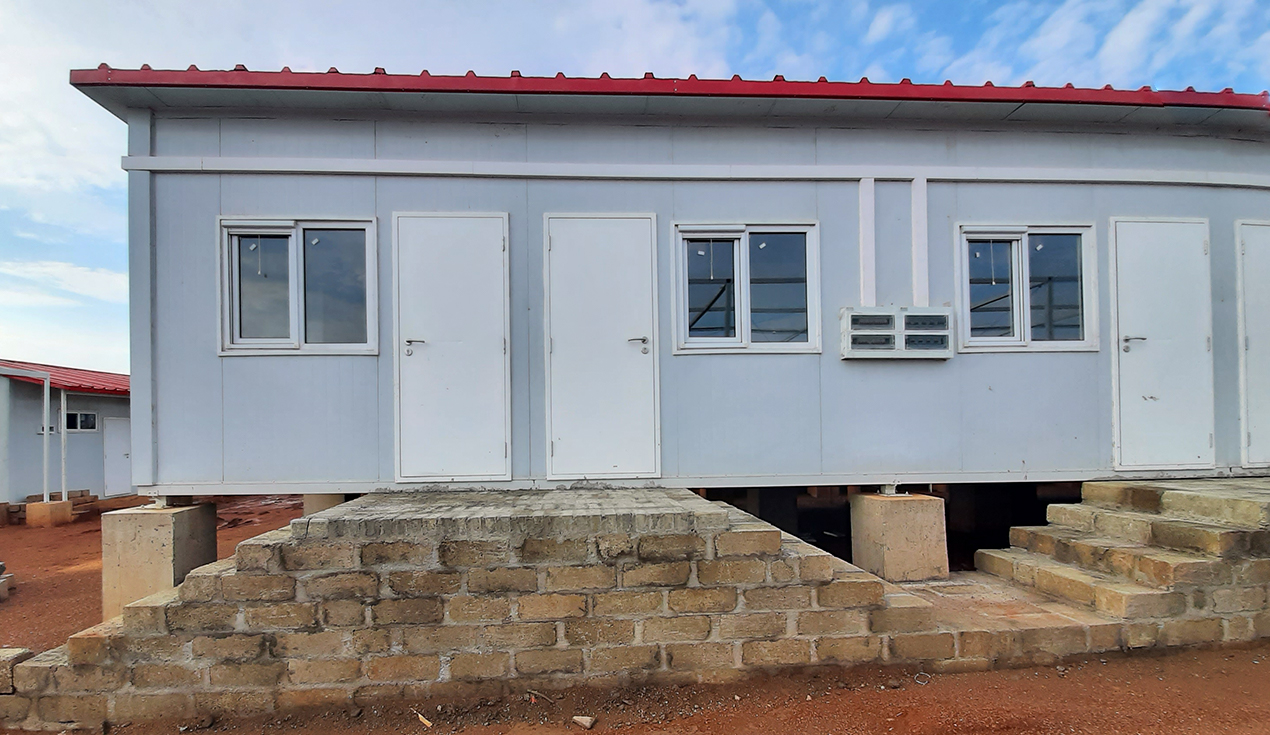
  • Thermal and moisture control: Insulated roofs and walls, plus elevated floor systems that improve under‑floor ventilation and protect against ground moisture and corrosion—an approach already proven on energy pipeline camps in Tanzania.

  • Fire and functional safety: In high‑risk areas such as kitchens, composite wall structures (light steel, non‑combustible insulation and calcium silicate boards) are used to improve fire performance and protect occupants.

MEP systems, including power distribution, lighting, data cabling, plumbing, sanitary fixtures and fire‑fighting provisions, are prefabricated and tested in the factory. On site, crews mainly focus on positioning modules, connecting interfaces and commissioning, which significantly shortens camp construction time.


Supply Chain Management and PVOC Inspection


For the EACOP camps, design, production, quality control and logistics are tightly integrated around the camp accommodation container house solution. Based on the pipeline schedule and camp phasing, modules and materials are grouped into 14 shipping batches that match six camp locations and their foundation completion dates.


Before export, container houses and key materials undergo PVOC and other required inspections for East African markets, supporting smooth customs clearance and compliance with local standards. Optimized packing density, loading plans and transport routes help lower freight costs and reduce damage risks during long‑distance shipment.


Once modules reach ports and then the EACOP camp sites in Uganda and Tanzania, local teams can rapidly complete installation, system connections and commissioning. This enables early occupation of camp accommodation container houses and helps the pipeline EPC contractor maintain its construction milestones.


Outcomes: A Benchmark Oil and Gas Worker Camp


The EACOP camp accommodation container house project demonstrates how modern modular housing can support large oil and gas pipelines in Africa.


Key benefits include:

  • Reliable, comfortable accommodation and office space for pipeline workers along a 1,443 km cross‑border route, with complete support facilities.

  • Scalable and relocatable modular design that reduces lifecycle costs and allows redeployment to future oil and gas or mining projects in Africa.

  • Climate‑adapted container house configurations, including plateau and high‑humidity solutions, improving durability, safety and comfort in complex environments.

  • An integrated model covering design, prefabrication, inspection, logistics and on‑site construction, offering owners and EPC contractors a dependable, fast‑track camp solution.


About Chengdong Modular House (CDPH)


Chengdong Modular House (CDPH) is a specialist provider of integrated modular housing and engineering camps, focusing on container houses, prefab houses and modular buildings for global projects. As a top manufacturer of high‑quality modular and container houses, Chengdong delivers complete camp accommodation container house solutions for construction, mining and oil & gas projects worldwide.


With about 70,000 m² of factory space and an annual capacity of up to 40,000 modular units, Chengdong offers a one‑stop service that combines R&D, manufacturing, sales and installation. To explore more modular camp solutions and project cases, visit the official website of Chengdong Modular House: https://www.cdph.net. Its camp accommodation container house portfolio covers cold‑resistant, plateau, Gobi and desert environments, making Chengdong a trusted partner for EACOP‑type pipeline projects and other large‑scale energy developments worldwide.


Get a quote

Related Products

Light steel module products

Light steel module products

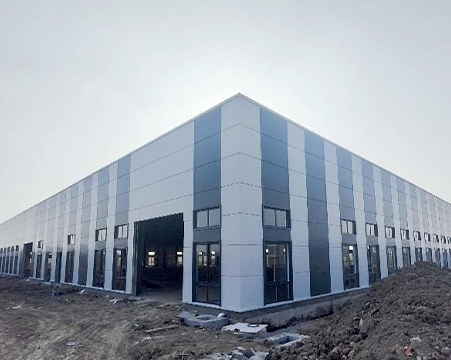
Light steel module products adopt a sheet-type module system. Through the through-column design, the structural stress performance is more reasonable. The light steel integrated wall adopts an integrated modular design concept, making installation simple and fast.
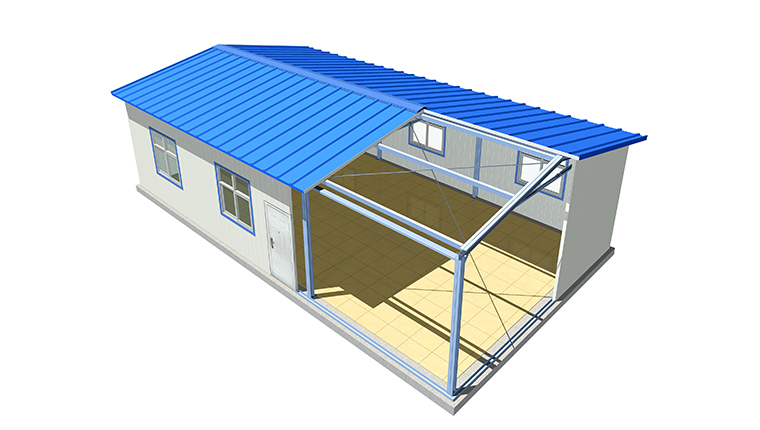
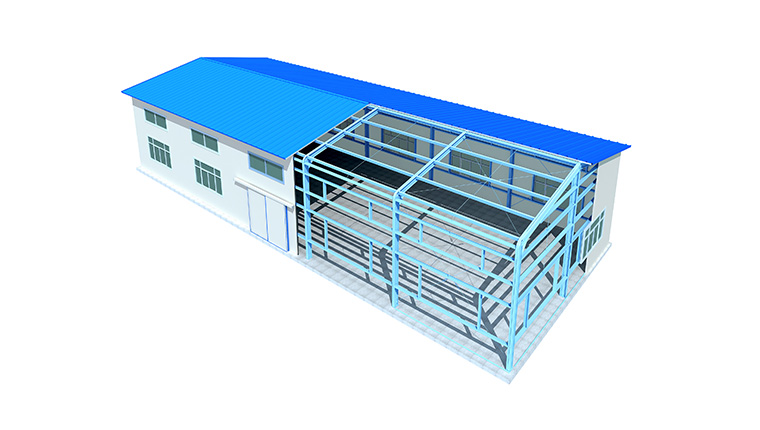
According to the application scenarios, the products can be fully prefabricated in the factory and hoisted on site, or semi-prefabricated and assembled on site. They have the advantages of modular design, earthquake resistance, wind resistance, fire resistance, heat insulation, and short construction period. They are mainly used in scenarios such as apartments, hotels, commercial buildings, and offices.

More
Light Steel Villa

Light Steel Villa

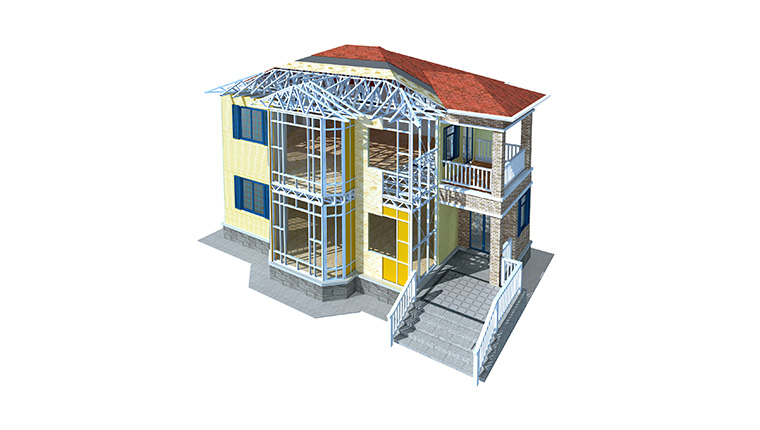
Light steel villas are currently the application direction of high-end housing in camp construction and future civil buildings. They can be used as semi-permanent buildings. According to the individual needs of customers, the layout and decoration style can be customized in the design stage. For construction scenarios in different climate regions, building materials can be selected in a targeted manner. Compared with traditional villas, it greatly reduces the construction cycle and greatly reduces the environmental pollution on the construction site.

More
Modular House

Modular House

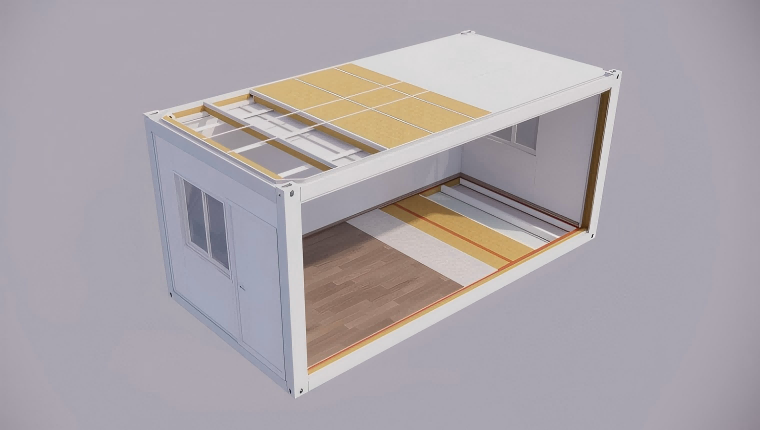
The container house is a movable and reusable building product. This kind of house adopts modular design and factory prefabrication production. It uses the container frame as the basic unit and can be used alone. It can also be used through different combinations of horizontal and vertical directions to form a spacious use space. The vertical direction can be stacked with 3 layers. The box unit structure is a standard component welded with special steel. The containers are connected by bolts. Its structure is stable, easy and fast to install, and is favored by most users.

More

Related cases

whatsapp.png
+86 18001125785
zongubimgfz3.svg
chengdong@cdph.com.cn

Scan the QR code to follow